
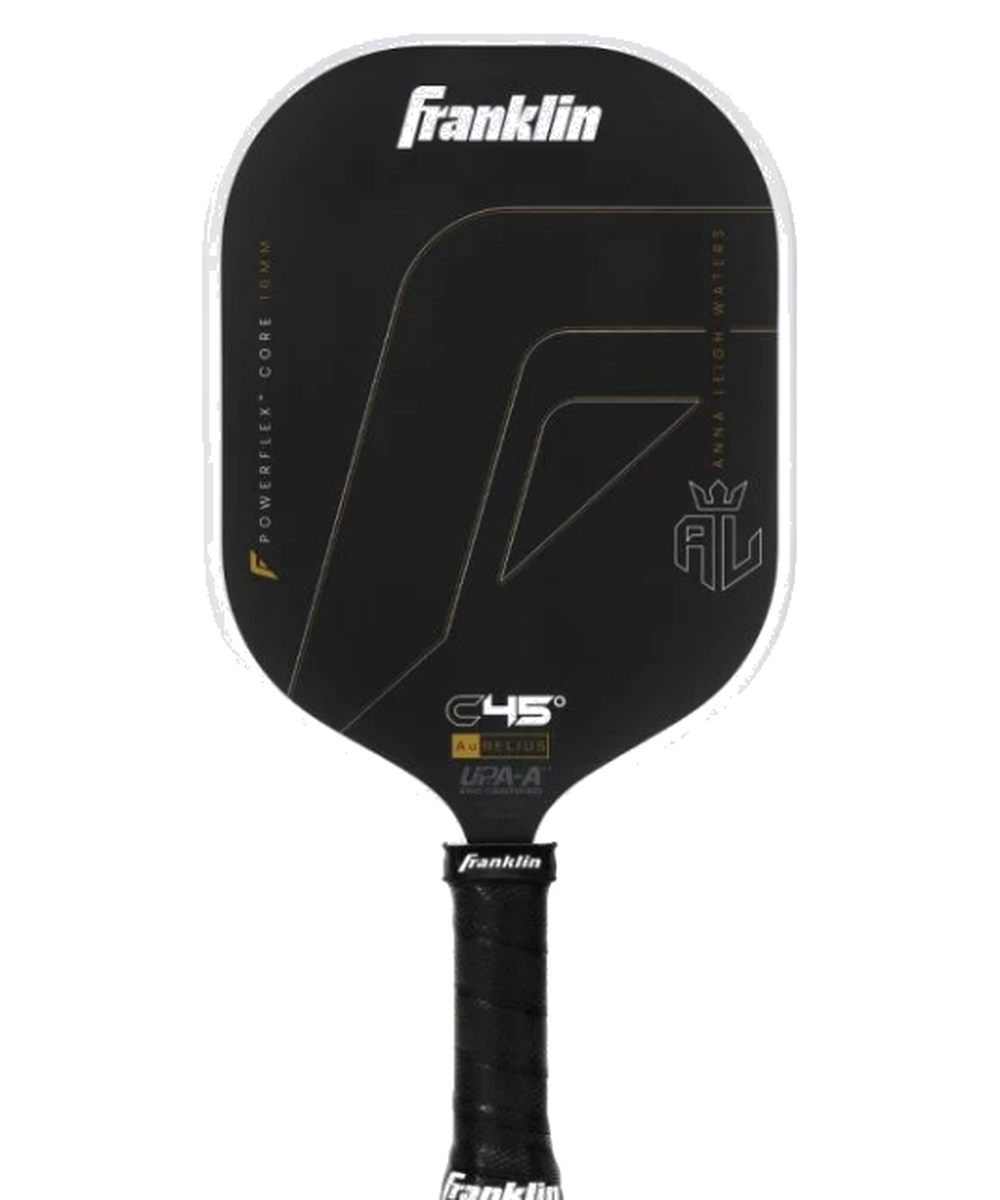
Finding the best lightweight pickleball paddles for 2026 matters most for players managing tendon or elbow sensitivity, or anyone who wants faster hands at the net without a heavy swing weight dragging them down. We didn’t hit a single ball to write this. Instead, we cross-checked specs and verdicts published by independent reviewers — Pickleheads, The Pickleball Era, and others — against manufacturer listings, and we’re explicit below about which numbers are independently sourced versus manufacturer-stated.
See our related buying guide. Check the official source.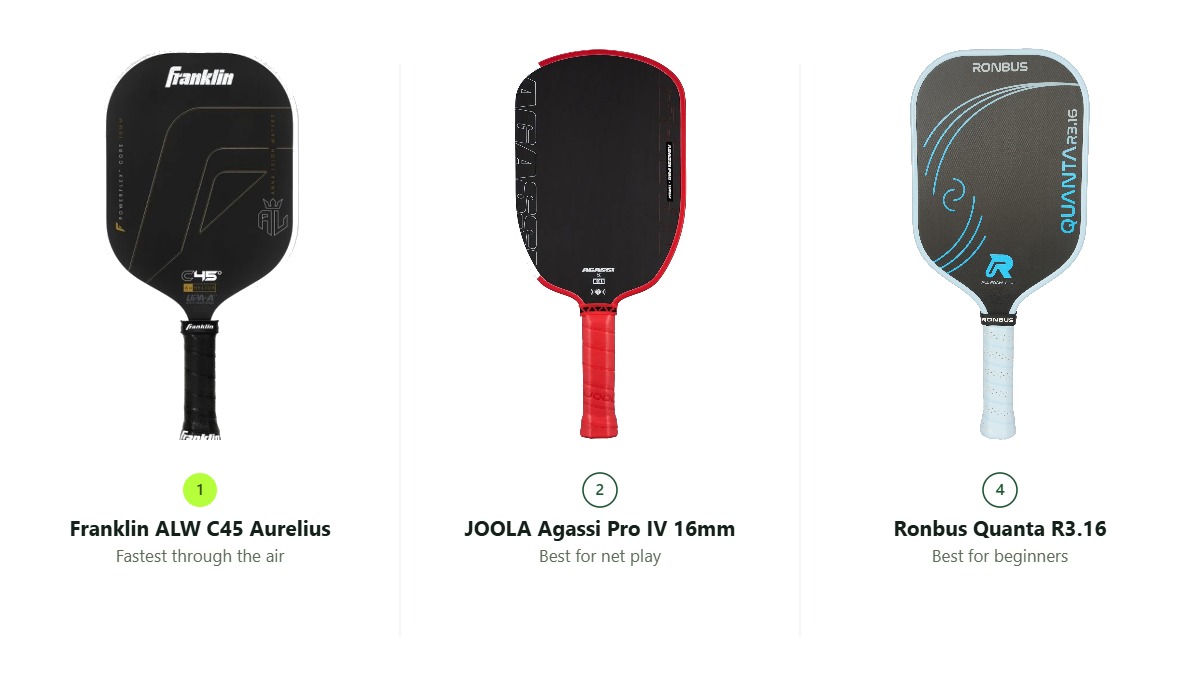
Why Paddle Weight Matters
Two different numbers get called “weight” in paddle reviews, and they measure different things. Static weight is what a paddle weighs on a scale — the number most retailers list. Swing weight is how heavy a paddle feels in motion, which depends on how the weight is distributed across the paddle’s length, not just the total. A paddle can have a low static weight and still feel heavy in a fast exchange if its weight sits toward the head rather than the handle. Where we could find a reviewer-measured swing weight alongside static weight, we’ve noted both; where only static weight has been independently published, we say so rather than estimating the other number.
How We Ranked These Paddles
Most reviewers define “lightweight” as roughly 6.5–7.8 oz static weight, with anything under 8.0 oz generally considered light enough to reduce arm fatigue over a long session. We only included paddles that independent review sites have actually weighed and reviewed — not manufacturer marketing claims alone. See our review process for the full methodology.
Compare how the lightweight pickleball paddles rank by price, weight, and verified owner ratings before you decide.At a Glance: 2026 Lightweight Paddle Picks
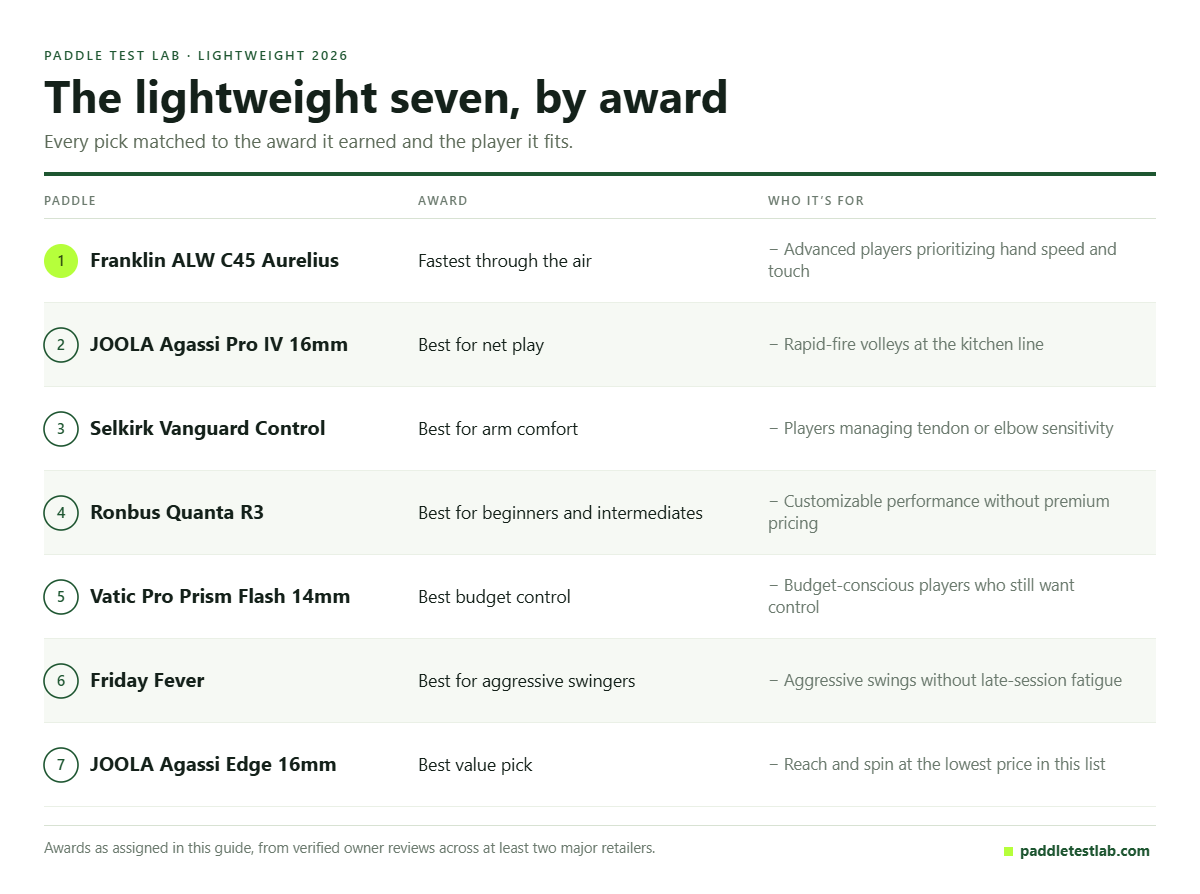
| Paddle | Price | Weight | Best For |
|---|---|---|---|
| Franklin ALW C45 Aurelius | $229.99 | 7.2–8.0 oz | Fastest through the air, advanced players |
| JOOLA Agassi PRO IV (16mm) | ~$150 | 7.6–7.9 oz | Rapid-fire volleys at the kitchen line |
| Selkirk Vanguard Control | ~$180 | 7.5–7.9 oz | Arm/tendon-friendly control |
| Ronbus Quanta R3 | ~$100 | 7.6 oz | Beginners/intermediates, versatility |
| Vatic Pro PRISM Flash (14mm) | ~$90 | 7.7 oz | Budget control and touch |
| Friday Fever | ~$94 | 7.7 oz | Aggressive swings without fatigue |
| JOOLA Agassi Edge (16mm) | ~$100 | 7.7–8.0 oz | Best value lightweight pick |
Full Breakdown of the Lightweight Pickleball Paddles Above
Franklin ALW C45 Aurelius — Fastest Through the Air
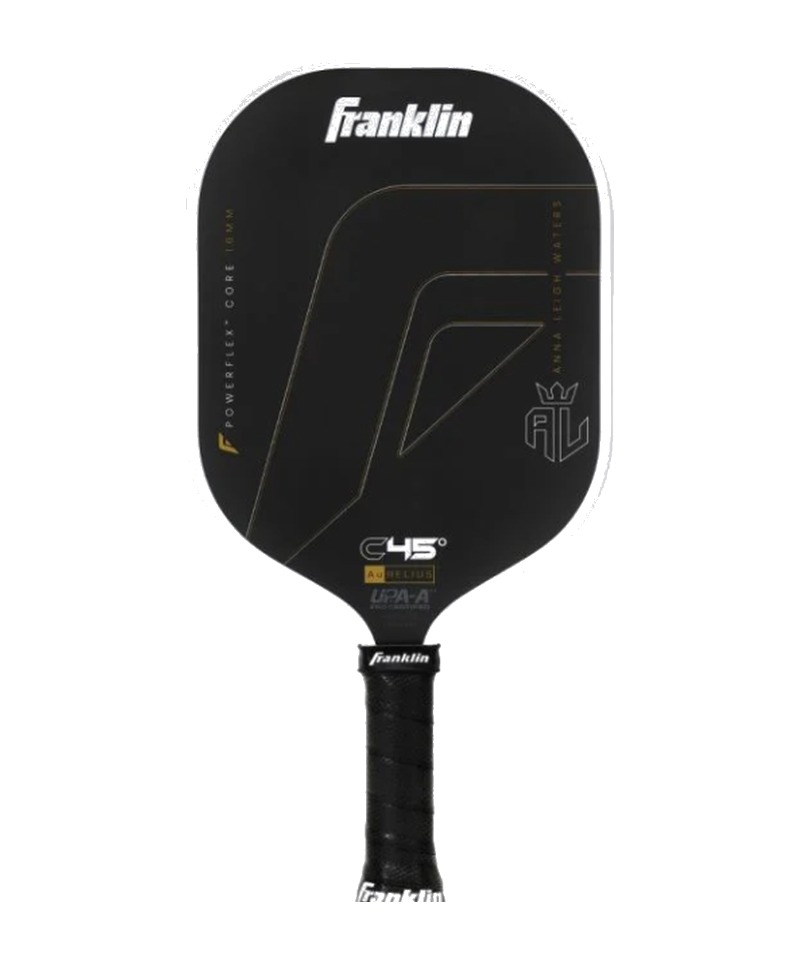
At 7.2–8.0 oz depending on thickness (12.7, 14, or 16mm), independent coverage from Pickleheads called this “the lightest paddle and the fastest through the air” in its lineup, thanks to a shortened widebody shape that cuts drag. At $229.99 it’s priced at the top of this list, aimed at advanced players prioritizing hand speed and touch over raw power. For the rest of Franklin’s lineup, see our full Franklin pickleball paddle review.
JOOLA Agassi PRO IV (16mm) — Best for Net Play
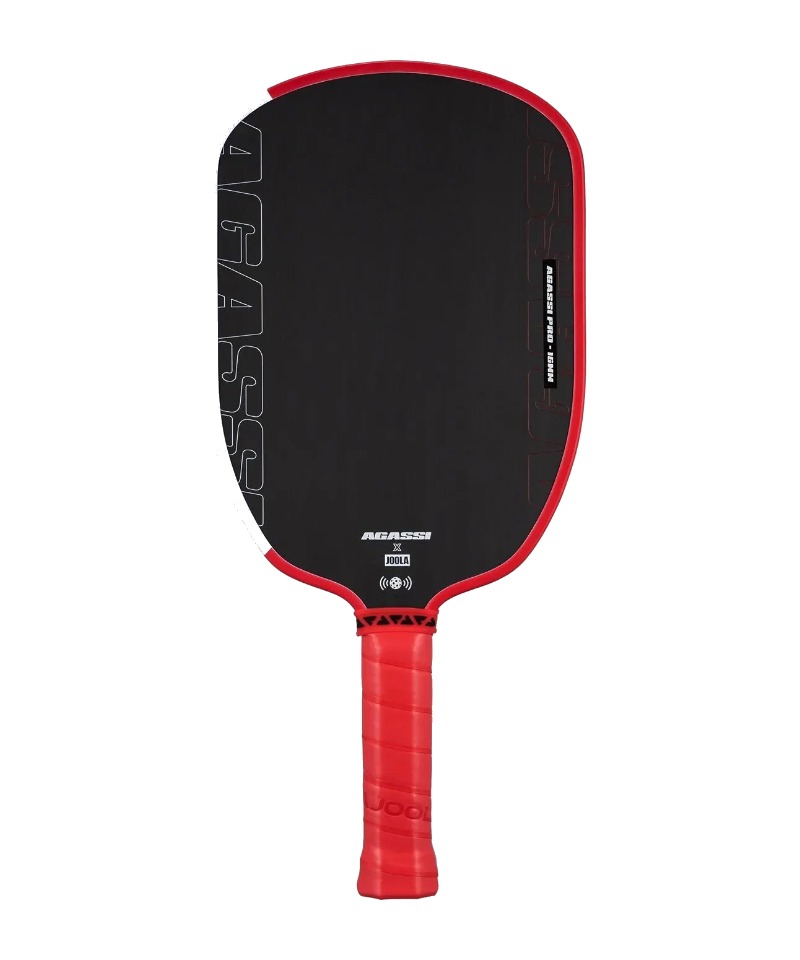
Weighing 7.6–7.9 oz at roughly $150, The Pickleball Era’s independent coverage called this “the fastest best lightweight pickleball paddle” in its test group, built for rapid-fire exchanges at the kitchen line. We already cover JOOLA’s broader lineup — including how the Pro IV compares to the pricier Pro V — in our JOOLA pickleball paddle review.
Selkirk Vanguard Control — Best for Arm Comfort
At 7.5–7.9 oz and roughly $180, this model uses Selkirk’s shock-absorbing SuperCore polymer and was specifically flagged by The Pickleball Era’s independent coverage as engineered to help prevent tennis elbow, with a sweet spot described as forgiving on off-center hits. We cover the rest of Selkirk’s lineup in our Selkirk pickleball paddle review, and if elbow pain is your main concern, our dedicated tennis elbow paddle guide goes deeper.
Ronbus Quanta R3 — Best for Beginners/Intermediates
At 7.6 oz and roughly $100, Pickleheads’ independent coverage called this “one of the fastest elongated paddles” in its foam-core class, recommending it for beginners and intermediates who want customizable performance without a premium price tag.
Vatic Pro PRISM Flash (14mm) — Best Budget Control
At 7.7 oz and roughly $90, the 14mm version was described by Pickleheads as “lighter and has more pop than the 16mm” version, with reviewers highlighting control and touch shots as its strongest area.
Friday Fever — Best for Aggressive Swingers
At 7.7 oz and roughly $94, Pickleheads’ coverage credited this paddle’s light build with letting players swing aggressively without fatigue, while still delivering what the same review called elite-level spin and a plush feel.
JOOLA Agassi Edge (16mm) — Best Value Pick
At 7.7–8.0 oz and roughly $100, The Pickleball Era named this “the best value lightweight pickleball paddle” in its test group, citing an extended shape for reach and a carbon face for spin at an accessible price.
Who Should Buy Which Paddle
Not all lightweight pickleball paddles suit the same player — here’s how to match one to your priority:
If arm or elbow comfort is the priority: the Selkirk Vanguard Control was the only paddle in this group specifically engineered and marketed around that use case, and independent coverage backed the forgiving-sweet-spot claim.
If budget is the deciding factor: the Vatic Pro PRISM Flash and JOOLA Agassi Edge both land near $90–$100 while still qualifying as genuinely lightweight (under 8 oz) in independent testing.
If you want the fastest hands at net: the JOOLA Agassi PRO IV and Franklin ALW C45 Aurelius were both specifically credited with speed advantages by the independent sources we checked, though the Franklin sits at a materially higher price.
Are Light Paddles Better for Quick Hands?
Partly — and the nuance matters, because buying purely on the number printed on the box is how players end up with a paddle that feels wrong.
Fast hands at the kitchen line depend on how quickly you can get the face into position, and that is governed by swing weight rather than static weight. Swing weight measures how the mass is distributed: a 7.8 oz paddle with weight concentrated in the head can feel slower than an 8.1 oz paddle that is balanced toward the handle. If hands battles are where you lose points, the number to check is swing weight, and most brands do not print it.
The trade-off is stability. Lower mass means the paddle twists more when the ball lands off-centre, so blocks and counters lose pace and direction. Players who reach for a very light paddle to win firefights sometimes find they now lose the reset that follows. Our guide to swing weight in pickleball explains how it is measured and which range suits which style.
Lightweight paddles for wrist and arm pain
This is the most common reason people go looking for a light paddle, and it is only half right.
Lower mass genuinely reduces the load your wrist and elbow carry through a long session, and for players managing fatigue that is a real benefit. But a lighter paddle also transmits more shock, because there is less mass to absorb the impact — which is why some players with tennis elbow find a light paddle makes things worse rather than better.
What tends to help more: a thicker core that dampens rather than returns vibration, a foam-filled perimeter, a correctly sized grip, and a swing weight you can move without straining. Grip size in particular is under-appreciated — too large a grip restricts wrist action and is a documented contributor to arm strain. Our arm-friendly paddle guide works through the full set of factors, and grip sizing covers how to measure yours properly.
Paddles Under 7.5 oz: What to Expect
| Weight band | Character | Suits |
|---|---|---|
| Under 7.5 oz | Very fast hands, least stable, most shock through the arm | Net-focused doubles players with clean contact |
| 7.5–7.9 oz | Quick but still stable — the practical light band | Most players wanting speed without giving up control |
| 8.0–8.3 oz | Midweight: the all-round default | The majority of players, and the safest starting point |
| 8.4 oz and above | Most stable and powerful, most fatiguing | Singles players and those driving from the baseline |
One practical note: a paddle can always be made heavier, never lighter. If you are between bands, buy the lighter one and add lead tape to tune it — that also lets you place the weight where you want it rather than accepting the factory distribution.
FAQs
What is considered a lightweight pickleball paddle?
Anything under roughly 7.8 oz is generally described as lightweight, with 7.3–7.7 oz being the genuinely light band. Midweight runs about 7.8–8.4 oz, and above that is heavyweight.
The caveat worth repeating: static weight is the less useful of the two numbers. Two paddles at an identical 7.6 oz can feel completely different depending on where the mass sits. If a paddle feels heavier than its spec suggests, the weight is in the head. Our guide to choosing paddle weight covers both numbers and how to decide.
Lightweight vs heavy paddle: which should you choose?
Lighter gives you hand speed, manoeuvrability and less fatigue, at the cost of stability, power and shock absorption. Heavier gives you plough-through on drives, stability on off-centre contact and a more absorbed impact, at the cost of reaction speed and arm fatigue.
The practical starting point for most players is midweight, around 8.0 oz, then adjust based on what actually goes wrong in your games. Losing hands battles at the net points lighter. Getting pushed around on blocks and drives points heavier. Elbow soreness points to core construction and grip size before it points to weight. And because you can only add mass, starting slightly light and tuning up with lead tape is the more forgiving approach.
What counts as a lightweight pickleball paddle?
Most independent reviewers define lightweight as roughly 6.5–7.8 oz static weight, with anything under 8.0 oz generally considered light enough to help reduce arm and tendon fatigue over a long session.
Do lightweight paddles sacrifice power?
Generally, yes to some degree — less mass behind the paddle face typically means less raw power on drives, which is why several of the lightweight paddles above lean on control and touch rather than baseline pace as their main selling point.
Are lightweight paddles better for tennis elbow?
A lighter paddle can reduce strain, but weight alone isn’t the whole picture — core material and vibration dampening matter too. Our dedicated best paddles for tennis elbow guide covers that topic specifically, including paddles engineered around shock absorption rather than weight alone.
Does swing weight matter more than static weight for a lightweight pickleball paddle?
For most players, yes — how a paddle feels during a fast exchange depends more on swing weight (how the mass is distributed) than on the number printed on the box. Two lightweight pickleball paddles with identical static weight can feel noticeably different in hand if one carries more mass toward the head. We call out swing weight above wherever an independent reviewer has actually measured it.
Sources: Pickleheads — Best Lightweight Pickleball Paddles; The Pickleball Era — Best Lightweight Pickleball Paddles.
Reference: USA Pickleball — official rules, equipment standards, and the approved-paddle list.
Related guides

Isacc Shah
Isacc Shah writes PaddleTestLab. He does not test paddles in a lab and says so plainly — there is no rig, no radar gun, no staff hitting balls. Instead he aggregates independent bench measurements, manufacturer specifications, USA Pickleball's approval database and hundreds of verified owner reviews per product, then reports where those sources disagree. Every score on the site carries its evidence count. Where a specification is not published, the site writes UNKNOWN rather than estimating it, and the criticism is printed next to the praise.