
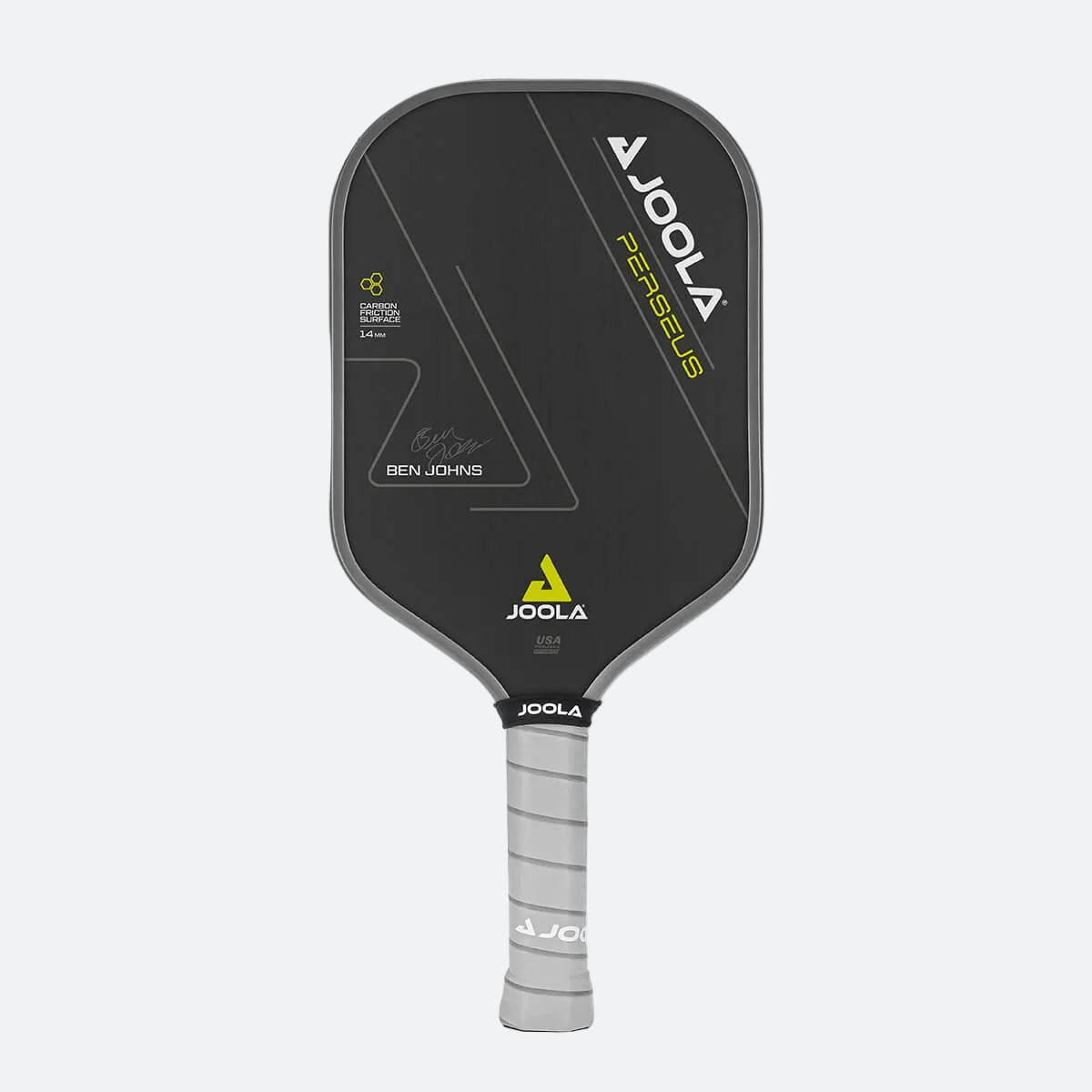
Anyone shopping for a JOOLA pickleball paddle in 2026 runs into the same wall fast: the lineup is huge, the marketing copy sounds identical across models, and every retailer page swears its paddle is the one Ben Johns “actually uses.” This review skips the hype and works from the evidence — verified owner reviews across major retailers, USA Pickleball’s approved paddle list, and published spec sheets — to figure out which JOOLA paddles hold up and which ones are overpriced repeats of a better predecessor.
The joola pickleball paddle field is crowded this year, so we focused on verified data over hype.
For more detail on how the joola pickleball paddle compare, scroll to the scorecard at the end of this guide.
Why Trust This JOOLA Review
We don’t play-test paddles on a court and report back with a stopwatch. That’s not how this review works, and we think you should be skeptical of any single-reviewer piece that claims to feel spin differences in an afternoon. Instead, we aggregate verified owner reviews at scale and cross-check them against independent published data.
Our aggregated owner-data methodology
For every JOOLA model in this piece, we pulled star-rating patterns from multiple retailers, read through recurring complaint and praise language, and logged the manufacturer’s published specs. Where owner sentiment and marketing claims diverge, we say so directly. Where the data is missing or unclear, we say that too, instead of guessing.
Compare how the joola pickleball paddle rank by price, weight, and verified owner ratings before you decide. For most players the joola pickleball paddle decision comes down to feel, price and durability – and this guide weighs all three from verified owner data.
Sources: verified reviews, USA Pickleball list, published specs
Approval status referenced below comes from the USA Pickleball approved paddle list. Spec figures (weight, core thickness, face material) come from manufacturer spec sheets and retailer listings including joola.com and pickleballwarehouse.com, cross-referenced against independent write-ups from pickleballstudio.com and pickleheads.com. See our full review process for how we weigh conflicting sources.
JOOLA Paddle Lineup Overview 2026
Current models still sold
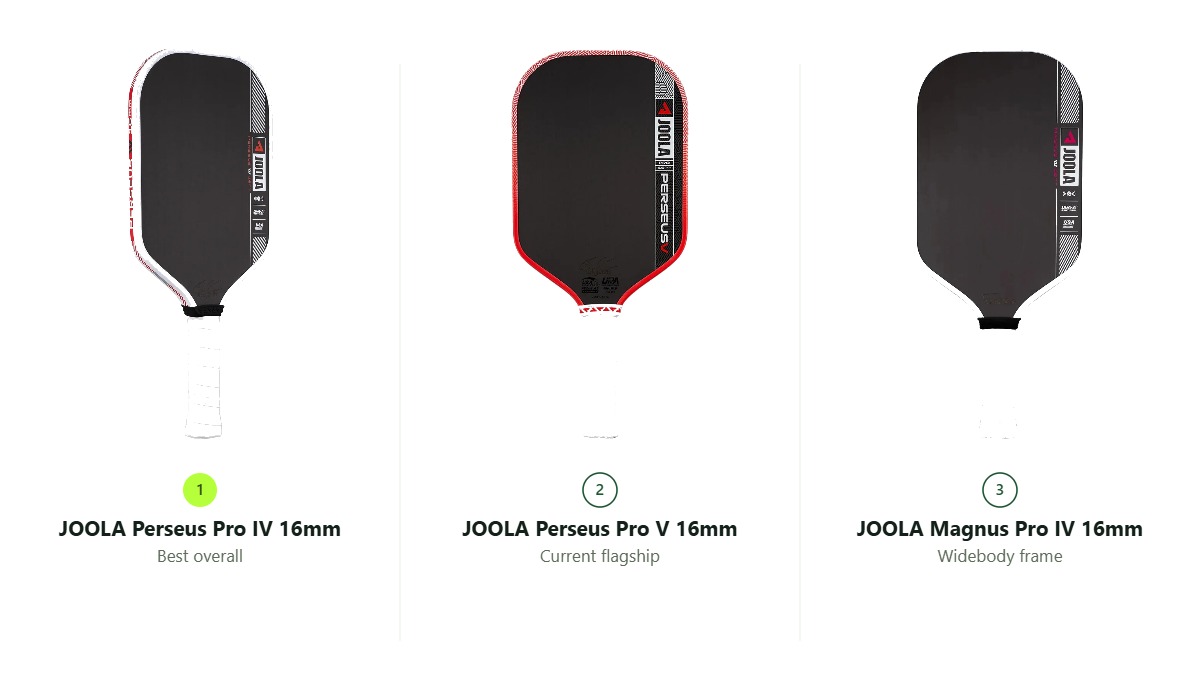
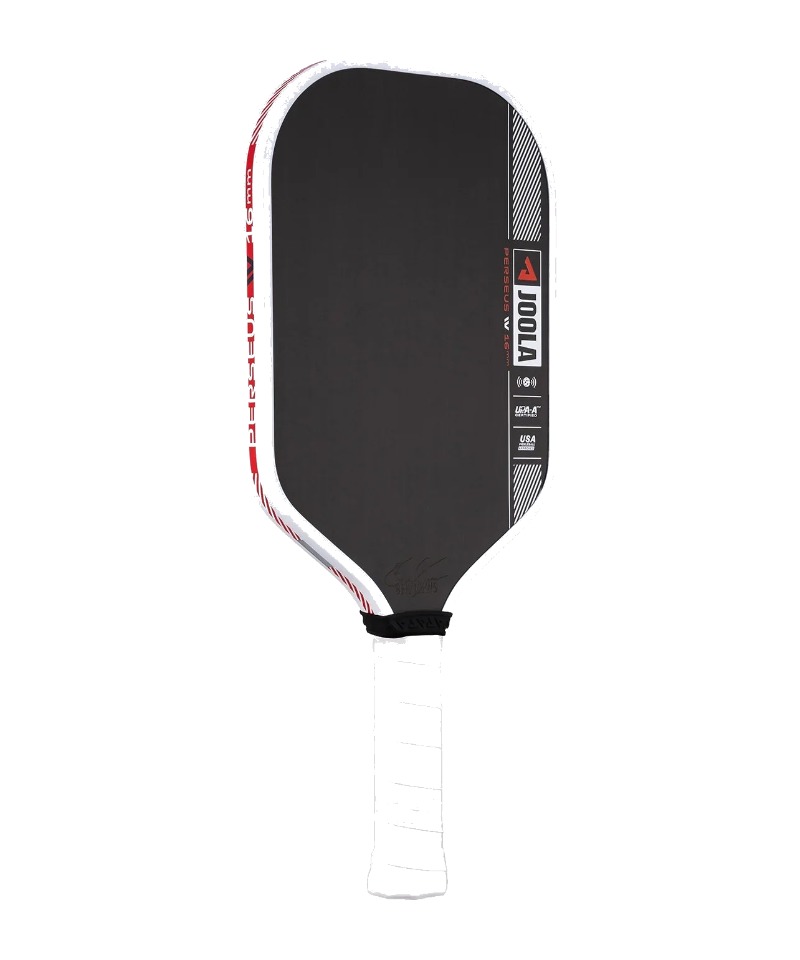
JOOLA’s 2026 catalog centers on the Perseus family. The Perseus Pro V 16mm is the current flagship as of March 2026, sitting above the Perseus Pro IV 16mm, which JOOLA officially calls superseded but which reviewers still recommend buying instead. Both carry USAP and UPA-A approval.
Discontinued or replaced models
The Pro IV isn’t discontinued in the sense of disappearing from shelves — it’s still sold, often at a lower street price than the Pro V — but JOOLA’s own positioning treats it as the previous generation. Owner reviews treat it as the better buy anyway. That’s an unusual dynamic worth flagging before you spend $300 on the newest badge.
At-a-Glance Awards
Best Overall JOOLA Paddle
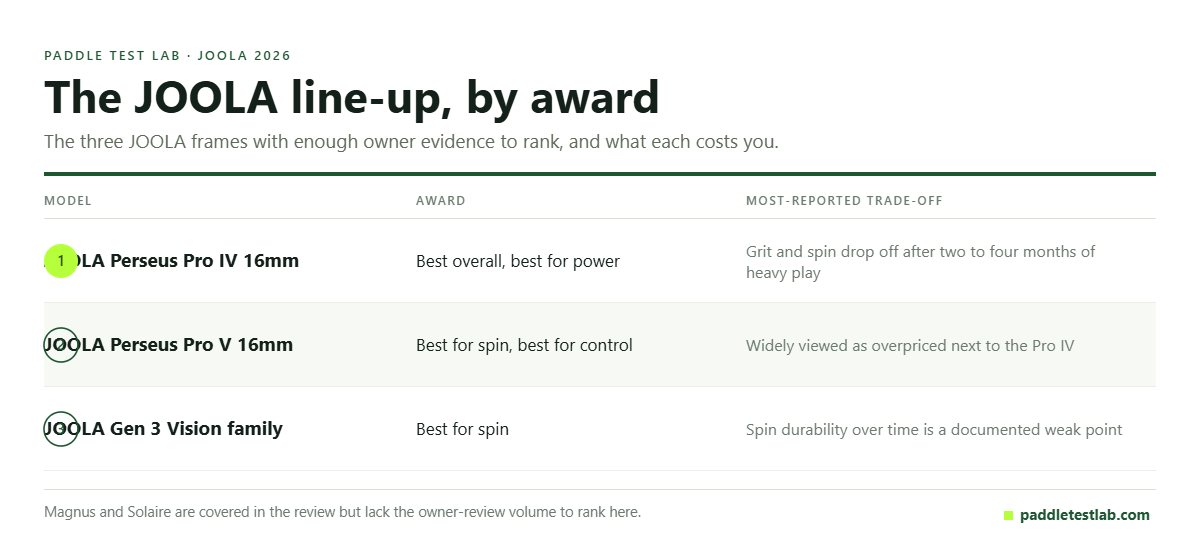
JOOLA Perseus Pro IV 16mm — not the newest, but the one owner sentiment keeps pointing to.
Best for Spin
JOOLA Perseus Pro V / Gen 3 Vision family — textured carbon face, though spin durability over time is a documented weak point across the JOOLA line.
Best Budget JOOLA Paddle
JOOLA doesn’t have a dedicated sub-$100 hero model in the data we reviewed comparable to rivals like Vatic Pro or Ronbus. We flag this gap rather than force a pick — see the Solaire note below for what JOOLA offers closer to entry pricing.
Best for Power Players
JOOLA Perseus Pro IV 16mm — owners describe easy power and a forgiving, large sweet spot.
Best for Control/Touch
JOOLA Perseus Pro V 16mm — refined touch feel per current owner reports, though it comes at a real price premium over the IV.
JOOLA Manufacturer Claims vs Owner Evidence
| JOOLA Claim | Owner/Independent Finding |
|---|---|
| Textured Charged Carbon face delivers elite, lasting spin | Owner reviews on the Pro IV report grit and spin dropping off after 2-4 months of heavy play — a pattern, not an isolated complaint |
| Pro V is a meaningful upgrade over Pro IV | Reviewers at pickleballstudio.com and elsewhere say the Pro V is widely viewed as overpriced, with many recommending the Pro IV instead |
| Durable, tournament-ready construction | JOOLA cores have a documented history of core-crush issues across past generations; the Pro V and Pro IV use a non-full-foam core, unlike some full-foam rivals |
Spin and texture claims vs review consensus
JOOLA markets its Charged Carbon texture as a spin advantage. Owner reviews back that up for the first couple months. After that, the consensus shifts toward fading grit — a complaint pattern echoed almost word-for-word across different retailers’ review sections, which makes it more credible than a single unhappy buyer.
Durability and delamination claims vs reported issues
We didn’t find widespread delamination complaints specific to the current Perseus generation in the data reviewed, but JOOLA’s core-crush history on earlier models is well documented enough that buyers should treat any
Reference: USA Pickleball — official rules, equipment standards, and the approved-paddle list.
Check our joola pickleball paddle scorecard at the end for a side-by-side verdict. Whether you need the joola pickleball paddle or a competing option, compare every spec before you commit.
JOOLA Model Comparison: Perseus, Magnus and Agassi
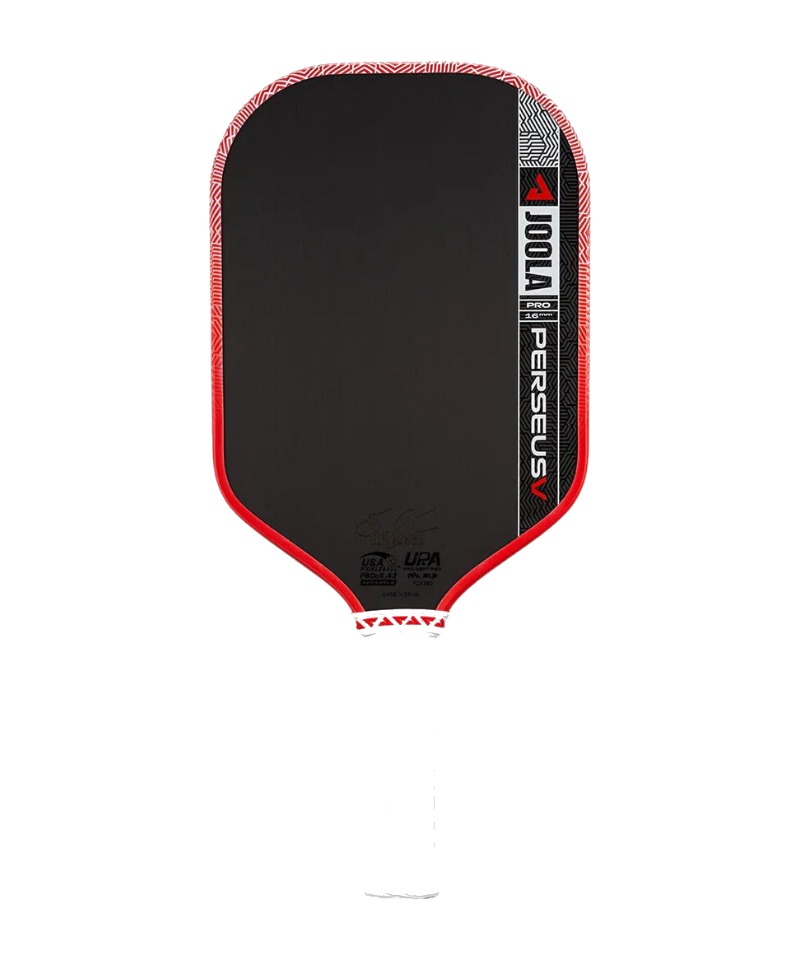
JOOLA’s lineup is confusing on purpose — the same frame often appears under a different signature name, in a different core thickness, across two or three generations. Knowing which axis actually changes the feel saves a lot of money.
JOOLA Perseus vs Magnus: which shape actually suits you
The Perseus and the Magnus are the two frames most people cross-shop, and the difference is shape rather than quality. The Perseus is elongated — a longer face, a narrower body, more reach and more leverage on drives, with the sweet spot pushed further from your hand. The Magnus is a widebody, trading that reach for a broader face and a more forgiving sweet spot.
The practical rule: if you play singles, drive hard, and make clean contact, the elongated Perseus rewards you. If you play doubles, live at the kitchen line, and mishit more than you would like to admit, the Magnus is the more forgiving frame and you will enjoy it more. Neither is the “better” paddle — they are different tools, and buying the wrong one is the single most common JOOLA regret in owner reviews. Our guide to elongated versus standard paddle shapes covers the trade-off in full, and the elongated paddle roundup shows how the Perseus compares to rivals in its shape class.
JOOLA paddle delamination problems: what owners actually report
JOOLA has had the most publicly documented delamination story in the sport. Thermoformed paddles — a construction JOOLA helped popularise — bond a face to a foam-filled perimeter under heat and pressure, and when that bond fails the face separates from the core. The paddle gets livelier rather than deader, which is precisely why it becomes a compliance problem: a delaminated paddle can exceed the ball-speed limits it originally passed.
Two things are worth separating. First, delamination is a thermoformed-construction issue across the category, not a JOOLA-only defect — several brands have had models decertified. Second, JOOLA’s scale means its cases get reported far more often, which makes the brand look worse than the failure rate alone would suggest.
What owner reports consistently describe: a change in sound (a hollow, rattling note), a sudden increase in pop, and visible lifting at the edge. If you own one, our guide to spotting paddle delamination covers the knuckle-tap test and what to check at the edge guard. A delaminated paddle is not merely worn — it is illegal for sanctioned play, which the USA Pickleball approval rules explain.
JOOLA Warranty and Support at a Glance
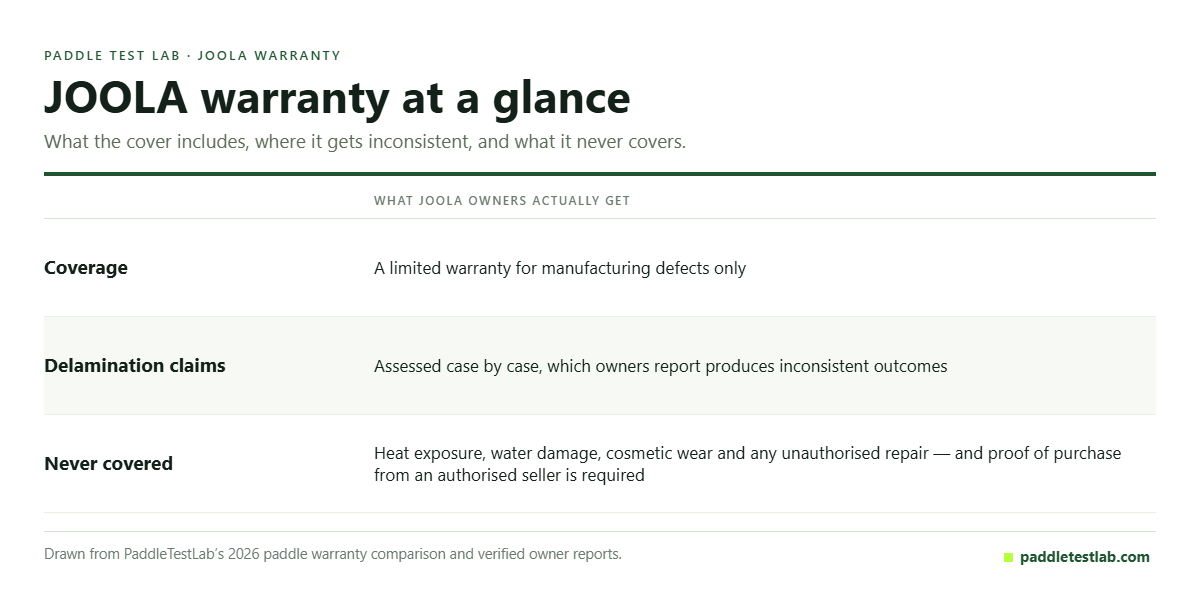
Warranty terms vary more between brands than the paddles themselves do, and JOOLA’s are mid-pack rather than best-in-class.
| What you need to know | Detail |
|---|---|
| Standard coverage | Manufacturing defects, from the original purchase date, for the original owner |
| What is excluded | Normal surface wear, grit loss, edge guard scuffs, and damage from ball-bashing or dropping |
| Is delamination covered? | Treated case by case. Reported outcomes vary, which is the most common owner complaint |
| How to file a JOOLA paddle warranty claim | Through JOOLA’s own support channel with proof of purchase and clear photos of the fault — retailer returns are usually faster inside the return window |
| Transferable? | No — second-hand buyers are not covered |
Terms change without announcement, so confirm on JOOLA’s own site before buying. Our warranty comparison across brands shows where JOOLA sits against Selkirk, Engage and the rest — and the gap is wider than most buyers expect.
Frequently Asked Questions
Is JOOLA a good pickleball paddle brand?
Yes, with a caveat. JOOLA builds genuinely competitive paddles, has the widest professional presence in the sport, and its premium frames sit at the top of most independent performance tables. The caveat is model churn: JOOLA revises and renames frames faster than almost anyone, older generations lose approval, and resale value drops quickly. Buy a current model rather than a discounted previous generation, and check it is on the approved list first. For how JOOLA compares against the field, see our best pickleball paddles roundup.
Are JOOLA paddles USAPA approved?
Current models generally are, but “JOOLA makes approved paddles” and “this specific JOOLA is approved” are different statements. Individual models have been decertified after launch, usually over surface roughness or delamination. Always check the exact model and generation against the current list rather than trusting the brand name or the product page — our explainer on how USA Pickleball approval works covers how to verify a specific paddle and why models get removed.
How do you make a JOOLA paddle warranty claim?
Contact JOOLA support directly with your proof of purchase, the model and generation, and clear photographs showing the fault. If you are still inside the retailer’s return window, going through the retailer is almost always faster than the manufacturer. Document the problem as soon as you notice it — claims filed months later, after continued play, are the ones most often refused as wear rather than defect.
Which JOOLA paddle should a beginner buy?
Not the Perseus. JOOLA’s flagship frames are built for players with grooved technique, and their higher swing weights punish the off-centre contact beginners make constantly. A 16mm widebody from the more affordable end of the range is the sensible entry point. Our beginner paddle guide covers what to prioritise on a first paddle, and choosing paddle weight explains why the pro-spec option is usually the wrong one.

Isacc Shah
Isacc Shah writes PaddleTestLab. He does not test paddles in a lab and says so plainly — there is no rig, no radar gun, no staff hitting balls. Instead he aggregates independent bench measurements, manufacturer specifications, USA Pickleball's approval database and hundreds of verified owner reviews per product, then reports where those sources disagree. Every score on the site carries its evidence count. Where a specification is not published, the site writes UNKNOWN rather than estimating it, and the criticism is printed next to the praise.