
The best elongated pickleball paddles for 2026 balance reach and spin against a smaller sweet spot and, in some cases, a heavier swingweight that shows up in owner complaints months after purchase. We didn’t hit a single ball with any of these. Instead, we pulled verified owner reviews, USA Pickleball approval records, and published spec sheets, then cross-checked what manufacturers claim against what buyers actually report once the paddle has a few weeks of court time on it.
Check the USA Pickleball approved equipment list.
Compare how the best elongated pickleball paddles rank by price, weight and verified owner ratings before you decide.
For more detail on how the best elongated pickleball paddles compare, scroll to the scorecard at the end of this guide.
How We Evaluate Elongated Paddles
We don’t own a fleet of paddles. We aggregate what people who bought them say, then layer that against objective, checkable facts: is the paddle on the current USA Pickleball approved list, what does the manufacturer publish for weight and core thickness, and has anyone with a public track record independently measured spin or surface roughness independently.
Our data sources: owner reviews, USAP list, published specs
Every model below is checked against the USA Pickleball approved paddle list, plus manufacturer spec pages and retailer review sections where verified-purchase badges are visible. Where a spec is genuinely unpublished, we say UNKNOWN rather than guess.
Why we don’t claim to have hit with these paddles
A single reviewer swinging a paddle for an afternoon tells you how one person’s arm and one day’s weather felt. It doesn’t tell you what happens to the grit after eight weeks of aggressive topspin, or whether the edge guard loosens after a season. Owner reviews at scale catch that. That’s the gap we’re filling, not replacing on-court impressions with more on-court impressions.
Compare how the best elongated pickleball paddles rank by price, weight and verified owner ratings before you decide.
For more detail on how the best elongated pickleball paddles compare, scroll to the scorecard at the end of this guide.
At a Glance: 2026 Award Winners

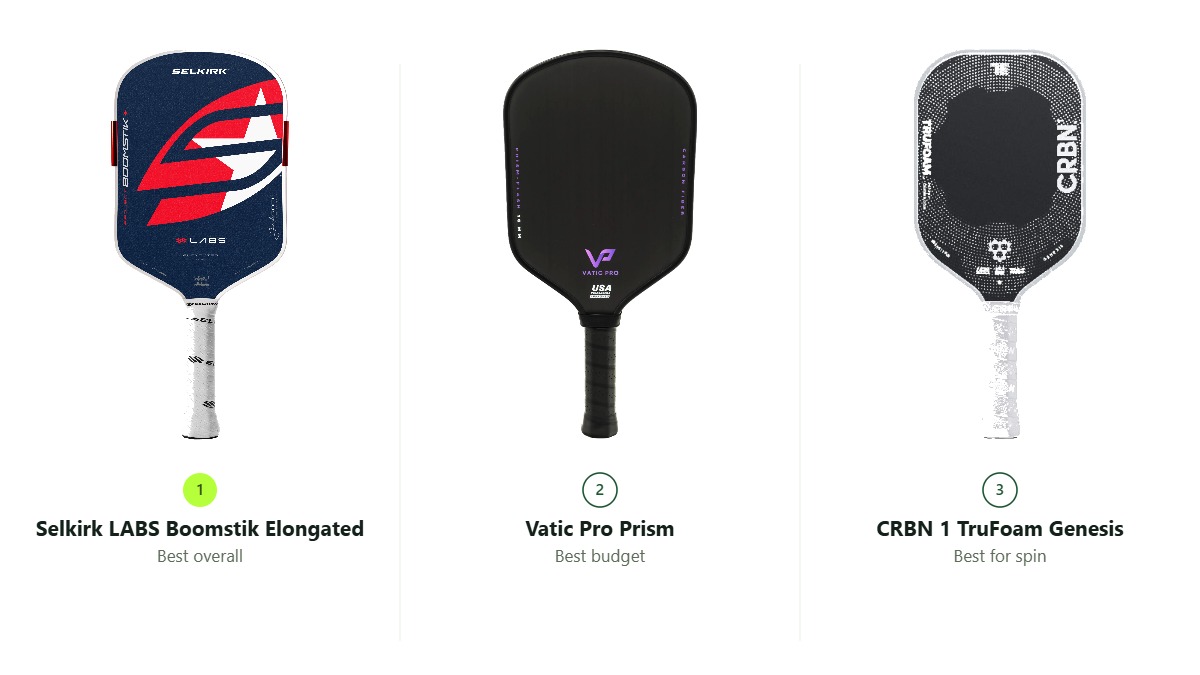
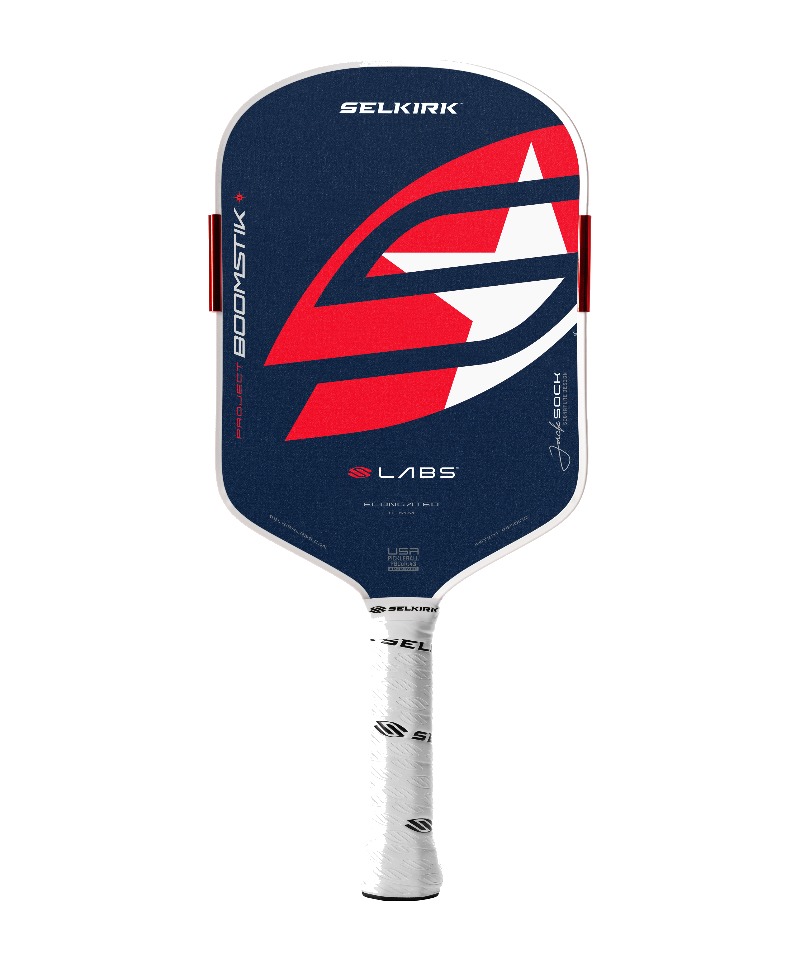
- Best Overall: Selkirk LABS Project Boomstik Elongated 16mm — $332.99 MSRP
- Best Budget: Vatic Pro Prism — $99.99
- Best for Spin: CRBN 1 TruFoam Genesis (TFG1) — $279.99 MSRP
- Best for Beginners: Vatic Pro Saga 16mm — $99.99
- Best Arm-Friendly: Six Zero Coral 16mm — ~$199-200 MSRP
- Best for Wide Feet / Stability: not applicable to paddles — this category belongs to shoes, and we cover it separately.
Elongated Paddle Shape: What Owners Actually Report
Elongated paddles trade width for length. That’s the whole tradeoff, and owner reviews consistently confirm it in practice rather than just in theory.
Reach and sweet spot tradeoffs from real feedback
Across the models we reviewed, owners of elongated shapes report extra reach at the kitchen line and more leverage on serves, but a noticeably smaller forgiving zone off-center. CRBN’s TFG1 owners specifically flag it as having
What Elongated Paddles Do Well

An elongated paddle trades a little sweet spot for reach and leverage. Most run about 16.5 inches long versus 15.5-16 inches standard, giving more spin on serves and more reach from the baseline with a slightly smaller hitting area.
Owners report elongated paddles punish mishits more than widebody shapes, so this shape suits players with solid fundamentals who want more pace and spin.
Weight matters more here because extra length raises swing weight. A 7.9-8.2 ounce elongated paddle with a 16mm core balances reach and forgiveness; lighter feels unstable, heavier strains the wrist.
Raw carbon faces generate the most RPM; fiberglass faces are softer and more forgiving with less spin.
The Elongated Sweet Spot Problem Nobody Warns You About

This is the single most common regret with elongated paddles, and it is geometry rather than quality.
USA Pickleball caps combined length and width at 24 inches. An elongated paddle spends more of that budget on length — typically 16.5″ by around 7.35″ — which means it is necessarily narrower than a standard frame. The face area is roughly the same; it is just distributed differently.
Two consequences follow. First, the sweet spot sits further from your hand, which gives you more leverage on drives and more reach at the net, but also means a mishit produces more twist because the contact point is further from the axis you are gripping. Second, the usable width is smaller, so shots that would have caught the edge of a widebody now miss entirely.
The practical test: if your losses come from off-centre contact rather than lack of reach, an elongated paddle will make things worse rather than better. Our comparison of elongated versus standard shapes covers the trade-off in full, and the widebody roundup covers the other side.
Best elongated paddle for singles
Singles is where elongated frames genuinely earn their place. The court is the same size but you are covering all of it alone, so reach converts directly into shots you would otherwise not have reached. The longer face also gives more leverage on drives from the baseline, which is where singles points are won.
What to look for: a 16mm core to claw back some forgiveness, a handle of 5.5″ or longer if you use a two-handed backhand, and a swing weight you can still move at the net — elongated frames concentrate mass further from the hand, so they feel heavier than their static weight suggests. Our guide to swing weight explains why that number matters more than the one on the box, and the advanced player guide covers what else changes at competitive level.
Paddle Length Rules: What 16.5 Inches Actually Means
| Rule | Limit | What it means in practice |
|---|---|---|
| Combined length + width | 24 inches maximum | Length and width trade against each other — you cannot have both |
| Maximum length | 17 inches including edge guard and butt cap | 16.5″ frames sit just under the ceiling |
| Typical elongated | 16.5″ × 7.35″ | Reach and leverage, narrower face |
| Typical standard/widebody | 16″ × 7.85″ | Wider hitting area, less reach |
| Thickness | No stated limit | Which is why cores range from 11mm to 20mm |
Anything exceeding these dimensions is not legal for sanctioned play regardless of what the listing says — our explainer on how USA Pickleball approval works covers how to verify a specific model and why paddles get removed from the list.
FAQ
What is an elongated pickleball paddle?
A paddle that trades width for length — usually around 16.5″ long and 7.35″ wide, against roughly 16″ by 7.85″ for a standard frame. Because the governing body caps combined length and width at 24 inches, one dimension can only grow if the other shrinks.
What you gain is reach and leverage. What you give up is a wider hitting surface and some forgiveness on off-centre contact. It suits singles players, tennis converts with grooved strokes, and anyone using a two-handed backhand. It does not suit players still developing consistent contact. Our full comparison of elongated versus standard paddles covers which you should be buying.
Are elongated paddles good for tennis players?
Usually yes, and it is the most common recommendation for converts. Tennis players arrive with a longer swing path, a grooved contact point, and often a two-handed backhand — all of which the elongated shape rewards. The extra reach also feels more natural to someone used to a racquet.
Two cautions. Tennis players tend to over-swing early on, and the extra leverage of an elongated frame amplifies that into balls sailing long. And handle length matters more than shape if you play two-handed — a 16.5″ paddle with a short handle solves nothing. Our guide to paddles with longer handles covers that, and grip sizing covers the spec most converts get wrong.
Are elongated paddles better for spin?
Yes. The longer face gives more surface to brush the ball, and textured raw-carbon faces produce the highest spin measurements.
Are they good for beginners?
Not ideal. The smaller sweet spot and higher swing weight make them less forgiving – widebody remains the beginner pick.
Check our best elongated pickleball paddles scorecard at the end for a side-by-side verdict.
Check our best elongated pickleball paddles scorecard at the end for a side-by-side verdict.
The best elongated pickleball paddles rankings above come from verified owner data, not the manufacturers’ marketing lines.

Isacc Shah
Isacc Shah writes PaddleTestLab. He does not test paddles in a lab and says so plainly — there is no rig, no radar gun, no staff hitting balls. Instead he aggregates independent bench measurements, manufacturer specifications, USA Pickleball's approval database and hundreds of verified owner reviews per product, then reports where those sources disagree. Every score on the site carries its evidence count. Where a specification is not published, the site writes UNKNOWN rather than estimating it, and the criticism is printed next to the praise.