

Getting pickleball paddle core types explained without marketing spin is harder than it should be, because core names are where brands spend their invented-vocabulary budget. Strip the trademarks away and the market runs on a handful of real structures. Here’s what each one is, what brands claim for it, and what owners actually report.

Pickleball Paddle Core Types Explained: The Main Structures
Polymer honeycomb — the default
A plastic honeycomb lattice — hexagonal cells, like a beehive in cross-section — bonded between two face sheets. It’s light, absorbs shock well, and is quiet compared to older materials. The overwhelming majority of paddles owners buy today are polymer honeycomb, and its feel is what most players mean by ‘normal’. Owner complaints cluster around aging: cells can crush after heavy use, creating dead spots, and the face-to-core bond is where delamination starts. Thickness matters as much as material here — see our 14mm vs 16mm guide.
Full foam — the newer wave
Instead of a lattice, the core is a solid slab of engineered foam. The pitch: no cells to crush, so no crush-related dead spots, plus a consistent response across the whole face. Owner reports on recent foam-core paddles largely back the no-crush claim — crush complaints are notably absent from foam-core review threads — and comfort scores run high. The honest caveats: the category is young, so multi-year durability is unproven, and some owners describe the feel as different enough from honeycomb to need an adjustment period.
Foam-injected and hybrid designs
Between the two sit designs that keep a honeycomb center but add foam — typically injected around the perimeter. The claim is edge stability and a bigger effective sweet spot. Owner sentiment is broadly positive on perimeter-foam paddles, though it’s hard to separate the foam’s contribution from everything else in a redesign. Treat ‘foam-injected’ as a plausible plus, not a guarantee.
Older cores you’ll still see
Aluminum honeycomb (light, but dents and sounds metallic) and Nomex — a resin-dipped cardboard-like honeycomb (durable, loud, harsh) — built the sport’s early paddles. They survive mostly in budget and legacy models. Owner reviews of both read the same way: fine for casual play, clearly outclassed on comfort and quiet by modern polymer and foam.
Reading Through the Brand Names

Brands rarely say ‘polymer honeycomb’ when a trademarked name is available. The practical decode: look for the words ‘polypropylene’ or ‘polymer’ (honeycomb), ‘foam core’ or ‘foam-injected’ (self-explanatory), and check the spec sheet rather than the headline. If a core name appears nowhere outside one brand’s marketing, it’s a name, not a technology.
Which Core Should You Buy?

For most players: polymer honeycomb remains the safe, proven default with the widest choice of shapes, weights, and prices. Consider full foam if consistency and arm comfort top your list and you’re comfortable being relatively early to a category. Consider perimeter-foam hybrids if you want honeycomb familiarity with extra stability. Whatever the core, storage habits matter as much as structure — heat is the documented enemy of every core type, so keep any paddle out of hot cars.
Polypropylene vs Nomex: The Two Original Core Materials
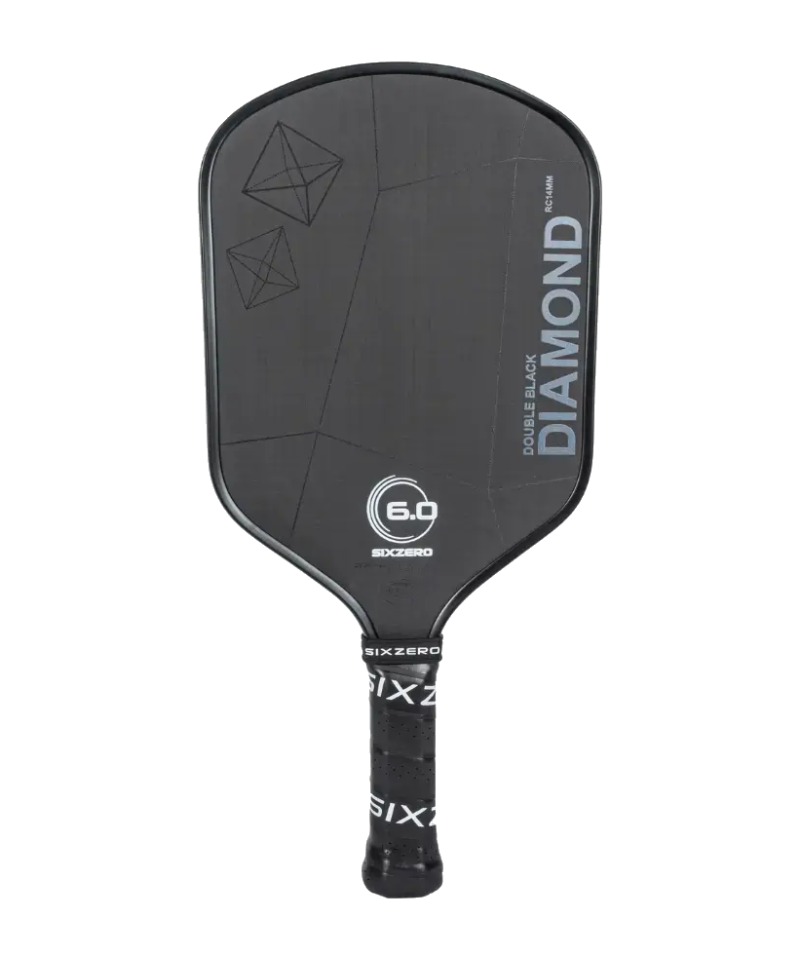
Before foam and thermoforming, paddle cores came in two flavours, and the difference explains a lot about how the sport’s equipment evolved.
Polypropylene is a soft plastic honeycomb and is now overwhelmingly dominant. It absorbs energy on impact, which produces the quieter, softer, more controlled feel modern players expect. It is also cheap to manufacture consistently.
Nomex is a resin-dipped paper honeycomb — far harder, far louder, and much livelier off the face. It was the original performance core and still appears occasionally on power-oriented paddles. Nomex paddles are noticeably harsher on the arm and are a significant part of why pickleball earned its noise reputation.
A third option, aluminium, sits between them: light and control-oriented, but prone to denting and largely obsolete.
For practical purposes today, assume polypropylene unless a listing says otherwise. Where the real differentiation now happens is thickness and what surrounds the honeycomb — our comparison of 14mm versus 16mm cores covers the thickness question that replaced the material one.
Foam-injected paddles explained
Foam injection is the most consequential change in paddle construction of the last few years, and it addresses a specific weakness.
A honeycomb core is hollow at the edges, and that hollow perimeter is where paddles feel dead on off-centre contact and where the frame rings on impact. Injecting foam into the perimeter walls does three things: it stabilises the edge so mishits lose less pace, it damps the hollow ringing that makes paddles loud, and it adds mass at the rim which raises twist weight and improves forgiveness.
The trade-offs are weight and cost. Foam adds grams, and where those grams sit changes the swing weight — which is why some foam-perimeter paddles feel heavier in play than their static weight suggests. Because the damping also lowers the pitch and volume of the impact, foam-filled frames come up repeatedly in quiet paddle discussions, though foam changes the ring rather than the initial crack of ball on face.
Honeycomb Cell Size and What It Changes

| Cell size | Effect | Trade-off |
|---|---|---|
| Small cells (dense) | Firmer, more responsive, more consistent across the face | Less absorption, harsher feel, louder |
| Medium cells | The common compromise on most modern paddles | Master of nothing in particular |
| Large cells (open) | Softer, more dwell, quieter, more forgiving | Less pop, can feel mushy on drives |
Cell size is rarely published, which is why two paddles with identical stated core thickness can play noticeably differently. When a brand does mention it — usually as a number in millimetres — a larger figure means a more open, softer core. It is also part of why bigger cells sound hollower, which matters if you play somewhere with noise restrictions.
Frequently Asked Questions
What is a thermoformed pickleball paddle?
A paddle built as a single sealed unit under heat and pressure, rather than assembled from a core with faces glued on and an edge guard wrapped around. The face wraps the perimeter and bonds to foam-filled walls, producing a stiffer, more connected frame with a larger effective sweet spot.
Thermoforming is why modern paddles feel more powerful and more stable than paddles from a few years ago. It also introduced the sport’s biggest durability problem: the face-to-core bond can fail, and when it does the paddle becomes livelier rather than deader — which is why a delaminated paddle can exceed the limits it originally passed. Our guide to spotting delamination covers what to listen and look for.
Unibody vs thermoformed: what is the difference?
Both aim at durability, from opposite directions.
Thermoformed paddles still have distinct components — face, core, foam walls — fused under heat. They deliver stiffness and a large sweet spot, but they retain a bond that can fail.
Unibody construction goes further: the frame is a single continuous carbon structure with a dense solid core, and there is no separate edge guard. There is no face-to-core bond, so there is nothing to delaminate and no edge guard to peel. The cost is feel — a solid core does not trampoline the way a honeycomb does, so the response is firm and muted. Players describe it as precise, or as dead, and both are descriptions of the same paddle.
A third approach, full-foam cores, removes the honeycomb entirely and gets the same durability benefit with a softer feel. Our CRBN review covers a full-foam implementation and our Gearbox review covers the unibody approach.
What core do most pickleball paddles use?
Polymer (polypropylene) honeycomb, by a wide margin. It’s the balance of weight, feel, quiet, and cost that the modern paddle market standardized on.
Are foam core paddles better than honeycomb?
Different, with real upsides. Owner reports support the no-core-crush claim and rate comfort highly, but the category is young enough that long-term durability isn’t proven the way honeycomb’s failure modes are documented. ‘Better’ depends on how much you value consistency versus track record.
What causes dead spots in a paddle core?
In honeycomb cores, crushed cells from repeated impact create areas that return less energy. In any core, face-to-core bond failure — delamination — produces the same symptom. A tap test that sounds different across the face is the classic owner check.
Do core types affect how loud a paddle is?
Yes — owners consistently describe Nomex as the loudest, aluminum as metallic, and polymer and foam as the quiet options. If you play somewhere with noise complaints, core choice is a real factor.

Isacc Shah
Isacc Shah writes PaddleTestLab. He does not test paddles in a lab and says so plainly — there is no rig, no radar gun, no staff hitting balls. Instead he aggregates independent bench measurements, manufacturer specifications, USA Pickleball's approval database and hundreds of verified owner reviews per product, then reports where those sources disagree. Every score on the site carries its evidence count. Where a specification is not published, the site writes UNKNOWN rather than estimating it, and the criticism is printed next to the praise.