
If you’re shopping for the best pickleball accessories for beginners, the noise online is mostly marketing copy dressed up as advice. We didn’t hit a court with a stopwatch or a scale to write this. Instead, we pulled verified owner reviews, manufacturer spec sheets, and the current USA Pickleball approved paddle list, then looked for where owner experience and marketing claims line up — and where they don’t.

How We Evaluated These Accessories
A true beginner doesn’t need twelve paddles compared side by side with adjectives. They need to know which specific models real buyers keep, which ones they return, and why.
Our data sources: owner reviews, USA Pickleball list, published specs
Every product below comes from a database of published price, weight range, core material, and face material, cross-referenced against verified purchase reviews on major retail sites. We checked each paddle’s status on the official USA Pickleball approved list before including it — approval status changes, and a paddle that was legal last season isn’t automatically legal this one. Where a spec was unpublished, we say so instead of guessing.
Why we don’t claim hands-on testing
We don’t put a paddle in anyone’s hand and call it a review. We aggregate verified owner reviews at scale and cross-check them against independent published data and manufacturer spec sheets. That’s a different kind of evidence than one person’s afternoon on a single paddle, and honestly it’s more useful for a beginner trying to avoid an expensive mistake. See our review process for the full method.
At-a-Glance: Award Winners for Beginners
| Award | Model | Price | Why |
|---|---|---|---|
| Best Overall | Vatic Pro Prism | $99.99 | Benchmark budget carbon paddle, plush and forgiving |
| Best Budget | Ronbus Quanta | $119.99 MSRP ($99 w/ codes) | Foam core with no core-crush history, ultralight |
| Best for Comfort/Arm-Friendly | Six Zero Coral 16mm | ~$199-200 MSRP | Dense full-foam core, top comfort scores in owner reviews |
| Best for Spin | Six Zero Double Black Diamond Control | $180.00 | Strong topspin RPM reports, large sweet spot |
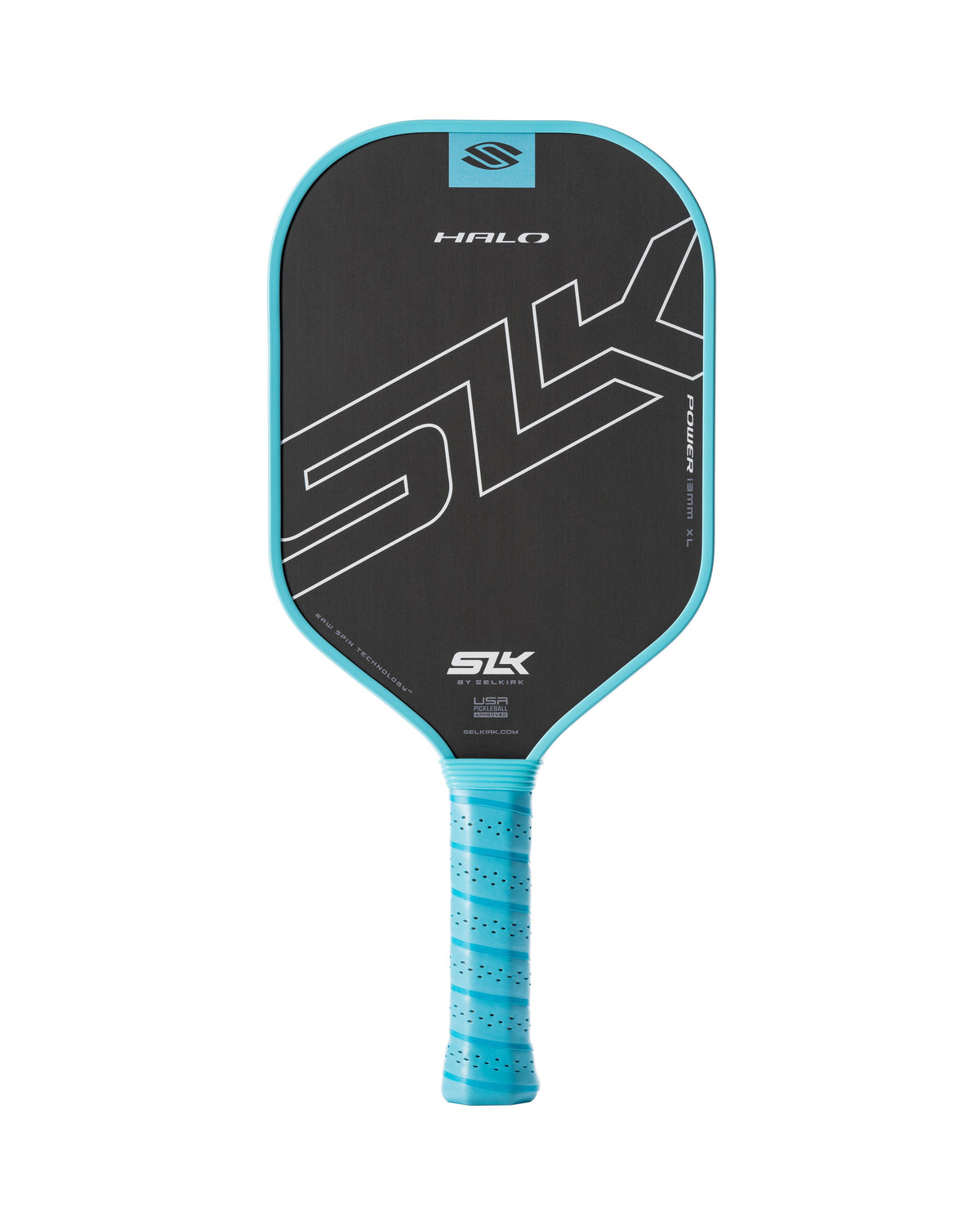
| Best Beginner-Specific Design | Selkirk SLK Halo XL Control | $99.99 street | Entry-priced T700 carbon aimed at new-to-intermediate players |
Detailed Picks
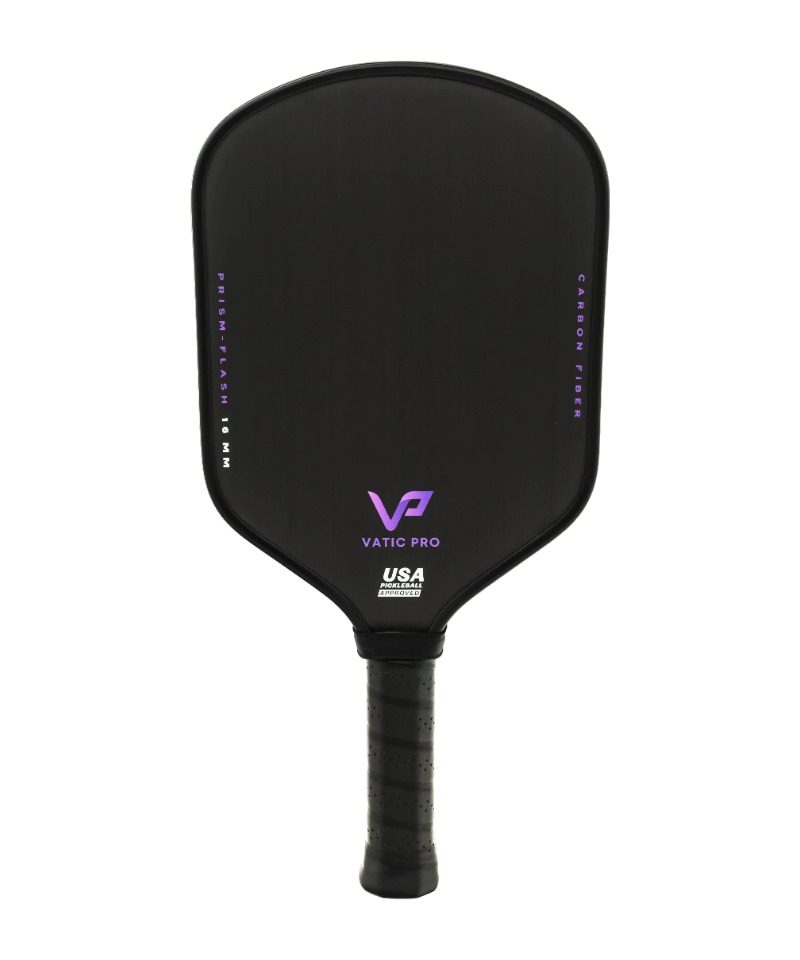
Vatic Pro Prism — Best Overall
| Price | $99.99 |
| Weight | 7.7-8.2 oz depending on model |
| Core | 16mm (14mm also available) |
| Face | Raw Toray T700 carbon |
| Shape | Hybrid/elongated/widebody options |
| USAP | Yes |
Owners consistently call the Prism the benchmark budget carbon paddle. It’s plush, forgiving, and the grip inserts are marketed to cut shock — a real plus for a new player still learning to control contact. Across owner reviews, the recurring complaint is grit wear: one tester reported roughly 50% spin loss after two months of play. It also runs slightly head-heavy. For a first serious paddle, that trade-off looks reasonable.
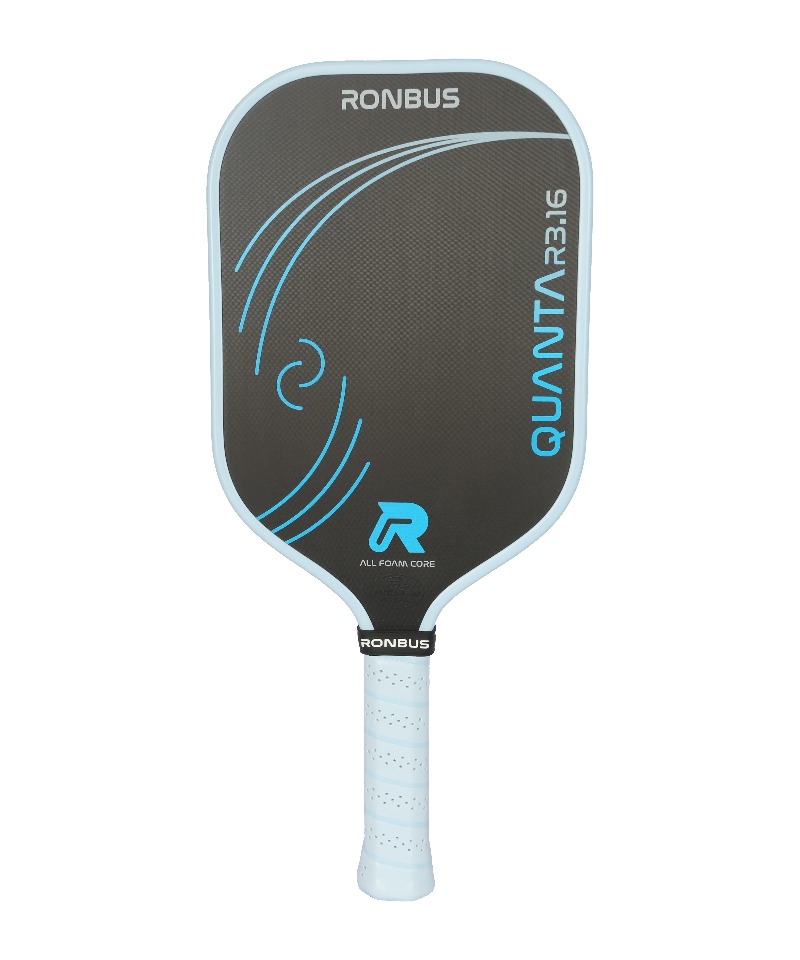
Ronbus Quanta — Best Budget
| Price | $119.99 MSRP; $99 with codes |
| Weight | 7.68-7.80 oz |
| Core | 16mm Gen-4 EPP foam |
| Face | Raw carbon |
| Shape | Elongated/widebody/hybrid |
| USAP | Yes (USAP, PBCoR .43) |
Owners praise the Quanta’s foam core for avoiding the core-crush problems seen in older paddle generations, and it’s genuinely light and maneuverable. The catch: stock, the sweet spot runs small, and reviewers note it needs 7.5-15g of added weight at the 3 and 9 o’clock positions to perform well. That’s an extra step a true beginner may not want to take on day one.
Six Zero Coral 16mm — Best for Comfort/Arm-Friendly
| Price | ~$199-200 MSRP |
| Weight | 7.9-8.2 oz, average 8.05 oz |
| Core | 16mm dense full-foam |
| Face | Diamond Tough raw carbon |
| Shape | Elongated/hybrid/widebody |
| USAP | Yes |
Owners rate the Coral highly for minimizing vibration, which matters for anyone worried about tennis elbow. The full-foam core is dense but soft in feel, and comfort scores in owner reviews are consistently strong. The honest caveat: there’s relatively little owner feedback yet compared to older paddles, so long-term durability is unproven. The grip is also thick, which reviewers say fits poorly for small hands.
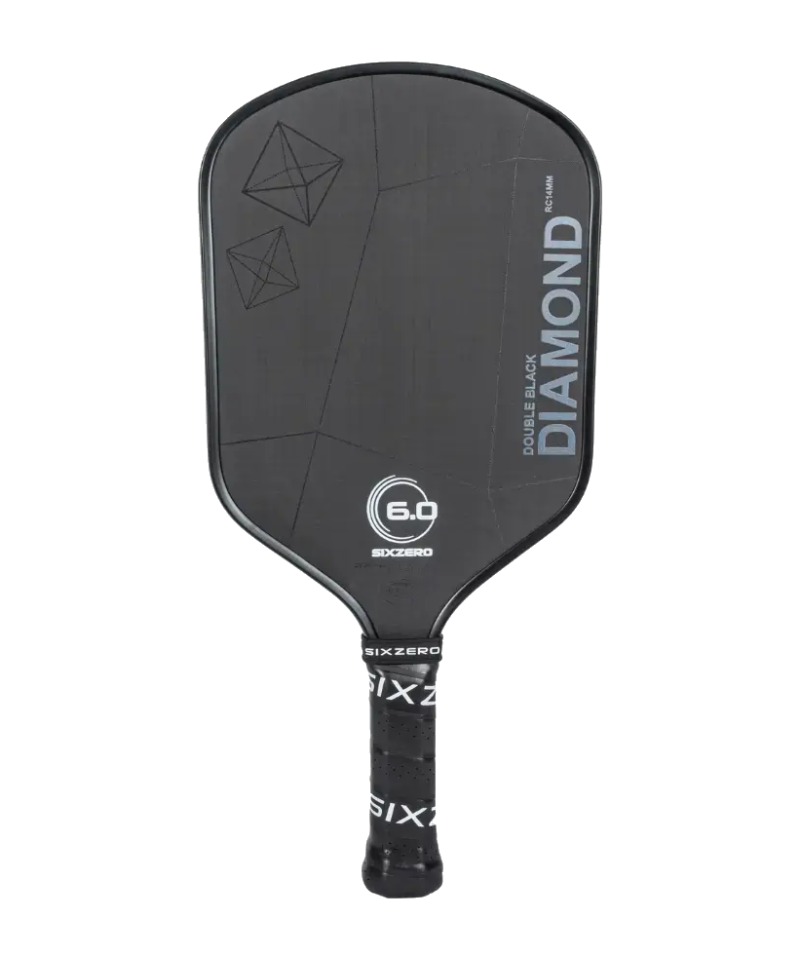
Six Zero Double Black Diamond Control — Best for Spin
| Price | $180.00 |
| Weight | 8.1 oz average |
| Core | 16mm (14mm also available) |
| Face | Toray 700K raw carbon |
| Shape | Hybrid |
| USAP | Unknown — not confirmed against the current list |
This paddle earns a 4.6/5 average across 24 verified reviews on Pickleball Warehouse, with owners citing a large sweet spot and strong topspin RPM. But the same review pool flags pop fading and grit wearing down within 6-8 weeks, plus a thin handle that some find uncomfortable over long sessions. It also scuffs balls more than reviewers expected.
Selkirk SLK Halo XL Control — Best Beginner-Specific Design
| Price | $99.99 street ($139.99 MSRP) |
| Weight | 7.6-8.2 oz, average 7.9 oz |
| Core | 16mm |
| Face | T700 raw carbon (Rev-Core) |
| Shape | Elongated |
| USAP | Unknown — not confirmed against the current list |
Selkirk built this as a beginner-to-intermediate line, and reviewers appreciate getting T700 carbon at an entry price with strong control characteristics. The trade-off shows up in the numbers: spin sits around 1400-1450 RPM, low for a carbon-faced paddle, and it doesn’t generate enough power for players who like to attack. The grip also runs thick, which reviewers say fits many women’s hands poorly. Check current USAP status before league play — see our USA Pickleball approved paddles guide for how to verify.
Manufacturer Claims vs. Owner Evidence

| Claim | Owner/Independent Evidence |
|---|---|
| Vatic Pro Prism grip inserts reduce shock | Owners broadly agree the feel is plush; no independent shock data exists to confirm the specific claim |
| Ronbus Quanta foam core performs like premium paddles | Owners say the sweet spot needs added weight to reach that level stock |
| Six Zero Coral minimizes vibration for arm comfort | Comfort scores in owner reviews support this; long-term durability data is still thin |
| Six Zero Double Black Diamond delivers durable spin | Owner reviews report pop and grit fading within 6-8 weeks — durability claim doesn’t fully hold |
| Selkirk SLK Halo XL Control offers strong spin | Measured RPM (1400-1450) runs low for a carbon face; owners note power limits |
Where marketing claims hold up
Foam-core designs across the Ronbus Quanta and CRBN-style builds genuinely seem to sidestep the older core-crush problem that plagued earlier polymer-core paddles. Owner reviews back that up consistently, independent of brand.
Where owner reviews contradict or complicate marketing
Spin and power claims are the weakest link. Grit-based spin systems on budget paddles — the Prism, the Double Black Diamond — show real degradation within weeks to months in owner reports, even when marketing implies a longer-lasting surface. Treat any ‘maximum spin’ claim as a best-case, day-one number, not a guarantee for the life of the paddle.
Who Should Buy What
By budget
Under $100, the Vatic Pro Prism and Ronbus Quanta lead owner sentiment. Between $150-200, the Six Zero Coral and Double Black Diamond bring more refined cores and shapes, at the cost of less established durability track records.
By play style (arm issues, spin focus, width of paddle face)
Players managing tennis elbow or general arm sensitivity should look toward the Six Zero Coral first — its full-foam core and low-vibration reports are the most consistent in this category. Spin-focused beginners should weigh the Double Black Diamond’s RPM praise against its documented grit-wear timeline. If wide-body forgiveness matters most, the Vatic Pro Saga and Prism both offer widebody shape options, though the Saga is explicitly a jack-of-all-trades pick rather than an offense-generating paddle.
Final Verdict
Top recommendation for most beginners
For most people starting out, the Vatic Pro Prism earns Best Overall because owner sentiment is the most consistent of any paddle in this price range — forgiving, plush, and genuinely built around a beginner’s swing. It’s not indestructible, but at $99.99 it’s a reasonable first investment before committing to a $200-plus paddle.
When to consider an alternative pick
If arm comfort is your dominant concern, skip straight to the Six Zero Coral despite the higher price and thinner review history. If you’re spin-obsessed and don’t mind replacing a paddle face sooner, the Double Black Diamond’s RPM reputation may be worth the trade-off. And if you’re not sure a paddle will stick as a hobby yet, the Ronbus Quanta’s lower price point (with a small DIY tuning step) is a sensible hedge.
What Do I Need to Start Playing Pickleball?
Ask five players what do I need to start playing pickleball and you will get five shopping lists, most of them too long. The honest version is short: a paddle, balls that match the court you play on, and shoes with lateral support. Everything else can wait until you know you will keep playing.
The two items beginners most often get wrong are the balls and the shoes. Indoor and outdoor balls are physically different — see our indoor ball guide and outdoor ball guide for which belongs on your court. Running shoes are the more expensive mistake, and we cover why in the FAQ below.
Pickleball Starter Kit Essentials
These are the pickleball starter kit essentials ranked by how soon owners say they needed each one, with realistic 2026 street prices.
| Item | Typical spend | Buy it |
|---|---|---|
| Paddle (USAP approved) | $60–$120 | Day one |
| Balls, sleeve of 3–6 | $10–$20 | Day one |
| Court shoes with lateral support | $70–$140 | Day one if you play weekly |
| Paddle cover | $10–$25 | First month |
| Overgrips, pack of 3 | $8–$15 | First month |
| Bag or sling | $30–$110 | Once you own more than one paddle |
| Portable net | $120–$250 | Only for home-court play |
If you would rather buy it all in one box, our pickleball paddle sets guide covers what sets include and where they cut corners.
Best Pickleball Gifts Under $50
Under fifty dollars you cannot buy a good paddle, so the best pickleball gifts under $50 are the things players run out of rather than the things they research. A three-pack of overgrips, a sleeve of the right balls, a paddle cover and a sling bag all land in that band and all get used.
The one exception worth knowing: budget paddles have improved enough that a sub-$50 paddle is a reasonable gift for someone who has never played and might not continue. See the best pickleball paddles under $50 for what that money actually buys, and what it does not.
For a deeper dive into paddle selection generally, see our how to choose a pickleball paddle guide.
FAQs
What accessories does a true beginner actually need to start?
A USA Pickleball approved paddle, a sleeve of approved balls, comfortable court shoes, and a paddle cover to protect the face from scratches and temperature swings. Everything past that — bags, grips, dampeners — is optional refinement, not a requirement.
What is the best budget-friendly pickleball paddle for someone just starting out?
Based on aggregated owner reviews, the Vatic Pro Prism at $99.99 and the Ronbus Quanta at $119.99 MSRP (often $99 with codes) are the most consistently praised budget options. Both are USA Pickleball approved as of the current list.
Which paddles are better for players with arm or elbow sensitivity?
Owner reviews point to the Six Zero Coral as the strongest arm-friendly option among carbon paddles here, thanks to its dense full-foam core and low-vibration feedback. If you’re specifically managing diagnosed tennis elbow, talk to a physical therapist about grip size and swing mechanics too — paddle choice alone won’t solve everything.
Do beginners need a USA Pickleball approved paddle to play recreationally or in leagues?
For casual backyard play, no rulebook enforces this. For league or tournament play, yes — most organized play requires a paddle currently on the USA Pickleball approved list. Approval status can change, so verify before you buy, especially with newer paddles. See our USA Pickleball approved paddles explained guide for details.
What’s the difference between a wide-body and standard paddle shape for new players?
Widebody and hybrid shapes generally offer a larger hitting surface, which tends to forgive off-center contact better — useful while you’re still developing consistent paddle control. Elongated shapes trade some of that forgiveness for extra reach and leverage, usually favored by more experienced players chasing power.
How do I know if a paddle’s spin or power claims are actually true?
Don’t take the marketing page at face value. Cross-check it against a broad base of verified owner reviews — patterns in real-world complaints, like grit wearing down within weeks, tell you more about long-term performance than a single spin-rate number on a spec sheet.
Do I need special pickleball shoes?
If you play more than once a week, yes — and this is the accessory where skipping costs the most. Running shoes are built for forward motion with a raised heel stack and a soft, unsupported midfoot. Pickleball is played almost entirely sideways, and that combination is how players roll ankles. Court shoes have a flatter profile, a reinforced lateral cage and a non-marking outsole that indoor venues usually require anyway. Our pickleball shoes guide covers which models owners report lasting past the 60-hour mark.
What pickleball court accessories do I need for a home court?
A home setup needs three things beyond the gear you already own: a portable net that meets the 34-inch centre and 36-inch sideline height, court line tape or chalk to mark a 20 × 44 ft court, and outdoor balls, since a driveway or garage floor will destroy indoor ones. Wind screens and portable lighting are common additions but neither is necessary to play. Store paddles indoors rather than in a garage or car — heat is what warps faces, which is what a paddle cover and a thermal-lined bag exist to slow down.
Related guides

Isacc Shah
Isacc Shah writes PaddleTestLab. He does not test paddles in a lab and says so plainly — there is no rig, no radar gun, no staff hitting balls. Instead he aggregates independent bench measurements, manufacturer specifications, USA Pickleball's approval database and hundreds of verified owner reviews per product, then reports where those sources disagree. Every score on the site carries its evidence count. Where a specification is not published, the site writes UNKNOWN rather than estimating it, and the criticism is printed next to the praise.