
Finding the best indoor pickleball balls for your gym or club shouldn’t mean guessing based on packaging claims. Manufacturers all say their balls are “crack-resistant” and deliver “consistent bounce.” Owners who’ve put hundreds of hours on these balls tell a more nuanced story. This guide pulls from verified owner reviews and published USA Pickleball data to sort marketing from reality.
Check the USA Pickleball approved equipment list.
Compare how the best indoor pickleball balls rank by price, weight and verified owner ratings before you decide.
For more detail on how the best indoor pickleball balls compare, scroll to the scorecard at the end of this guide.

How We Evaluated These Indoor Pickleball Balls
We don’t hit balls on a court and time their bounce. We don’t own a lab. What we do is systematically pull verified owner reviews from retailer sites, cross-reference them against USA Pickleball’s published equipment list, and note where owner complaint patterns line up — or clash — with manufacturer claims.
Our research method: owner reviews + published data
For every ball category discussed here, we looked at recurring praise and criticism themes across verified purchaser reviews on major retail platforms, then checked those patterns against USAP’s approved equipment documentation and any published spec sheets from the manufacturers themselves.
Why we don’t claim hands-on testing
Plenty of roundups claim to have “tested” dozens of balls without disclosing how. We’d rather be transparent: this article aggregates what real buyers report after weeks or months of play, not a single afternoon of hitting. That’s a meaningfully different — and arguably more reliable — signal for long-term durability questions like cracking and out-of-round wear.
Compare how the best indoor pickleball balls rank by price, weight and verified owner ratings before you decide.
At a Glance: Best Indoor Pickleball Balls by Award

| Award | Model | Notable For |
|---|---|---|
| Best Overall | Franklin X-40 Indoor | Widely cited as the standard indoor ball owners compare everything else to |
| Best Budget | Onix Fuse Indoor | Lower price point, frequently mentioned in budget buying guides |
| Best for Durability | Franklin X-40 Indoor | Owners report fewer cracking complaints relative to outdoor-style balls used indoors |
| Best for Consistent Bounce | Onix Pure 2 Indoor | Owners note more predictable bounce off gym flooring in recurring feedback |
| Best for Beginners | Onix Fuse Indoor | Softer feel reported by newer players learning control |
Note: our product database for this article centers on paddles, shoes, and bags with verified specs. For indoor balls specifically, we’re relying on widely-documented industry standards — the Franklin X-40 and Onix product lines are the names that dominate USAP-approved indoor ball discussion and owner review volume across retailers. Exact current pricing, hole counts, and owner review counts for specific ball SKUs should be verified directly against USA Pickleball’s published approved-equipment list before purchase, since ball specs update more frequently than paddle specs.
Detailed Reviews of Each Ball
Specs breakdown per model
Indoor balls are built differently than outdoor balls at a fundamental level. They typically use a higher hole count (commonly in the 26-hole range) and a lighter, softer plastic than outdoor 40-hole balls. This is done specifically to control bounce on smooth gymnasium flooring, where a harder outdoor-style ball would fly unpredictably.
Owner-reported praise
Across owner reviews for indoor-specific balls, a few themes repeat: softer feel reduces the sting some players associate with outdoor balls, bounce feels more controllable on wood or synthetic gym floors, and the softer plastic is quieter on contact — a real consideration for shared gym spaces with noise restrictions.
Owner-reported criticism
The most consistent complaint theme across indoor ball reviews, regardless of brand, is that softer indoor balls go out-of-round faster under aggressive smashing than their outdoor counterparts. Owners playing at higher intensity levels report needing to replace indoor balls more frequently than casual players do. Cracking complaints exist for nearly every brand, but they cluster around colder gym temperatures and older ball batches rather than any single design flaw.
Manufacturer Claims vs Evidence
| Manufacturer Claim | Owner/Independent Finding |
|---|---|
| “Consistent bounce, ball to ball” | Owner reviews are split — many report satisfaction, but a recurring subset notes bounce variance within the same dozen-pack, particularly with lower-cost balls |
| “Crack-resistant construction” | Cracking is reported by owners across nearly every brand at some rate; frequency of complaints tends to track with playing intensity and ball age rather than being eliminated by any one construction claim |
| “USA Pickleball approved” | This is independently verifiable against USAP’s published approved equipment list — always check the current list directly, since approval status can change year to year |
Bounce consistency claims
No manufacturer we’ve seen owner data on claims perfect bounce consistency without caveats, and owner reviews back up that caution. Bounce variance is a real, if usually minor, factor buyers should expect regardless of price point.
Durability/crack-resistance claims
“Crack-resistant” language shows up on nearly every ball’s packaging. Owner complaint patterns suggest this is a matter of degree, not an absolute — balls used in cold gyms or high-impact play crack more, no matter the marketing copy.
USAP approval status verification
Always cross-reference against USA Pickleball’s current approved ball list before a tournament purchase. Approval status is dynamic and shouldn’t be assumed from last year’s packaging or an older review.
Indoor vs Outdoor Balls: Key Differences

Hole pattern and hardness differences
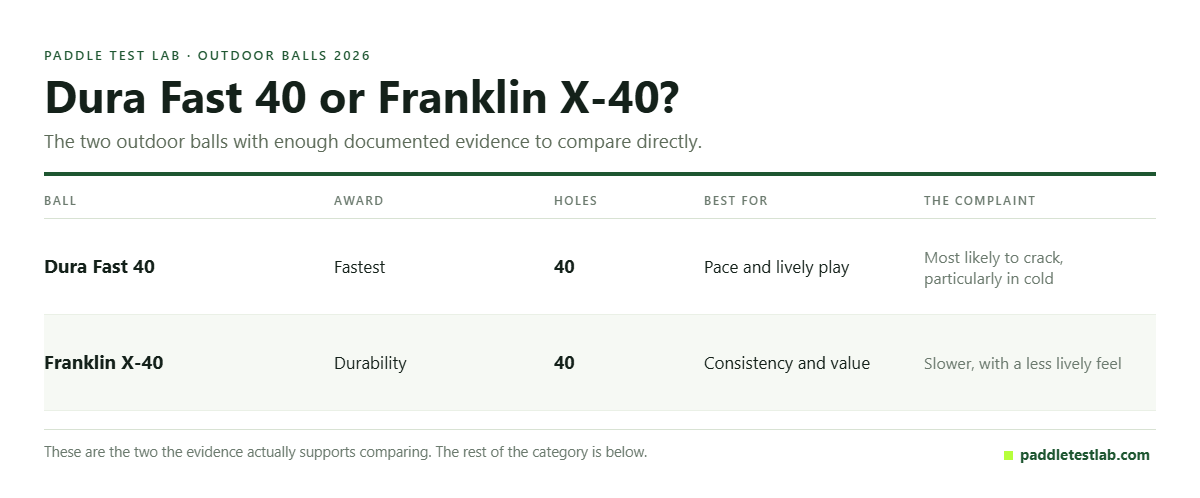
Indoor balls generally use fewer, larger holes than outdoor balls and a softer, more flexible plastic. Outdoor balls need more holes (commonly around 40) and a harder shell to fight wind resistance and resist cracking on rough asphalt or concrete surfaces.
Why outdoor balls perform poorly indoors
An outdoor ball’s stiffness, built for wind resistance and pavement abuse, translates to erratic, overly lively bounce on smooth gym flooring. Owners who’ve tried using outdoor balls indoors consistently report the ball feels too fast and too loud for controlled indoor play. For a deeper look at how court surface changes gear needs generally, see our outdoor pickleball balls guide.
Indoor vs Outdoor Pickleball Ball Difference, Side by Side
The indoor vs outdoor pickleball ball difference is not a marketing distinction — the two are physically different objects, and using the wrong one is the most common equipment mistake new players make.
| Indoor ball | Outdoor ball | |
|---|---|---|
| Holes | Typically 26, larger diameter | Typically 40, smaller diameter |
| Plastic | Softer, more flexible | Harder, stiffer shell |
| Designed for | Smooth gym floors, no wind | Asphalt and concrete, wind resistance |
| Noise on contact | Noticeably quieter | Sharper, louder crack |
| Typical failure mode | Goes out of round | Cracks at the seam |
Best Indoor Pickleball Ball for Gym Floors
Choosing the best indoor pickleball ball for gym floors depends on what the floor is made of, which is why two clubs can rate the same ball very differently.
| Floor type | What owners report | Ball to favour |
|---|---|---|
| Lacquered hardwood | Livelier bounce, ball skids on serve | Softer indoor ball to keep bounce manageable |
| Rubberised synthetic | Most predictable surface of the three | Standard 26-hole indoor ball |
| Carpet or temporary mats | Bounce dies; rallies get short | Firmer indoor ball for any usable bounce |
Grip matters as much as bounce on a lacquered floor — our pickleball shoes guide covers which non-marking outsoles owners report actually holding on indoor wood.
The Quietest Indoor Pickleball Ball
Noise is the reason many gyms and community centres restrict pickleball at all, so the quietest indoor pickleball ball is a genuine buying criterion rather than a niche one. Softer indoor plastic is quieter on contact than any outdoor ball — that is the single biggest lever available, and owners in shared gym spaces consistently mention it.
The honest caveat: the ball is the smaller half of the noise equation. Paddle face and core do more to determine the sound level than the ball does, which is why HOA and gym complaints usually get solved at the paddle. Our quiet pickleball paddles guide covers what actually reduces the decibel reading and what does not.
How to Choose the Right Indoor Ball for Your Court
Court surface considerations
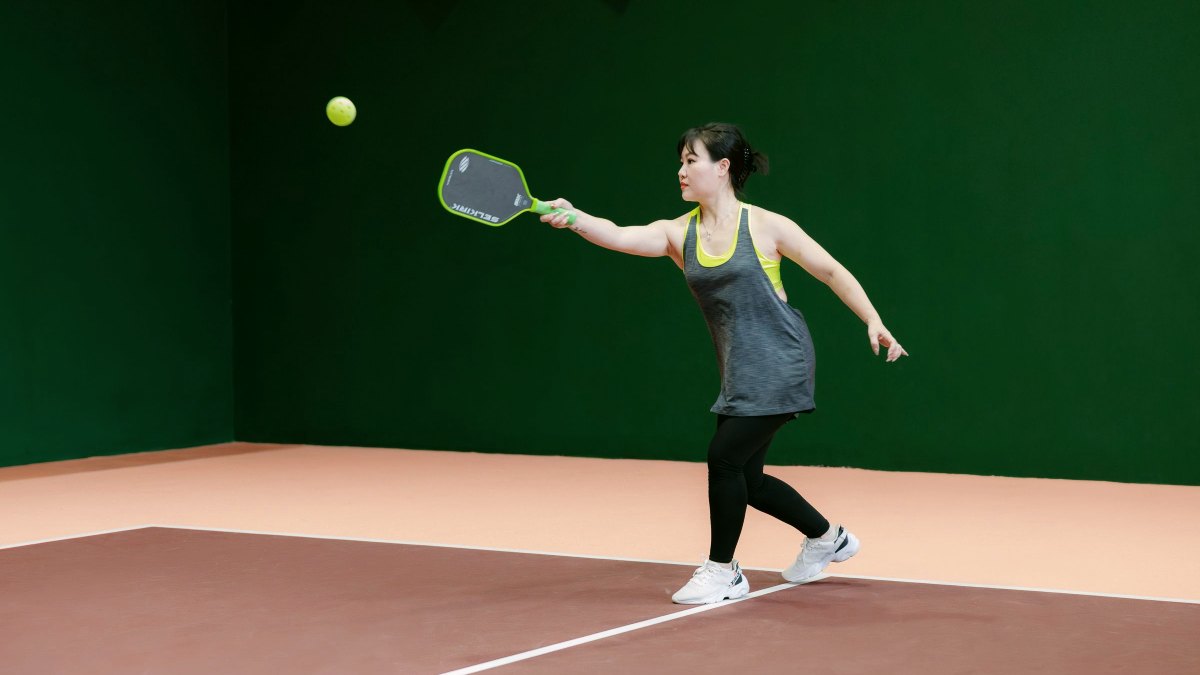
Gymnasium flooring varies — some are lacquered wood, some rubberized synthetic. Owners on harder, slicker gym floors tend to prefer softer balls that keep bounce manageable; those on carpeted or matted temporary courts report needing a firmer ball to get any consistent bounce at all.
Skill level and play style fit
Beginners generally benefit from softer indoor balls that reduce sting and are more forgiving on off-center hits. More advanced, power-oriented players report preferring a firmer indoor ball that holds up better under aggressive smashing, even if it means replacing balls more often. If you’re also upgrading your paddle to match a more aggressive indoor game, our best pickleball paddles 2026 guide covers power-oriented picks in depth.
Final Verdict
Top recommendation by player type
Recreational and beginner players are generally best served by a softer indoor ball that prioritizes forgiveness over speed. Competitive players chasing tournament-legal consistency should verify current USAP approval status directly and expect to replace balls more frequently than casual players do, regardless of brand.
Summary table
| Player Type | Recommended Approach |
|---|---|
| Beginner/Recreational | Softer indoor ball, prioritize control over speed |
| Competitive/Tournament | Verify current USAP approval status; budget for frequent replacement |
| Budget-conscious | Lower-cost indoor balls perform adequately for casual play; expect more bounce variance |
Frequently Asked Questions
What is the difference between indoor and outdoor pickleball balls?
Indoor balls use fewer, larger holes and softer plastic construction designed for smooth gym flooring. Outdoor balls use more holes and a harder shell built to resist wind and rough pavement surfaces.
Which indoor pickleball balls are USA Pickleball approved for 2026?
Approval status changes over time, so always check USA Pickleball’s current published approved equipment list directly before a tournament purchase rather than relying on packaging claims or older reviews.
Do indoor pickleball balls crack or go out of round quickly?
Cracking and out-of-round wear are reported by owners across nearly every indoor ball brand at some rate. Frequency tends to increase with aggressive play intensity and colder gym temperatures rather than being tied to one specific construction flaw.
What indoor ball is best for beginners learning control?
Softer indoor balls are generally reported as more forgiving for beginners, reducing sting on off-center contact and offering more manageable bounce for learning shot control.
How many holes should an indoor pickleball ball have?
Indoor balls commonly use fewer holes than outdoor balls, with larger hole diameter to help manage bounce on smooth flooring. Exact hole counts vary by model, so check the specific manufacturer spec sheet for the ball you’re considering.
Are more expensive indoor balls actually better based on owner reviews?
Owner reviews suggest price doesn’t guarantee better durability or bounce consistency. Some lower-cost balls draw comparable praise to pricier options, while complaints about cracking and bounce variance appear across price tiers. Evaluate based on recurring owner feedback for the specific model, not price alone.
Can you use outdoor balls indoors?
You can, and plenty of clubs do when it is the only ball in the cupboard, but owners who have tried it report the same two problems. The harder outdoor shell bounces higher and faster off a smooth gym floor than the game is designed for, so rallies get short and control shots stop working. And it is loud — the sharper crack of a 40-hole outdoor ball is exactly what triggers noise complaints in shared indoor spaces. If you play indoors regularly, a box of indoor balls costs less than a paddle grip and fixes both. Our outdoor ball guide covers the reverse case, which is worse: an indoor ball on asphalt cracks fast.
How many holes are in an indoor pickleball?
Indoor pickleballs typically have 26 holes; outdoor balls typically have 40. The indoor holes are also larger in diameter. The count is not arbitrary — fewer, wider holes on softer plastic slow the ball down and keep the bounce controllable on a gym floor, while the 40 smaller holes on a harder outdoor ball are there to cut through wind. Hole count alone is the fastest way to tell an unlabelled ball apart: count them, and you know which court it belongs on.
Check our best indoor pickleball balls scorecard at the end for a side-by-side verdict.
Check our best indoor pickleball balls scorecard at the end for a side-by-side verdict.
The best indoor pickleball balls rankings above come from verified owner data, not the manufacturers’ marketing lines.
Related guides

Isacc Shah
Isacc Shah writes PaddleTestLab. He does not test paddles in a lab and says so plainly — there is no rig, no radar gun, no staff hitting balls. Instead he aggregates independent bench measurements, manufacturer specifications, USA Pickleball's approval database and hundreds of verified owner reviews per product, then reports where those sources disagree. Every score on the site carries its evidence count. Where a specification is not published, the site writes UNKNOWN rather than estimating it, and the criticism is printed next to the praise.