
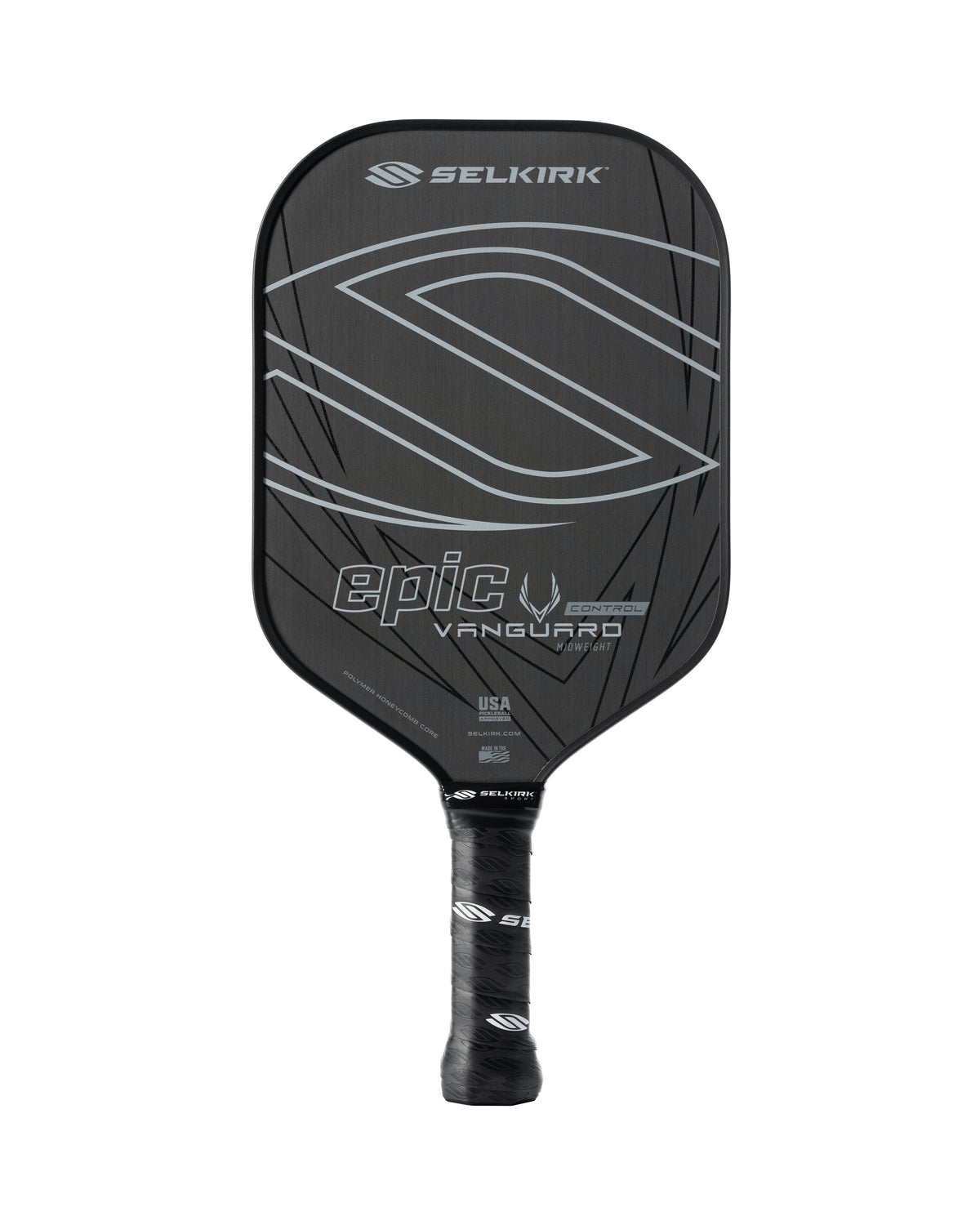
Looking for swing weight in pickleball? We ranked the field from verified owner reviews and independent data — no marketing fluff.
The swing weight in pickleball field is crowded this year, so we focused on verified data over hype.
Pick up two paddles that both read “8.0 oz” on the box, swing them side by side, and one can feel like a feather while the other feels like a sledgehammer. That gap isn’t in your head, and it isn’t the static weight. It’s swing weight — arguably the single most useful number for predicting how a paddle plays, and one that almost never appears on the packaging. This guide explains what pickleball swing weight is, how independent labs measure it, the ranges you’ll actually encounter, and how to use it when you buy.
For more detail on how the swing weight in pickleball compare, scroll to the scorecard at the end of this guide.
The box weight tells you almost nothing about feel
The number printed on a paddle — usually somewhere between 7.6 and 8.5 ounces — is static weight: what the paddle weighs sitting on a scale. It’s easy to measure and easy to print, so it became the default spec. The problem is that static weight says nothing about where that mass sits.
Compare how the swing weight in pickleball rank by price, weight, and verified owner ratings before you decide. For most players the swing weight in pickleball decision comes down to feel, price and durability – and this guide weighs all three from verified owner data.
Move a few grams toward the tip of the paddle and it swings heavier without the scale changing much. Move mass toward the handle and it swings lighter. Two paddles at an identical 8.0 oz can therefore feel completely different in a rally, because feel is driven by how the mass is distributed along the paddle, not the total on the scale. That’s the gap swing weight closes.
What swing weight actually measures
Swing weight is a measure of a paddle’s resistance to being swung — its rotational inertia around a pivot point near the handle. In plain terms, it captures how much effort it takes to get the paddle moving and how much “plow-through” it carries into the ball once it’s moving.
Because it accounts for where the mass is located, swing weight tracks real-world feel far better than static weight. A higher number means the paddle resists acceleration and deceleration more; a lower number means it whips around faster. It’s the same concept tennis players have used for decades, adapted to pickleball paddles.
How the labs measure it
Swing weight isn’t something you can eyeball or weigh on a kitchen scale. Independent testers measure it with a swing-weight machine — most commonly a device that swings the paddle as a pendulum on a fixed axis and calculates inertia from the oscillation. Reviewers like Pickleball Studio report the result as a unitless number that lets you compare paddles apples-to-apples. Because manufacturers rarely publish it, a measured figure from a named lab is usually the only trustworthy source you’ll find.
Typical swing weight ranges
Across paddles in stock form, swing weight runs roughly from the low 100s into the high 120s (occasionally lower or higher at the extremes). The numbers group into practical bands:
| Category | Approx. swing weight | General feel |
|---|---|---|
| Very light | 90–104 | Extremely quick, minimal plow-through |
| Light | 105–111 | Fast hands, easy maneuverability |
| Average | 112–118 | Balanced speed and power |
| Heavy | 119–124 | More power and stability, slower to react |
| Very heavy | 125–130+ | Maximum plow-through, most demanding to swing |
Most players will be shopping somewhere in the roughly 105–127 window, which is where the vast majority of popular paddles land.
Low vs. high: the core trade-off
- Lower swing weight (roughly 105–115): faster hands at the net, quicker resets and counters, less fatigue over a long session. The trade-off is less inherent power and more chance of the ball pushing the paddle around on hard shots.
- Higher swing weight (roughly 118–127): more power on drives and serves, and more stability — the paddle plows through the ball instead of getting knocked back. The trade-off is slower reactions in fast exchanges and more arm strain.
Neither is “better.” A singles player who wins with drives may love a higher number; a doubles player living at the kitchen line in hands battles usually wants a lower one.
A same-brand example that proves the point
The clearest illustration comes from within a single brand. According to Pickleball Studio’s testing, the JOOLA Perseus 14mm measures a swing weight around 112, while the JOOLA Hyperion 16mm comes in around 127 — despite near-identical box weights. That’s the difference between “average” and “very heavy” on the chart above. Same manufacturer, same rough number on the scale, and yet two genuinely different paddles: one that flicks around for speed, one built to plow through the ball. If you’d shopped by static weight alone, you’d never have seen it coming.
Swing weight vs. twist weight
Swing weight is often mentioned alongside twist weight, and they’re easy to confuse. They measure different axes:
- Swing weight = resistance to swinging the paddle forward through the ball (maneuverability and plow-through).
- Twist weight = resistance to twisting when you hit off-center (forgiveness and stability on mishits).
A high twist weight means an off-center ball doesn’t torque the paddle in your hand as much, so more of your hits stay on line. Wider paddle shapes tend to have higher twist weight; elongated shapes tend to swing heavier. Both specs are measured by the same labs, and both beat static weight for predicting real feel — but they answer different questions.
How to actually use swing weight when buying
- Decide what you need. Struggling with fast hands at the net? Lean toward a lower swing weight. Want more free power or getting pushed around on drives? Consider a higher one.
- Look up the measured number, not the box. Since brands rarely print swing weight, find a figure from a named independent tester before you buy.
- Compare within a band, then check twist weight. Once you’ve narrowed to a swing-weight range, use twist weight to break ties on forgiveness.
- Remember it’s tunable. Adding lead tape near the top of a paddle raises swing weight; adding it near the handle nudges it down. A paddle that’s slightly too light to swing can often be dialed up.
This is exactly the “claimed vs. measured” gap we track. When a brand’s marketing talks about “lightweight” or “powerful” without a swing-weight number behind it, cross-check the paddle in our Paddle Honesty Index, where we log measured specs against what’s advertised. If you’re building a shortlist, our roundup of the Best Pickleball Paddles 2026 matches paddles to playing styles so you can buy for your game rather than for a marketing line.
The bottom line
Static weight is the spec that’s easy to print; swing weight is the spec that predicts how a paddle plays. Two paddles at the same box weight can feel a full category apart once you see where the mass sits. Learn the roughly 105–127 range, know whether you want faster hands or more plow-through, and insist on a measured number from a credible source before you spend. The box weight lies — the swing weight doesn’t.
Sources: Pickleball Studio paddle database; Pickleball Effect database.
Reference: USA Pickleball — official rules, equipment standards, and the approved-paddle list.
Check our swing weight in pickleball scorecard at the end for a side-by-side verdict. Whether you need the swing weight in pickleball or a competing option, compare every spec before you commit.
The swing weight in pickleball rankings above come from verified owner data, not the manufacturers’ marketing lines.
Swing Weight vs Static Weight: Why They Are Not the Same Number
Static weight is what a scale reads. Swing weight is how hard the paddle is to accelerate, and it depends on where that mass sits rather than how much of it there is.
The physics is the same reason a hammer feels heavier than a ruler of identical weight: mass far from your hand resists acceleration far more than mass close to it. Move a gram from the handle to the tip and the static weight is unchanged while the swing weight rises noticeably.
The practical consequence is that two paddles with identical printed weights can feel completely different, and the one that feels heavier is not defective — it is head-weighted. This is the single most common source of “I ordered the same weight and it feels wrong” complaints. If a paddle feels sluggish despite a modest number on the box, the mass is in the head.
A third number sits alongside both: twist weight, which measures resistance to rotation about the paddle’s long axis. It is what determines how much the face turns when you catch the ball off-centre, and higher is generally better for forgiveness. Very few brands publish it.
How to lower a paddle’s swing weight
Genuinely reducing swing weight is difficult, because you cannot remove material from a finished paddle without wrecking it. What you can do is shift the balance:
- Add weight to the handle. Lead tape under the grip, or a heavier replacement grip, raises static weight while lowering the effective swing weight by moving the balance point toward your hand. This is the main lever available.
- Add an overgrip or two. Same effect at a smaller scale, and it lets you adjust grip size at the same time.
- Remove weight you added. If you previously taped the head, take it off before concluding the paddle is wrong.
What does not work: hoping a lighter static weight solves it. A 7.7 oz head-heavy paddle can still swing heavier than an 8.1 oz balanced one. Our guide to adding weight to a pickleball paddle covers placement in detail — where you put the tape matters more than how much you use.
Swing Weight Ranges by Playing Style
| Range | Character | Suits |
|---|---|---|
| Under 105 | Very fast hands, least stable, least plough-through | Net-focused doubles players with clean contact |
| 105–112 | Quick and manageable — the control band | Control players, kitchen-line specialists, hands battles |
| 113–118 | All-court balance of stability and speed | Most intermediate and advanced players |
| 119–125 | Stable and powerful, slow to reposition | Singles players and baseline drivers |
| Above 125 | Maximum plough-through, demanding on the arm | Specialists only — fatigue and elbow risk rise sharply |
Control-oriented players generally want the lower half of this table. A paddle you cannot get round in time cannot reset a ball no matter how good its core is — which is why our control paddle roundup treats swing weight as one of the four specs that actually produce control.
Frequently Asked Questions
What is a good swing weight for pickleball?
For most players, somewhere between 110 and 118. That band gives you enough mass to stay stable when the ball arrives with pace, without making the paddle too slow to reposition in a fast exchange at the kitchen line.
Adjust from there based on what actually goes wrong in your games. Losing hands battles at the net points lower. Getting pushed around on blocks and counters points higher. Elbow soreness points lower, and also toward core construction and grip size rather than weight alone. Our guide to choosing paddle weight covers how static weight and swing weight interact when you are shopping.
How can I measure swing weight at home?
Honestly: you cannot measure true swing weight without a rig. It is a moment-of-inertia figure, and the labs that publish it use dedicated equipment such as a Briffidi SW1 with a fixed pivot — not something you can replicate with kitchen scales.
What you can measure at home is the balance point, which is a decent proxy. Rest the paddle across a pencil or the edge of a table and slide it until it balances, then measure from the butt cap to that point. A longer distance means more mass toward the head and a higher swing weight. Comparing two paddles this way tells you which will feel heavier in play, even if it does not give you a number to quote.
If you want actual figures, use a published database rather than guessing — our page on who measures paddle specs and how names the independent testers who publish swing weight, and explains why their numbers should only be compared within a single dataset.

Isacc Shah
Isacc Shah writes PaddleTestLab. He does not test paddles in a lab and says so plainly — there is no rig, no radar gun, no staff hitting balls. Instead he aggregates independent bench measurements, manufacturer specifications, USA Pickleball's approval database and hundreds of verified owner reviews per product, then reports where those sources disagree. Every score on the site carries its evidence count. Where a specification is not published, the site writes UNKNOWN rather than estimating it, and the criticism is printed next to the praise.