

Learning how to choose a padel racket is mostly about ignoring the pro-player marketing and matching four specs to your actual level. This guide is built the way we build everything: from aggregated owner experiences and published specs, not from one afternoon of hitting. Here’s the framework.
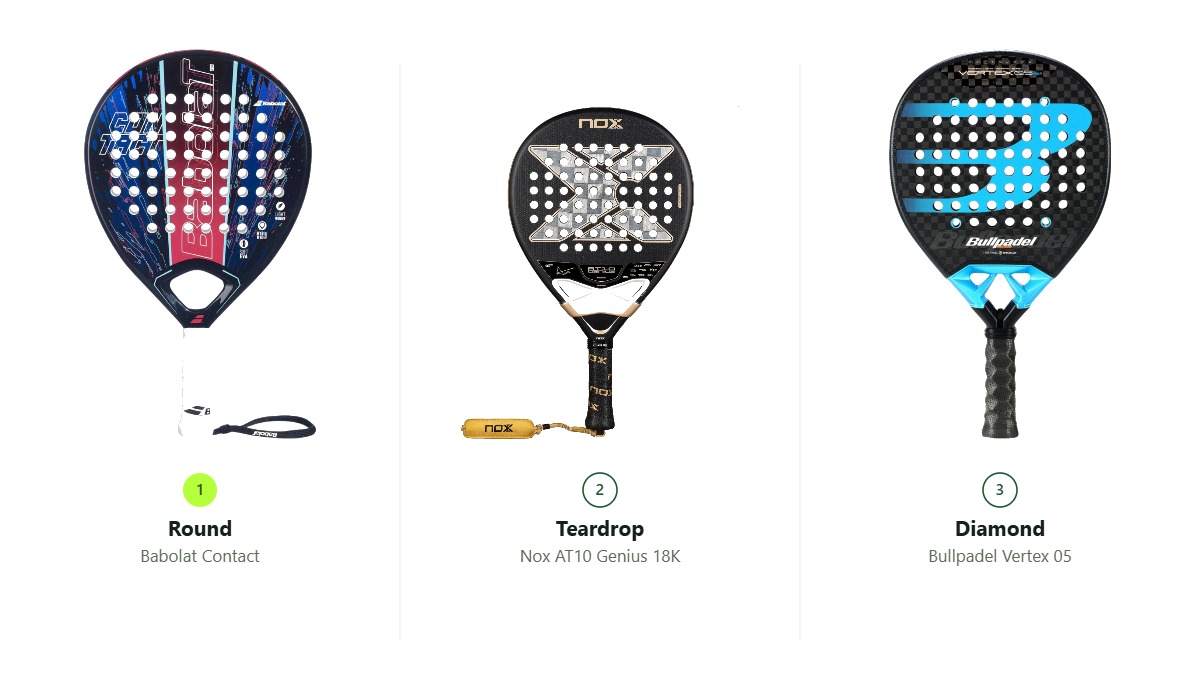
How to Choose a Padel Racket: The Four Decisions

1. Shape — the big one
Round rackets center the sweet spot low and large: maximum forgiveness and control, the consistent owner recommendation for beginners and most intermediates. Teardrop rackets shift mass and sweet spot upward for a power-control middle ground — the natural second racket. Diamond rackets stack mass high for maximum power with the smallest, highest sweet spot — rewarding for advanced attackers, punishing for everyone else. The pattern in owner reviews is blunt: shape mismatches cause more regret than any other spec. Our full padel racket shape guide goes deeper on the three shapes.
2. Balance — where the weight sits
Independent of shape, balance describes whether mass concentrates toward the head (more power, slower handling, more arm load) or the handle (faster hands, easier defense). Owners with elbow trouble consistently report head-heavy rackets aggravating it. When in doubt, medium balance.
3. Weight — less range than you’d think
Most adult rackets cluster in a fairly narrow band, but small differences matter because the racket is swung fast in tight exchanges. The owner consensus mirrors pickleball: mid-weight for most players; lighter if you have arm concerns or prize hand speed; heavier only for strong players chasing plow-through. Manufacturing variance between individual units is real here too — treat listed weights as targets.
4. Core foam — soft EVA, hard EVA, or FOAM
Padel cores are foam rubbers, broadly from softer (bigger comfort, easier depth on slower swings, quieter) to harder (more energy return for fast swingers, more feedback, harsher on the arm). Owner reports map cleanly: recreational players tend to describe soft and medium cores as more playable; hard cores reward genuinely fast swings and frustrate slower ones. Brands name their foams differently — read for the soft/medium/hard positioning rather than the trademark.
Matching the Package to Your Level
Beginner: round shape, medium balance, mid weight, soft-to-medium core — boring on paper, and by far the highest-satisfaction combination in owner threads. Our beginner racket roundup and under-$100 picks collect the models owners rate highest in this profile. Intermediate: teardrop becomes the sweet spot once your contact is consistent and you want more put-away power. Advanced attacker: diamond, head-leaning balance, harder core — with eyes open about the forgiveness tax.
The Mistakes Owner Threads Keep Repeating
Buying your favorite pro’s racket — pro-spec diamonds are built for swing speeds most club players don’t have. Overweighting power in the decision — padel is positional; owners consistently report control winning more club matches than power. Ignoring arm comfort signals — hard cores plus head-heavy balance is the combination that shows up in elbow-pain threads. And forgetting the rest of the kit — court shoes matter enormously in a sport this lateral; see our padel shoes roundup.
Padel Racket Weight and Balance: The Two Numbers That Decide Everything
Shape gets all the attention, but weight and balance determine how a racket actually feels in your hand — and they are printed on almost every listing.
Weight typically runs 350–390g. Lighter rackets are faster to manoeuvre at the net and cause less arm fatigue over three sets; heavier ones deliver more power and stay steadier when the ball arrives with pace. Most players land between 360g and 375g, and going lighter is usually the safer error.
Balance is measured in millimetres from the handle and matters more than weight. A low balance (around 250mm) keeps the mass near your hand — the racket feels lighter than it is, comes round quickly, and is far easier to control. A high balance (275mm and above) shifts mass toward the tip, generating power through leverage but making the racket slow and demanding.
The interaction is what buyers miss: a 355g racket with a high balance can feel heavier in play than a 375g racket with a low one. If a racket feels unwieldy despite a modest weight on paper, the balance is the reason. Our shape guide covers how balance and shape are linked — round frames run low, diamonds run high — and why choosing one effectively chooses the other.
A buying checklist for beginners
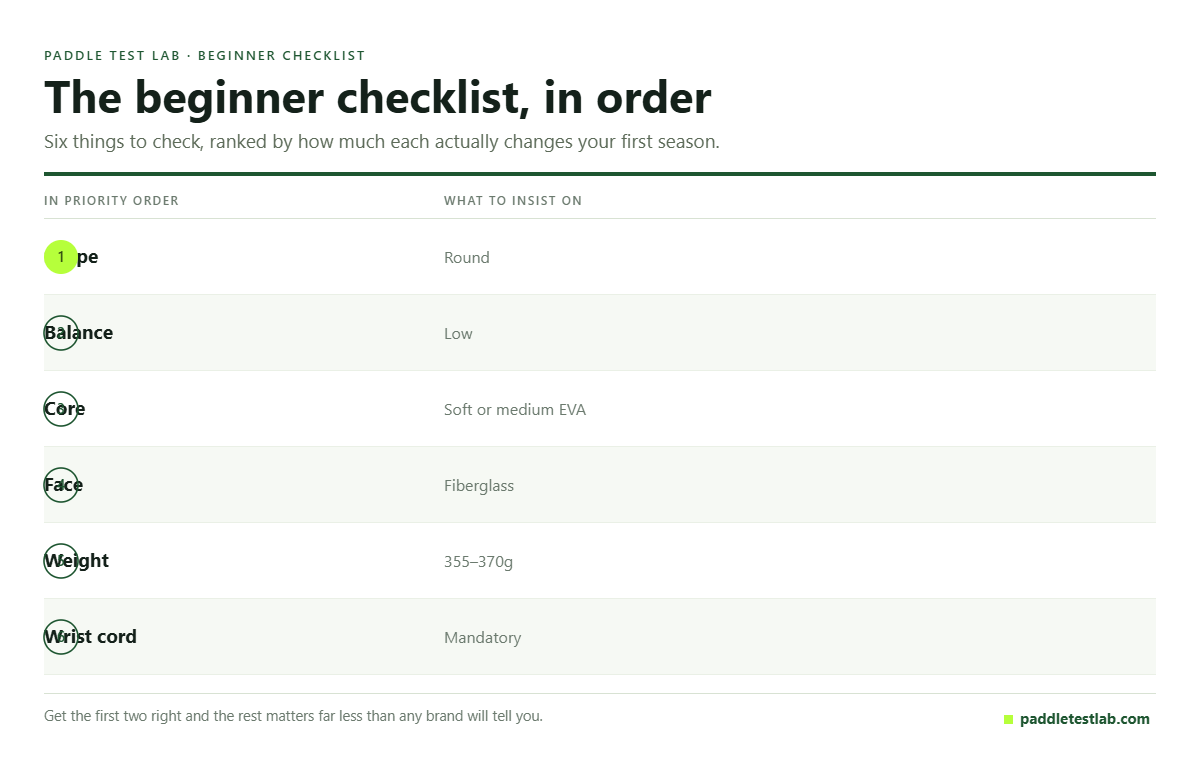
Work down this list in order. The first three settle most decisions.
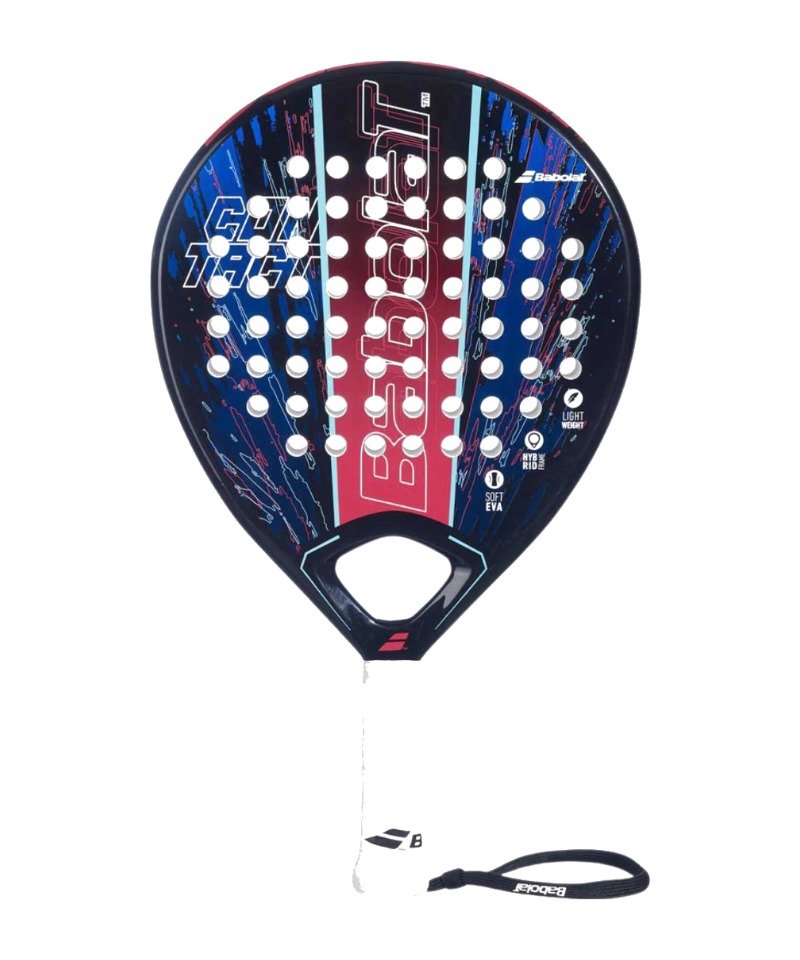
- Shape: round. Central sweet spot, maximum forgiveness.
- Balance: low. Easier to swing, easier to control.
- Core: EVA soft or medium. Comfort and dwell time over raw output.
- Face: fiberglass. Softer, more forgiving and cheaper than carbon.
- Weight: 355–370g for most adults.
- Wrist cord: mandatory in competition and sensible always.
What to ignore entirely at this stage: carbon weave numbers, professional endorsements, and anything described as offering “maximum power”. Our beginner racket guide covers each spec in more detail, and the under-£100 guide covers what is genuinely worth buying on a first budget.
Fibreglass vs Carbon Padel Faces
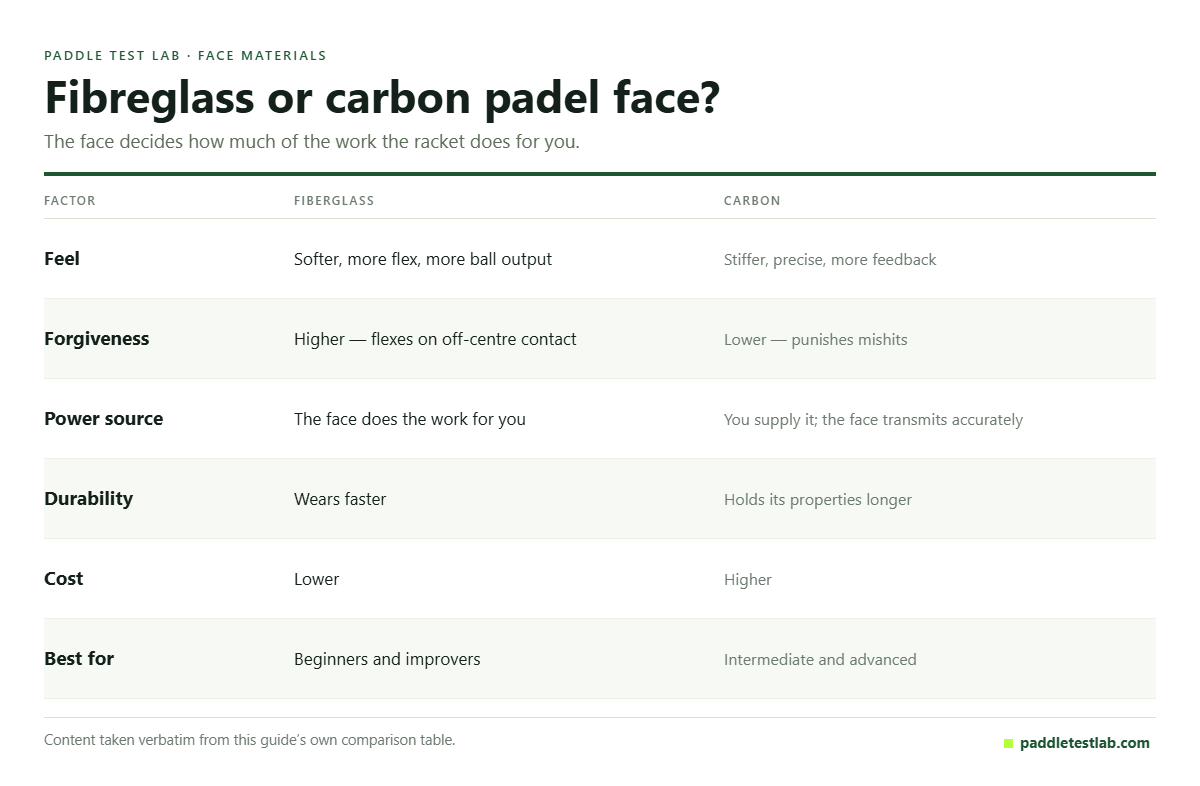
| Fibreglass | Carbon | |
|---|---|---|
| Feel | Softer, more flex, more ball output | Stiffer, more precise, more feedback |
| Forgiveness | Higher — flexes on off-centre contact | Lower — punishes mishits |
| Power source | The face does the work for you | You supply it; the face transmits it accurately |
| Durability | Wears faster | Holds its properties longer |
| Cost | Lower | Higher, rising with weave grade |
| Best for | Beginners and improvers | Intermediate and advanced players |
Carbon listings quote weave grades — 3K, 12K, 18K, 24K. The number describes the fibre bundle in the weave, not quality: lower grades generally flex more, higher grades are more rigid and give a firmer, more direct response. It is a feel preference rather than a ladder to climb, and it matters far less than shape and balance. See our padel racket roundup for how this plays out across the range.
Frequently Asked Questions
What padel racket do professionals use?
Almost universally diamond-shaped frames with high balance points, hard EVA cores and carbon faces — the most demanding combination available, chosen because professionals generate their own power and want precision and output at the tip.
That is exactly why buying a pro’s racket is usually a mistake. Those specs shrink the sweet spot, sit it near the tip rather than the centre, and punish anything less than clean contact. A club player using one typically finds their control and consistency get worse. Buy the shape that suits your contact, not the shape that suits Galán’s. Our shape guide covers what each one actually does.
When should you replace a padel racket?
Padel rackets have a shorter service life than most buyers expect, because the EVA core degrades whether or not the frame looks damaged. Signs it is time: the racket feels noticeably deader than it did, the ball is not coming off with the output it used to, or you can hear a duller, flatter sound on contact.
Structural signs are more urgent — any crack in the frame or delamination around the edge means it should come out of play immediately, both for performance and because a failing frame can come apart mid-swing. A regularly played racket typically lasts 12–24 months. Playing in cold conditions accelerates core degradation, and leaving a racket in a car boot through summer or winter is the fastest way to ruin one. Our racket roundup covers what to move to when yours is finished.
What shape padel racket should a beginner buy?
Round, almost without exception in owner guidance. The large, centered sweet spot forgives learning-phase contact, and the control-first character builds better habits than a power racket.
How much should I spend on a first padel racket?
Owner threads consistently push back on premium first purchases — entry and mid-priced rackets from established brands serve beginners well, and your preferences will change as your game forms. Spend up on your second racket, when you know what you want.
What’s the difference between EVA and FOAM cores?
Both are foam rubbers; EVA is the firmer family (itself ranging soft to hard) and polyethylene ‘FOAM’ cores are the softest, most flexible option. Softer cores favor comfort and easy depth; firmer cores return more energy to fast swings.
Do expensive padel rackets last longer?
Not reliably — owner reports of cracked frames and dead spots span every price tier. Price mostly buys materials and performance character, not durability. Storage and avoiding court-scrape impacts matter more for lifespan.
Related guides

Isacc Shah
Isacc Shah writes PaddleTestLab. He does not test paddles in a lab and says so plainly — there is no rig, no radar gun, no staff hitting balls. Instead he aggregates independent bench measurements, manufacturer specifications, USA Pickleball's approval database and hundreds of verified owner reviews per product, then reports where those sources disagree. Every score on the site carries its evidence count. Where a specification is not published, the site writes UNKNOWN rather than estimating it, and the criticism is printed next to the praise.