
Short answer: in JOOLA vs Selkirk, JOOLA gives you more performance per dollar and Selkirk gives you a limited lifetime warranty and US manufacturing. Which is right depends less on which paddle is better than on what you want to still be true in eighteen months.
JOOLA and Selkirk are the two brands a player most often ends up choosing between at the $250-plus end of the market, and they are not competing on the same thing.
JOOLA sells performance and a pro roster. Selkirk sells American manufacturing and a warranty that outlasts the paddle. Both are real propositions. Which one is right depends less on which paddle is “better” than on what you want to be true in eighteen months.
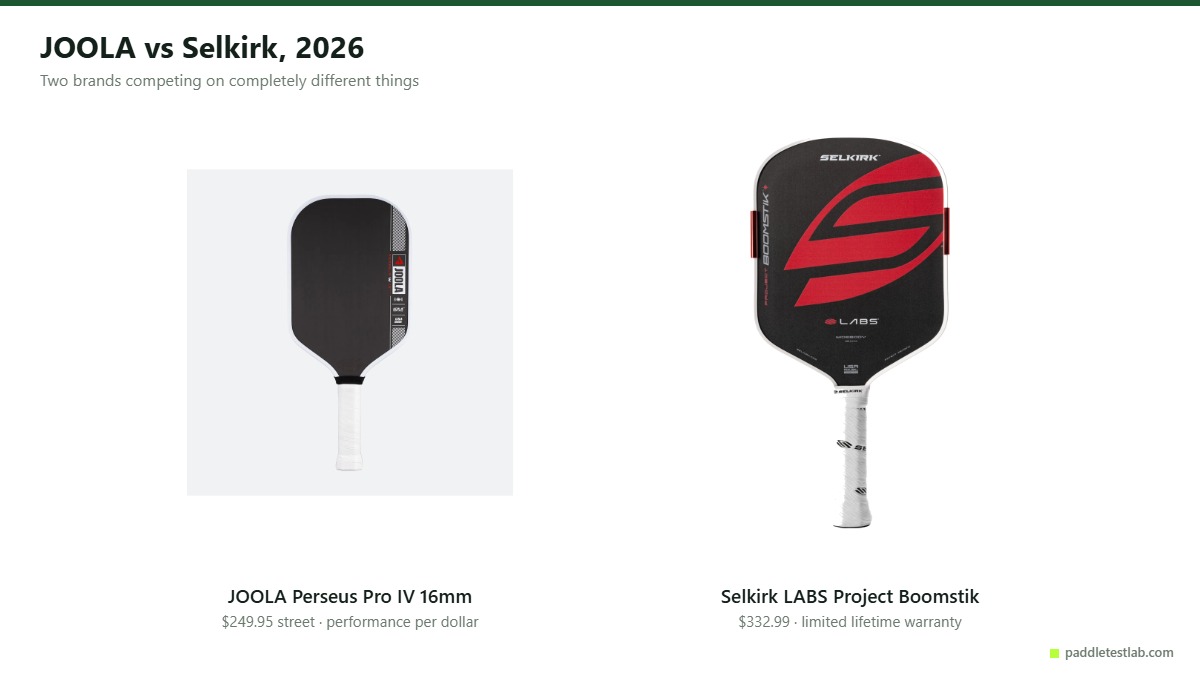
The Two Brands in One Paragraph Each
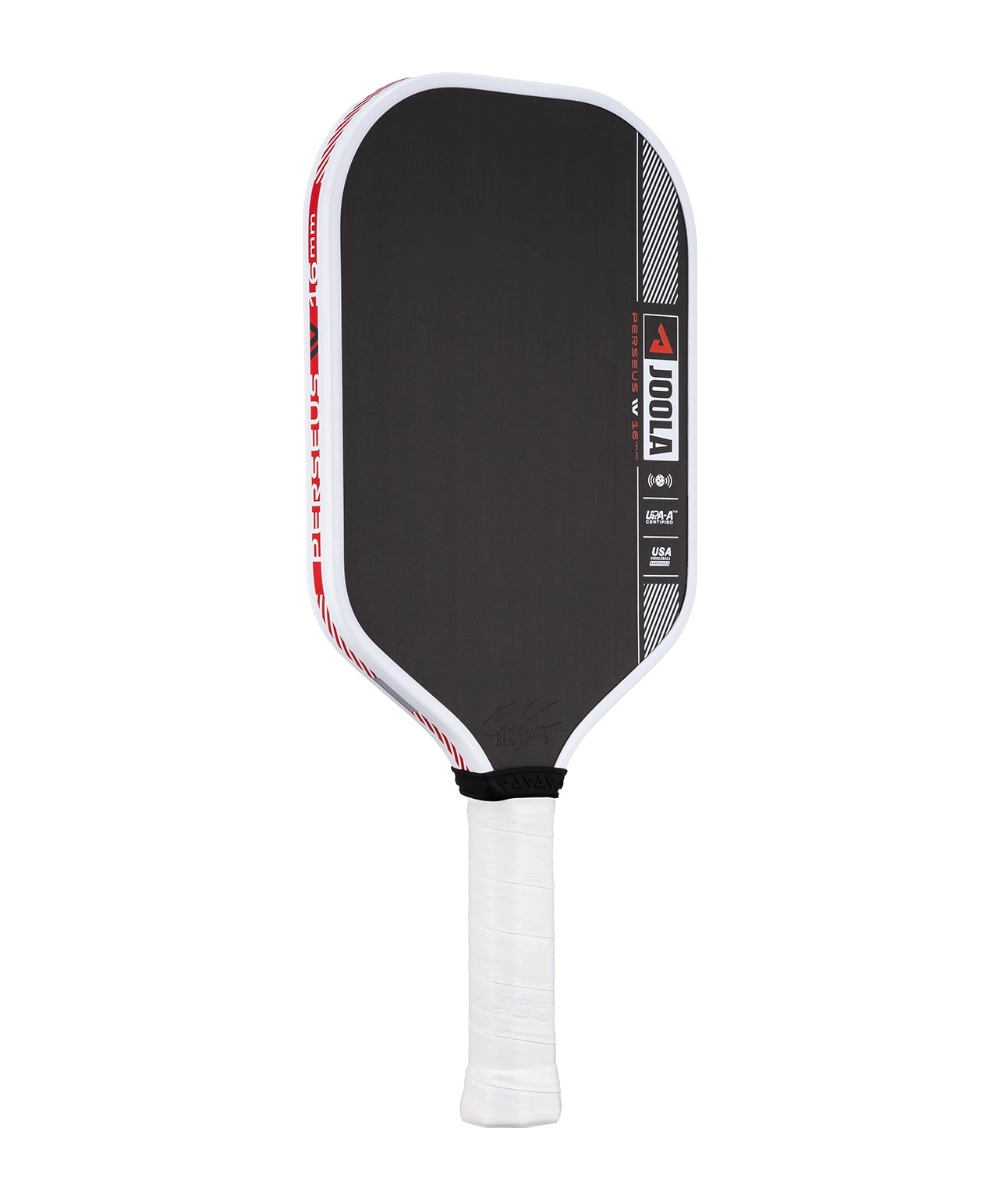
JOOLA came to pickleball from table tennis and arrived with the sport’s most visible player signatures. The Perseus line is the flagship, it is elongated and power-oriented, and it is the paddle you see most often on a serious court. JOOLA iterates fast — the Pro V landed in March 2026, barely a year after the Pro IV — and that pace is both the appeal and the problem.
Selkirk is an Idaho family business that manufactures in the United States and has been in pickleball longer than most of its competitors have existed. Its top line is LABS, its entry line is SLK, and its distinguishing feature is a limited lifetime warranty. Selkirk does not chase every construction trend; it releases fewer paddles and stands behind them longer.
Range and Price, Tier by Tier
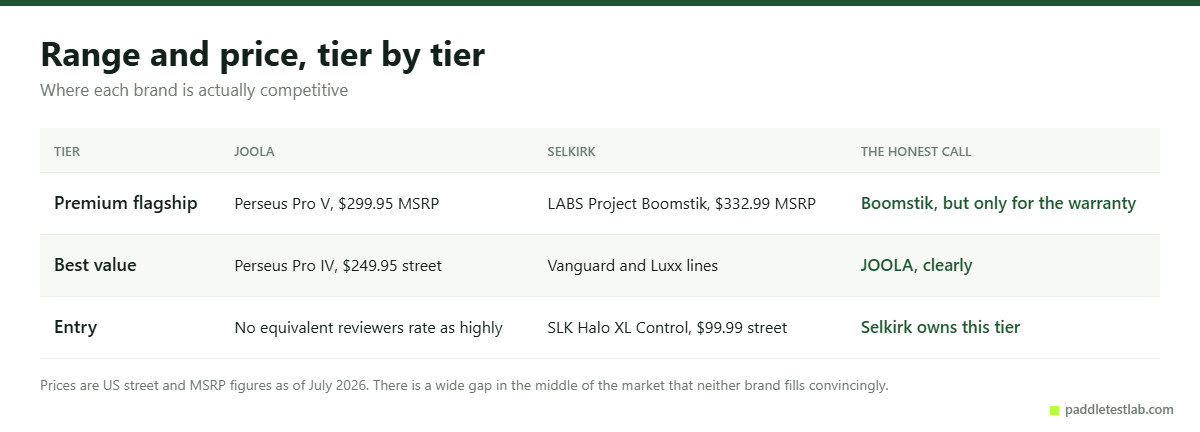
Premium. JOOLA’s Perseus Pro V sits at $299.95 MSRP; Selkirk’s LABS Project Boomstik at $332.99. Selkirk is the more expensive brand at the top, and reviewers consistently say so — the Boomstik runs $50 to $100 above comparable paddles. JOOLA’s own Pro IV, at $249.95 street, undercuts both.
Mid. This is where JOOLA is stronger. The Perseus Pro IV at street price is arguably the best-value premium paddle either brand makes, and most reviewers recommend it over the newer Pro V outright.
Entry. Selkirk wins on availability here. The SLK Halo XL Control sits at $99.99 street against a $139.99 MSRP and brings Selkirk’s build quality and T700 carbon to a first-paddle budget. JOOLA has no equivalent that reviewers rate as highly at that price.
Warranty and Support — the Honest Gap
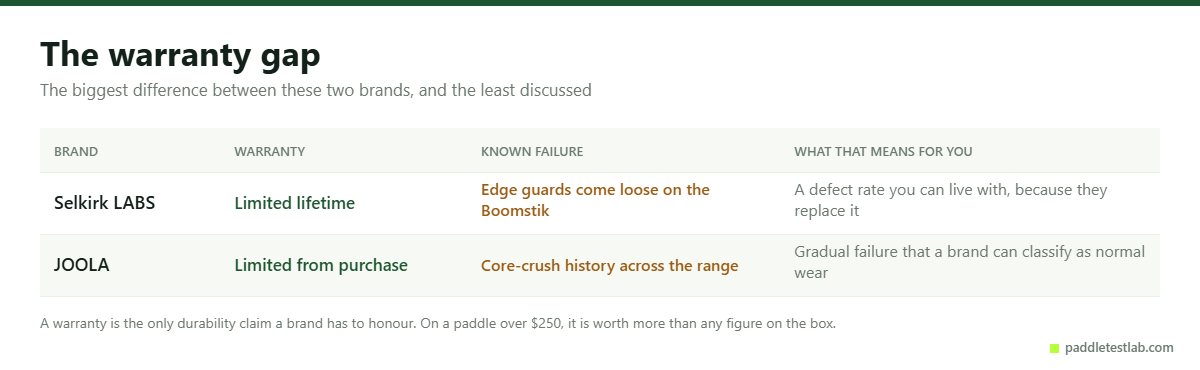
This is the single biggest difference between the two brands and the one least discussed in reviews.
Selkirk’s LABS line carries a limited lifetime warranty. That matters more than it sounds, because the Boomstik has many reported edge-guard failures. A defect rate that would sink another paddle is survivable when the brand replaces it without argument — and the warranty is why we can recommend the Boomstik despite the reports.
JOOLA runs a limited warranty from purchase, in line with most of the market. What matters on a JOOLA specifically is that the brand carries a documented core-crush history across its range. Core crush is gradual, it arrives as dead spots and a duller sound, and it is exactly the kind of failure a brand can classify as normal wear rather than a defect. Know that going in.
We track the current terms side by side in our paddle warranty comparison. On a $250 to $330 paddle, the warranty is worth more than any spec on the box.
JOOLA vs Selkirk: the Models Matched Head to Head
JOOLA Perseus Pro IV vs Selkirk LABS Project Boomstik
Both elongated, both power-first, about eighty dollars apart at street prices.
The Pro IV is the easier paddle. Power comes without a perfect stroke, the sweet spot is large, and it forgives. The cost is that grit and spin fall away after two to four months of heavy play, and the core-crush history applies.
The Boomstik hits harder and lasts longer. No reported core crush, InfiniGrit specifically engineered for spin durability, and the lifetime warranty behind it. The cost is that it is genuinely hard to control — that is the consistent reviewer finding, not a soft caveat — and the edge-guard problem is real.
Verdict: if you are a 4.0-plus player who will use the extra pace, the Boomstik is the better long-term buy. Below that, the Pro IV will produce better results on court.
JOOLA Perseus Pro V vs Selkirk LABS Project Boomstik
The flagship-versus-flagship comparison, and the one where we would take neither at full price.
The Pro V is a refined Perseus with a Charged Carbon face, and it is good. It is also widely called overpriced, has no full-foam core at $299.95 in 2026, and the standing reviewer advice is to buy the Pro IV instead and keep the money. The Boomstik at $332.99 asks even more but at least offers the warranty and durability record to justify it.
Verdict: Boomstik if you must have a flagship. Pro IV if you want the best paddle-per-dollar either brand sells.
SLK Halo XL Control vs the JOOLA entry range
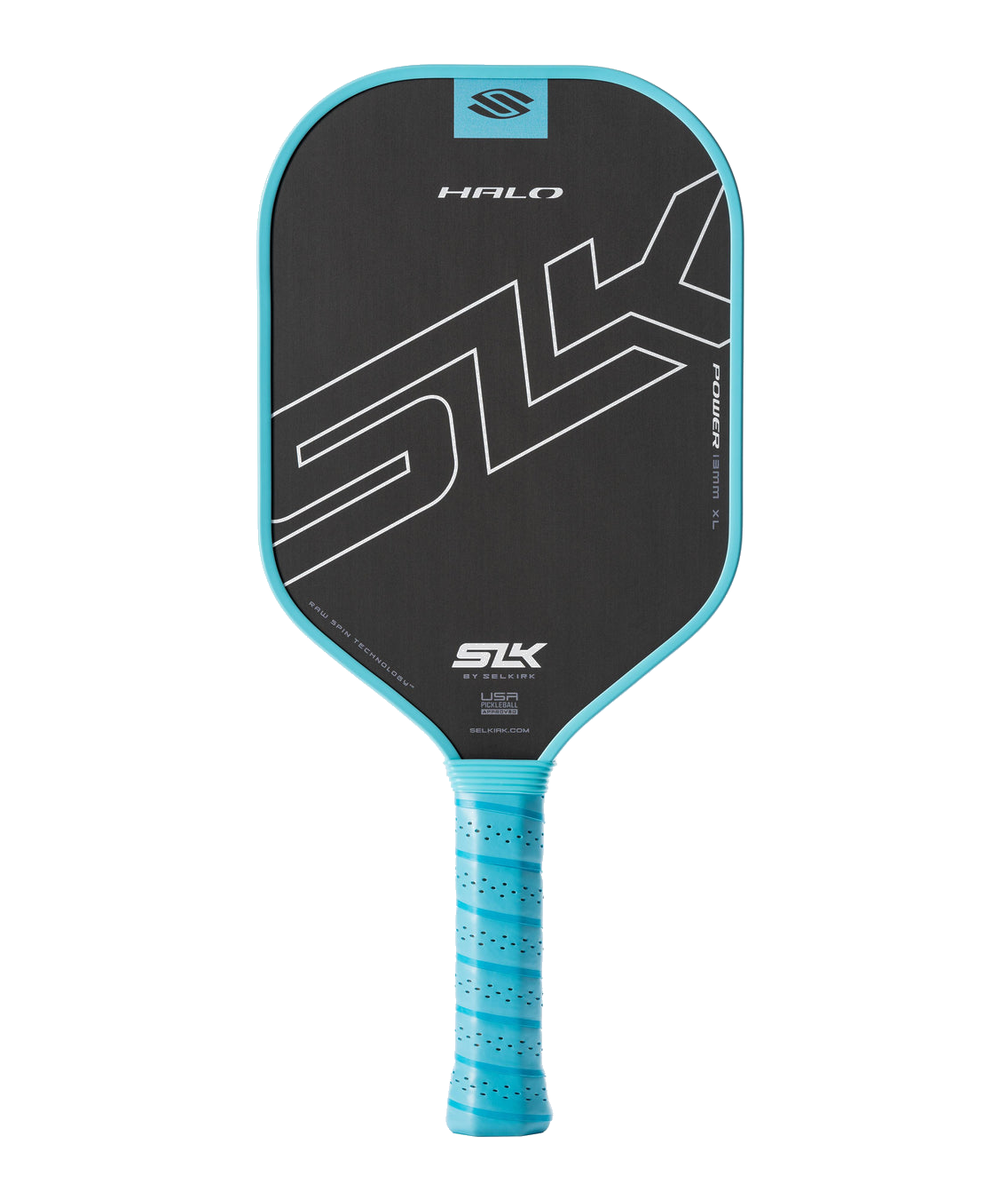
At $99 street the Halo XL gives you T700 raw carbon, Selkirk build quality and strong control. Two limits: spin sits at roughly 1,400 to 1,450 RPM, which is low for a carbon face, and the grip is thick enough that many women and small-handed players find it a poor fit.
Verdict: Selkirk owns the entry tier between these two brands. If spin matters to you at this budget, look outside both — our under-$100 guide covers the alternatives.
Who Should Buy JOOLA
- You want the most performance per dollar and you are comfortable replacing a paddle roughly annually.
- You play a power game off an elongated shape and want the pace to be available without perfect technique.
- You are buying the Pro IV at street price, which is the strongest value either brand currently offers.
- You are not troubled by grit fading inside a season, because you are a drive-and-volley player rather than a spin player.
Who Should Buy Selkirk
- You have already worn out or broken a paddle and do not want to do it again. The lifetime warranty is the product.
- You want US manufacturing and a brand that will still be answering the phone in five years.
- You are buying at the entry level, where the SLK line is better value than anything comparable from JOOLA.
- Spin durability matters to you specifically — InfiniGrit is the only surface on either side sold on how long it lasts.
Frequently Asked Questions
Which brand do more pros use?
JOOLA has the more visible signature roster, and the Perseus is the more common sight at the top of the pro game. Pro usage reflects sponsorship as much as performance, so treat it as a signal about marketing spend rather than about which paddle suits you.
Is Selkirk worth the extra money?
If you keep paddles for more than a year, the lifetime warranty closes most of the price gap on its own. If you upgrade annually anyway, you are paying for coverage you will never claim.
Do JOOLA paddles delaminate?
JOOLA’s documented issue is core crush rather than delamination, and the two are different failures. Our guide to delamination signs explains how to tell them apart and what each sounds like.
Which has better resale value?
JOOLA models hold attention longer because of pro visibility, but JOOLA also iterates faster, which pushes last year’s flagship down quickly. Selkirk’s slower release cycle keeps prices steadier. Neither is an investment.
Which is better for a beginner?
Selkirk, on availability alone — the SLK Halo XL at $99 is a genuinely good first carbon paddle. But neither brand is where we would send a beginner first; see our beginner paddle guide for the full shortlist.
Where can I read more on each brand?
We cover each in depth separately: the JOOLA paddle review and the Selkirk paddle review.
Ranges, warranty terms and prices are checked against JOOLA and Selkirk directly, and were current in July 2026.

Isacc Shah
Isacc Shah writes PaddleTestLab. He does not test paddles in a lab and says so plainly — there is no rig, no radar gun, no staff hitting balls. Instead he aggregates independent bench measurements, manufacturer specifications, USA Pickleball's approval database and hundreds of verified owner reviews per product, then reports where those sources disagree. Every score on the site carries its evidence count. Where a specification is not published, the site writes UNKNOWN rather than estimating it, and the criticism is printed next to the praise.