
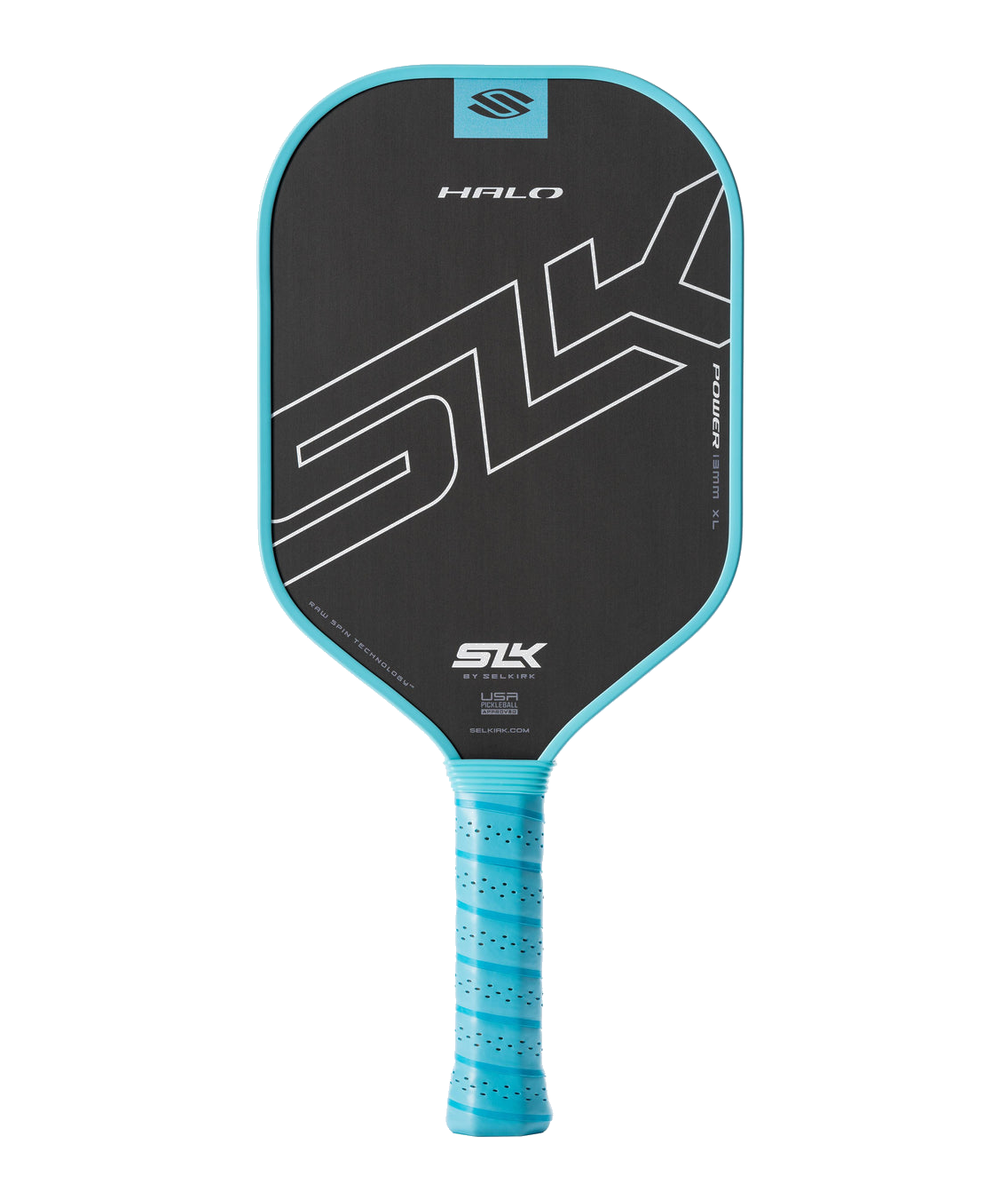
If you’re trying to figure out how to choose a pickleball paddle, the honest answer is that most of what decides your experience comes down to five specs: weight, core thickness, face material, shape, and grip size. Brand names and marketing copy matter a lot less than owners get told. This guide builds its recommendations entirely from verified owner reviews and published spec sheets, not from a single reviewer’s opinion after one hitting session.
Check the USA Pickleball approved equipment list.
Compare how the how to choose a pickleball paddle rank by price, weight and verified owner ratings before you decide.
For more detail on how the how to choose a pickleball paddle compare, scroll to the scorecard at the end of this guide.

Why Paddle Choice Matters More Than Brand Hype
Two paddles from the same brand, priced $150 apart, sometimes perform almost identically according to owner reports. What actually changes your game is weight, swingweight, core thickness, face material, shape, and grip fit. Everything else — colorways, pro endorsements,
Compare how the how to choose a pickleball paddle rank by price, weight and verified owner ratings before you decide.
For more detail on how the how to choose a pickleball paddle compare, scroll to the scorecard at the end of this guide.
The Five Specs That Decide Everything
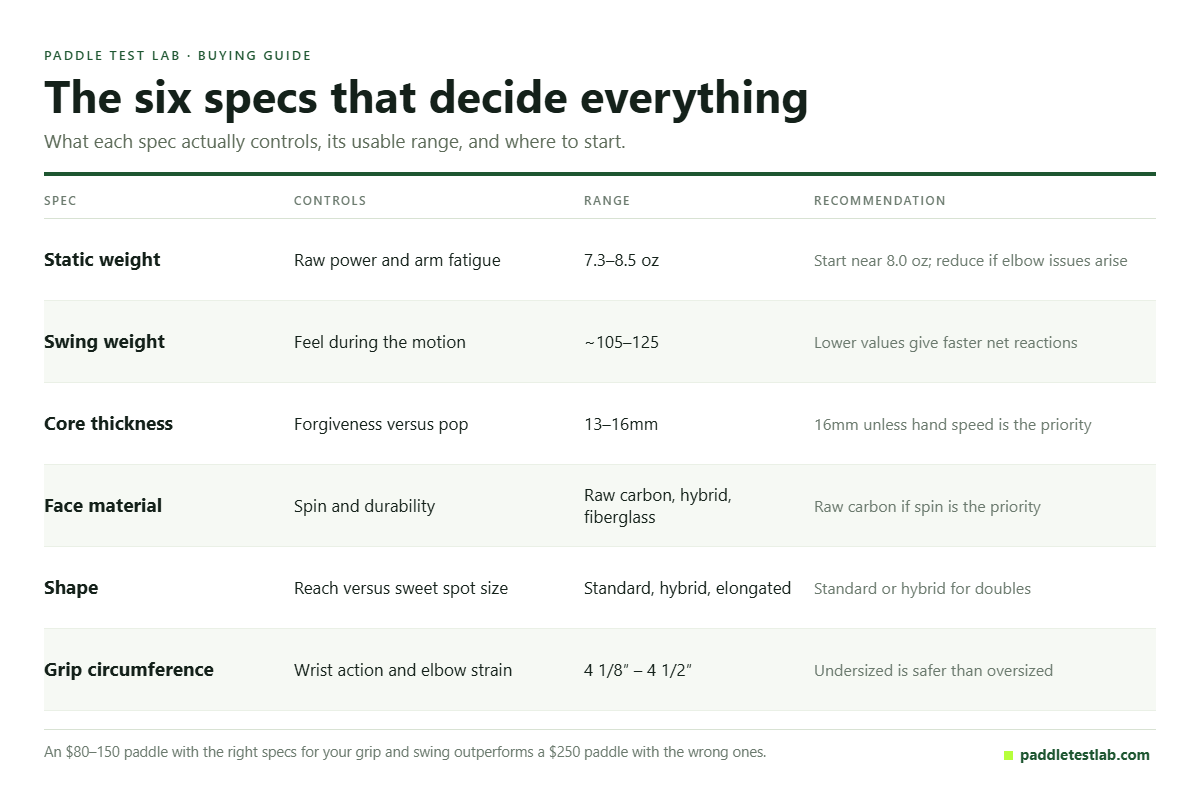
Weight, core thickness, face material, shape and grip size determine how a paddle feels. Weight controls power and control; core thickness balances power vs control; face material sets spin and durability; shape changes reach and sweet spot; grip size shapes comfort and injury risk.
Get these right and nearly any paddle in budget feels good. Get them wrong and even a premium paddle feels awkward.
Beginners do best with a control-first paddle near 8 ounces and a thicker core. Power players prefer under 7.8 ounces with a thinner core. Spin seekers prioritize a textured raw-carbon face; durability-first players choose fiberglass.
| Spec | What it controls | Common range | Rule of thumb |
|---|---|---|---|
| Static weight | Raw power and arm fatigue | 7.3–8.5 oz | Start near 8.0 oz; go lighter if your elbow complains |
| Swing weight | How heavy the paddle feels in motion | Roughly 105–125 | Matters more than static weight; lower is faster at the net |
| Core thickness | Forgiveness versus pop | 13–16mm | 16mm unless you specifically want speed off the face |
| Face material | Spin and surface longevity | Raw carbon, hybrid, fiberglass | Raw carbon if spin matters to you at all |
| Shape | Reach versus sweet spot size | Standard, hybrid, elongated | Standard or hybrid for doubles; elongated for singles |
| Grip circumference | Wrist action and elbow strain | 4 1/8″–4 1/2″ | Too small is safer than too big — you can always build it up |
Those are the pickleball paddle specs explained in roughly the order they affect your game. Swing weight is the one most buyers have never heard of and the one that changes the most — our guide to swing weight in pickleball explains how it is measured and which range suits which style of play.
FAQ
Should beginners buy the most expensive paddle?
No. A $80-150 paddle with the right specs beats a top-tier paddle with the wrong specs.
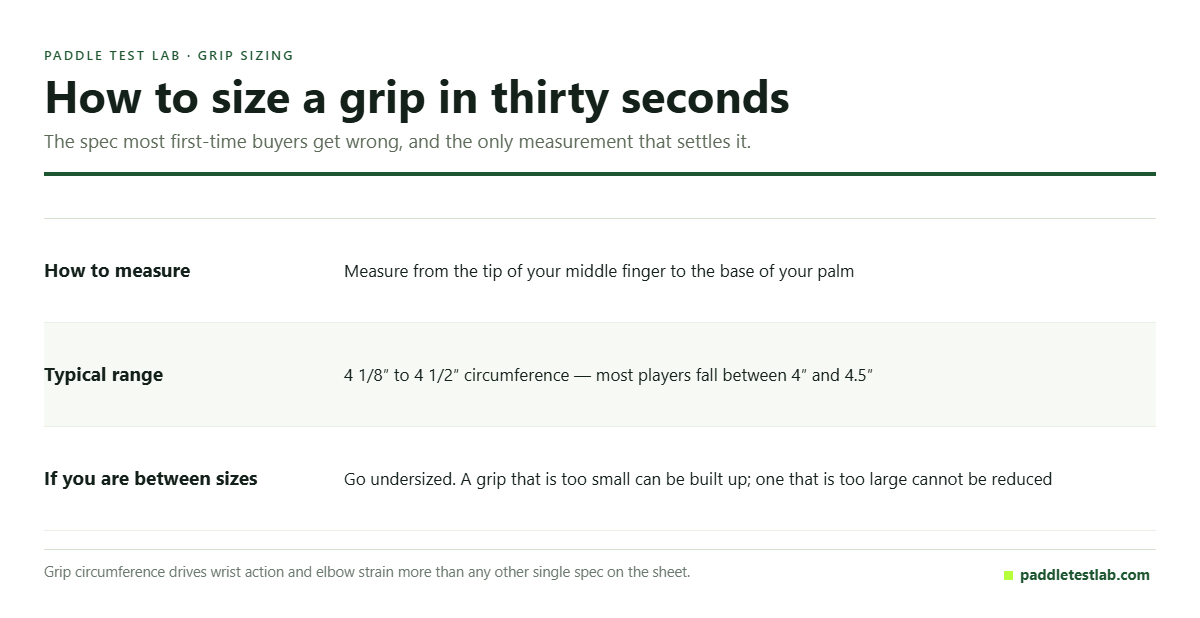
How do I find my grip size?
Measure middle finger tip to palm base. Most players are 4 to 4.5 inches, matching grips 4, 4.25 and 4.5.
What should I look for in a pickleball paddle?
In priority order: a grip size that fits your hand, a swing weight you can move comfortably at the net, a core thickness matched to your tolerance for mishits, and a face material that supports the amount of spin you actually use. Everything else — colour, brand, edge guard styling, the professional whose signature is on it — is secondary. The most common failure is buying for one spec in isolation, usually power, then discovering the paddle is unusable at the kitchen line. If you are starting from zero, our beginner pickleball paddle guide narrows the field before you start comparing specs at all.
What are the most common pickleball paddle buying mistakes?
Four come up again and again. Buying a paddle because a professional endorses it, when their swing weight and shape preferences rarely transfer to club play. Buying too heavy on the theory that heavier means more power, then developing elbow pain within a month. Choosing a grip that is too large because it felt secure in the shop, which restricts wrist action and is a well-documented contributor to arm strain. And upgrading too early — replacing a perfectly adequate paddle to fix a problem that is technique rather than equipment. Our guide to choosing pickleball paddle weight deals with both weight-related mistakes directly.
How Weight Changes Your Game
Paddle weight is the single biggest factor in how a paddle feels. Heavier paddles near 8.2 ounces generate more power and stability but tire the arm faster and slow your hand speed at the net. Lighter paddles under 7.6 ounces are easier to swing and react faster but give up power and can feel whippy on hard shots.
Most recreational players settle in the 7.8-8.1 ounce range, which balances power and control. If you have tennis elbow or wrist sensitivity, err slightly lighter and pair it with a thicker core for extra shock absorption.
Core Thickness and Face Material
Core thickness is measured in millimeters – typically 14mm or 16mm. A 16mm core gives more control and a softer feel, ideal for beginners and players who dink and block. A 14mm core gives more pop and power, preferred by aggressive players who drive the ball.
Face material follows play style. Raw carbon faces grip the ball for maximum spin but wear faster and cost more. Fiberglass faces are softer, more durable and cheaper, with less spin. Composite faces split the difference and are the best value for most players.
Shape and Grip Size
Shape changes reach and sweet spot. Standard shapes are balanced. Widebody paddles maximize the sweet spot for forgiveness. Elongated paddles add reach and spin but shrink the sweet spot. Choose widebody to start, and try elongated only after your contact point is consistent.
Finally, grip size. Measure from the middle fingertip crease to the base of the palm. Too small a grip twists in your hand; too large strains the forearm. Match your measurement to the manufacturer chart, and use an overgrip only to fine-tune feel, not to fix the wrong size.
Budget Guidance
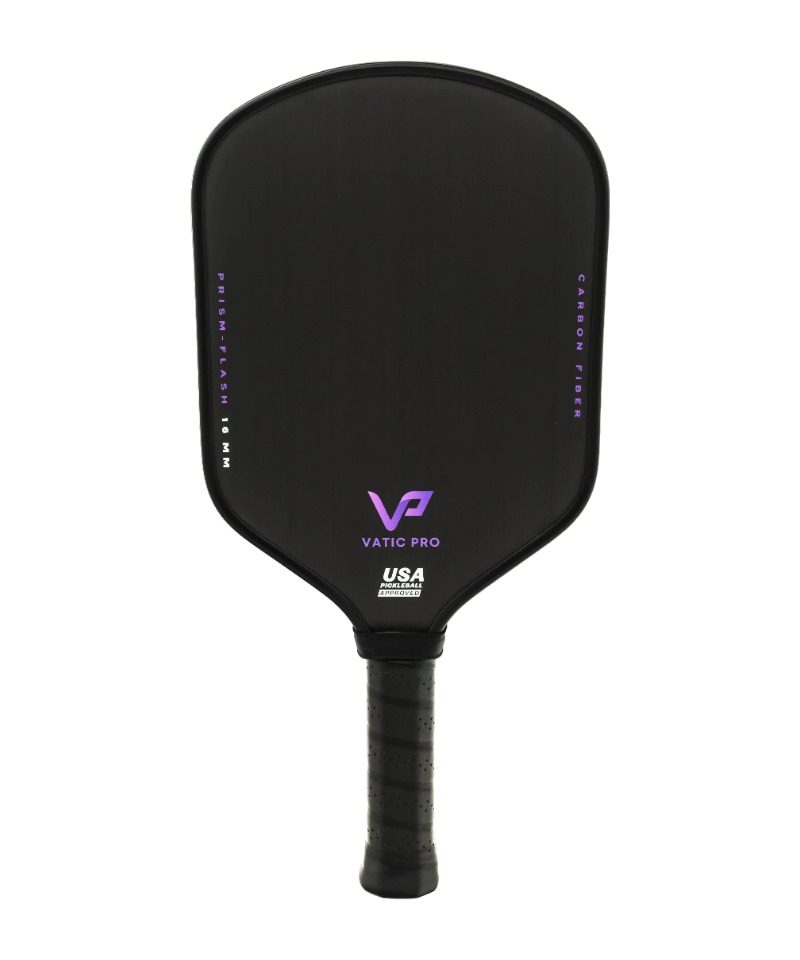
You do not need a premium paddle to play well. A $80-150 paddle with the right specs for your grip and swing outperforms a $250 paddle with the wrong specs. Spend more only when you have a consistent grip, a defined play style, and you want specific spin or power characteristics.
Check our how to choose a pickleball paddle scorecard at the end for a side-by-side verdict.
Check our how to choose a pickleball paddle scorecard at the end for a side-by-side verdict.
The how to choose a pickleball paddle rankings above come from verified owner data, not the manufacturers’ marketing lines.
Your Pickleball Paddle Buying Checklist
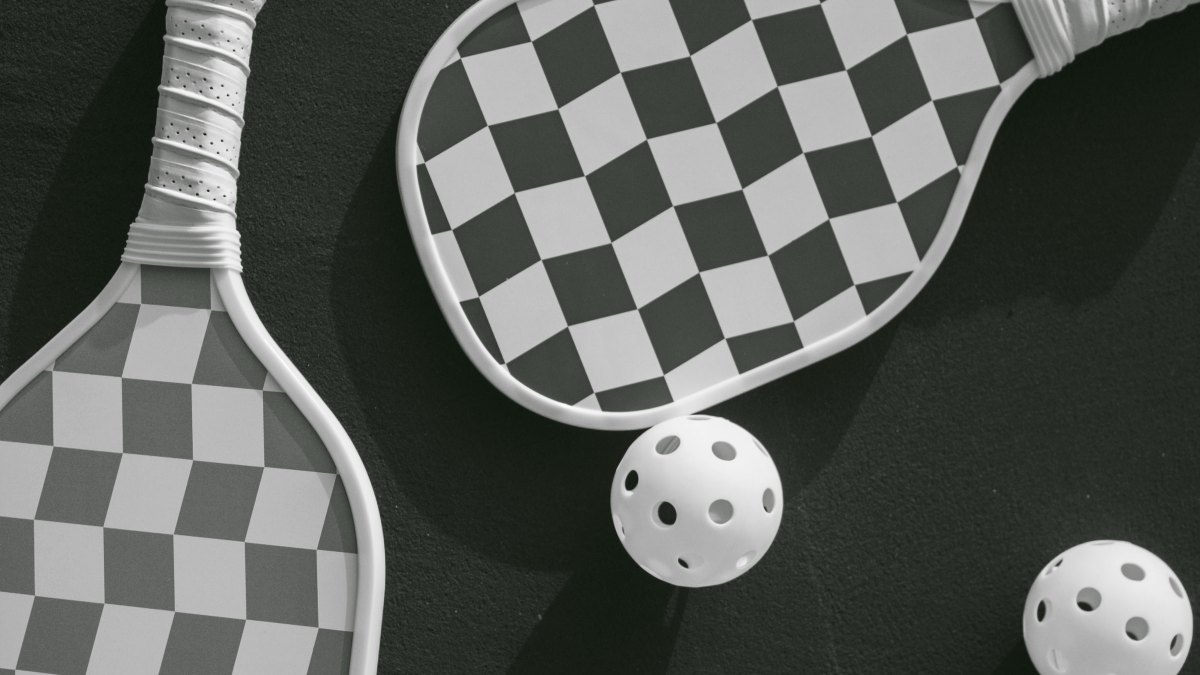
Run through this before you spend anything. If you cannot answer a line, that is research still to do rather than a line to skip.
- Do I know my grip size, measured rather than guessed?
- Have I decided between control and power, and does the core thickness match that decision?
- Is the face raw carbon, hybrid or fiberglass, and does that match how much spin I actually use?
- Is the swing weight in a range I can handle for a full session, not just a few swings in a shop?
- Is this exact model on the current USA Pickleball approved list, if I intend to play tournaments?
- What is the warranty length, and what does it exclude?
- Is the return window long enough for me to play with it several times?
- Am I buying this to fix an equipment problem or a technique problem?
Two of those lines are worth checking against sources rather than the product page: USA Pickleball approval status and warranty terms by brand, both of which brands tend to describe loosely in their own marketing.
How to Test a Pickleball Paddle Before You Buy
Demo programmes and generous return windows are the closest thing to a free trial this sport offers, and they are badly underused. If you can get a paddle in hand, these are the checks worth running in the first session rather than the fifth.
Hit twenty soft dinks before you hit a single drive. A paddle that feels exciting on drives and unmanageable on resets is the single most common regret purchase, and the dinks expose it immediately. Then deliberately hit off-centre — high on the face, and down near the throat — and notice how much the paddle twists in your hand and how much ball speed you lose. That is the forgiveness you will actually be living with. Finally, play a full session before deciding, because arm fatigue from a high swing weight does not show up in ten minutes.
If you are buying used, add a delamination check. Tap across the face with a knuckle and listen for any change in pitch or a rattle in one area, then look closely for lifting at the edge guard. Our guide to spotting paddle delamination covers what to listen for, and why a delaminated paddle is not merely worn but illegal for sanctioned play.
Related guides

Isacc Shah
Isacc Shah writes PaddleTestLab. He does not test paddles in a lab and says so plainly — there is no rig, no radar gun, no staff hitting balls. Instead he aggregates independent bench measurements, manufacturer specifications, USA Pickleball's approval database and hundreds of verified owner reviews per product, then reports where those sources disagree. Every score on the site carries its evidence count. Where a specification is not published, the site writes UNKNOWN rather than estimating it, and the criticism is printed next to the praise.