
The carbon fiber vs fiberglass pickleball paddle question comes up in nearly every buying guide comment section, and for good reason. Face material shapes how a paddle feels, how much pop it gives, and how long it lasts before performance drops off. We pulled owner-reported patterns and manufacturer data across a dozen current models to sort out what’s actually true versus what’s marketing.
Check the USA Pickleball approved equipment list.
Compare how the carbon fiber vs fiberglass pickleball paddle rank by price, weight and verified owner ratings before you decide.
For more detail on how the carbon fiber vs fiberglass pickleball paddle compare, scroll to the scorecard at the end of this guide.
Carbon Fiber vs Fiberglass: The Core Differences
Both materials sit on the outside of a paddle’s core, and that thin layer does most of the work in shaping ball feel. The core (usually polymer honeycomb or foam) handles some of the dampening, but the face determines spin, pop, and how forgiving off-center hits feel.
What “carbon fiber face” actually means
Carbon fiber faces are woven sheets of carbon filament, often from suppliers like Toray, bonded over the core. You’ll see two finishes: raw carbon, which is unpainted and typically grittier for spin, and textured carbon, which uses raised patterns molded into the surface for extra bite. Toray T700 carbon shows up repeatedly across models in the current market, from Paddletek’s Bantam TKO-C to Vatic Pro’s Prism line and Six Zero’s Double Black Diamond Control.
What “fiberglass (fiberglass composite) face” actually means
Fiberglass faces use woven glass fibers instead of carbon. They flex more on contact, which owners often describe as extra “pop” or trampoline effect. Fiberglass is generally cheaper to manufacture, which is part of why it shows up heavily in entry-level padel rackets like the Babolat Contact and Head Evo Speed, and in hybrid paddle faces that blend fiberglass with carbon for a softer, more forgiving response.
How face material affects power, spin, and feel
Generally, carbon fiber is stiffer and transmits more of your swing energy directly into spin and control, while fiberglass flexes and rebounds, which owners associate with easier power on shots where you’re not swinging hard. Neither material alone decides everything, though – core thickness, weight, and swingweight matter just as much. A heavy, head-heavy carbon paddle can still feel powerful, and a thin-core fiberglass paddle can still feel dead if the core is compromised.
Compare how the carbon fiber vs fiberglass pickleball paddle rank by price, weight and verified owner ratings before you decide.
For more detail on how the carbon fiber vs fiberglass pickleball paddle compare, scroll to the scorecard at the end of this guide.
Manufacturer Claims vs. Owner-Reported Evidence
This is where things get messy, because marketing language and lived experience don’t always line up.
Brand marketing claims about carbon fiber power/control
Brands routinely pitch carbon fiber as the “pro-level control” material with a large sweet spot and consistent spin. Selkirk markets its LABS Project Boomstik around “explosive durable power” thanks to T700 carbon and InfiniGrit texture. CRBN leans on its 100% foam core plus T700 raw carbon combo for dwell time and spin.
Brand marketing claims about fiberglass “pop” and affordability
Fiberglass paddles and rackets get marketed around affordability and forgiveness rather than raw power ceiling. In padel, Babolat’s Contact and Head’s Evo Speed are explicitly positioned as entry-level, arm-friendly fiberglass frames rather than performance-ceiling options.
What USA Pickleball approval does and doesn’t tell you
USA Pickleball (USAP) approval confirms a paddle meets surface roughness, dimension, and deflection standards for sanctioned play. It says nothing about durability, comfort, or how a paddle will perform after two months of heavy use. Most of the carbon models in this guide – the JOOLA Perseus line, Selkirk LABS Boomstik, CRBN TruFoam Genesis, Six Zero Coral, Paddletek Bantam TKO-C, Gearbox GBX Power, and Ronbus Quanta – carry current USAP approval. A few budget models, including the Vatic Pro Saga, SLK Halo XL Control, and 11SIX24 Pegasus, have unconfirmed USAP status as of this writing. Check the USA Pickleball approved paddle list before buying if tournament legality matters to you.
What aggregated owner reviews actually report on durability and performance
Across owner reviews, a consistent theme emerges: raw carbon faces on budget and mid-tier paddles lose grit and spin noticeably within 6-8 weeks of regular play. Six Zero’s Double Black Diamond Control owners report pop fading and grit wearing within that window. Vatic Pro Prism owners report one tester measuring roughly 50% spin loss after two months. On the premium end, JOOLA’s Perseus Pro IV shows a similar pattern – grit and spin drop noticeably after 2-4 months of heavy play, even though the core itself holds up. Selkirk’s Boomstik, by contrast, markets InfiniGrit specifically to resist that wear curve, and owners haven’t reported the same grit fade, though loose or failing edge guards are a recurring complaint instead.
| Claim | Manufacturer Says | Owner/Independent Evidence |
|---|---|---|
| Carbon fiber = longer-lasting grit/spin | Implied by “pro-grade” marketing | Mixed – several raw carbon models show grit fade in 6-8 weeks; InfiniGrit and cold-bond builds (Boomstik, Gearbox) report holding up better |
| Fiberglass = more pop for less effort | Marketed as forgiving power | Consistent with owner reports in padel entry frames; no comparable pickleball fiberglass-only paddle in this dataset to confirm directly |
| USAP approval = quality guarantee | Not explicitly claimed, but often implied by association | USAP only confirms legality, not durability or comfort – owner complaints exist even on approved paddles |
| No-core-crush foam cores last longer | Claimed by CRBN, Selkirk LABS, Gearbox, Ronbus | Owner reports generally support this for the core itself; face wear (grit, spin) is a separate, often earlier failure point |
Which Paddle Type Fits Your Game
Best for control-first players
Raw carbon paddles with larger sweet spots, like the Six Zero Double Black Diamond Control or Vatic Pro Saga, tend to get praised for forgiveness over outright power – a good fit if you’re building consistency before chasing pace.
Best for power/pop players
Stiffer carbon builds like the Gearbox GBX Power or Selkirk LABS Boomstik reward players who already generate their own racket-head speed. Owners repeatedly note these paddles are less forgiving and demand clean technique.
Best for beginners still learning feel
Budget carbon paddles with soft, forgiving faces – the Vatic Pro Prism and Saga, and the 11SIX24 Pegasus/Vapor line – get consistent praise for plush feel and large sweet spots at entry pricing. See our best pickleball paddles for beginners guide for more picks.
Best for players managing arm/elbow sensitivity
Six Zero’s Coral is specifically called out by owners for minimal vibration and top comfort scores, thanks to a dense, soft full-foam core. Engage’s Pursuit Pro1 6.0 is widely cited as a standard elbow-friendly pick with built-in vibration dampening and low swingweight, though its steep discounting suggests you should verify current production status before buying.
At-a-Glance: Top Picks by Category
| Award | Model | Price | Face |
|---|---|---|---|
| Best Overall | JOOLA Perseus Pro IV 16mm | $249.95 street | Textured carbon fiber |
| Best Budget | Vatic Pro Prism | $99.99 | Raw Toray T700 carbon |
| Best for Spin | Selkirk LABS Project Boomstik | $332.99 MSRP | Multistrata T700 carbon w/ InfiniGrit |
| Best for Beginners | Vatic Pro Saga | $99.99 | Raw carbon |
| Best Arm-Friendly | Six Zero Coral 16mm | ~$199-200 MSRP | Diamond Tough raw carbon |
Detailed Picks: Specs, Praise, and Criticism
Carbon fiber options reviewed
JOOLA Perseus Pro IV 16mm – $249.95 street ($279.99 MSRP), 7.9-8.1 oz, 16mm/14mm core, textured carbon fiber, elongated, USAP approved. Owners praise easy power and a forgiving, large sweet spot. Criticism centers on grit/spin dropping after 2-4 months of heavy play, and JOOLA cores carry a history of core-crush complaints in the line. It’s technically superseded by the Perseus Pro V, but reviewers consistently say the Pro IV is the better buy at its price.
Selkirk LABS Project Boomstik Elongated 16mm – $332.99 MSRP, 8.0-8.3 oz, 16mm core, T700 carbon with InfiniGrit, USAP approved. Owners report explosive, durable power with no core crush and strong spin retention thanks to InfiniGrit. The criticism is real: it costs $50-100 more than rivals, plays hard to control for some, and there are many reports of loose or failing edge guards.
CRBN 1 TruFoam Genesis (TFG1) – $279.99 MSRP, 7.8-8.1 oz, 14mm core, T700 raw carbon plus fiberglass, USAP approved. The 100% foam core (Gen4) eliminates core-crush complaints and owners praise dwell time and spin. Criticism: the grip gets slippery over time, the sweet spot is the smallest in the CRBN lineup, and swingweight runs high at 118-120.
Six Zero Coral 16mm – ~$199-200 MSRP, 7.9-8.2 oz, 16mm core, Diamond Tough raw carbon, USAP approved. This is the arm-friendly pick: owners consistently note minimal vibration and top comfort scores from its dense, soft full-foam core. The catch is limited feedback overall – long-term durability isn’t well established yet, and the grip is described as too thick for small hands.
Paddletek Bantam TKO-C 14.3 – $199.99 MSRP, 7.7-8.1 oz, 14.3mm core, PT-700 raw carbon, USAP approved since Feb 2024. Owners like the big pop paired with control, and it’s made in the USA. Criticism: it’s head-heavy (swingweight 116-117), the grip isn’t top-tier, it feels stiff on soft shots, and it’s notably loud on contact.
Vatic Pro Prism (Flash/V7/Bloom) – $99.99, 7.7-8.2 oz depending on model, 16mm/14mm core, raw Toray T700 carbon. Widely considered the benchmark budget carbon paddle – plush, forgiving feel with grip inserts marketed to reduce shock. The documented downside: grit wears fast, with one tester measuring roughly 50% spin loss after two months, and it runs slightly head-heavy.
Vatic Pro Saga 16mm – $99.99, 8.03-8.32 oz, 16mm/14mm core, raw carbon, USAP status unconfirmed. Called the best-priced true all-court paddle in its tier, with a polymer core that doesn’t show the long-term issues seen elsewhere. Owners note it’s a jack-of-all-trades – it won’t generate offense for you.
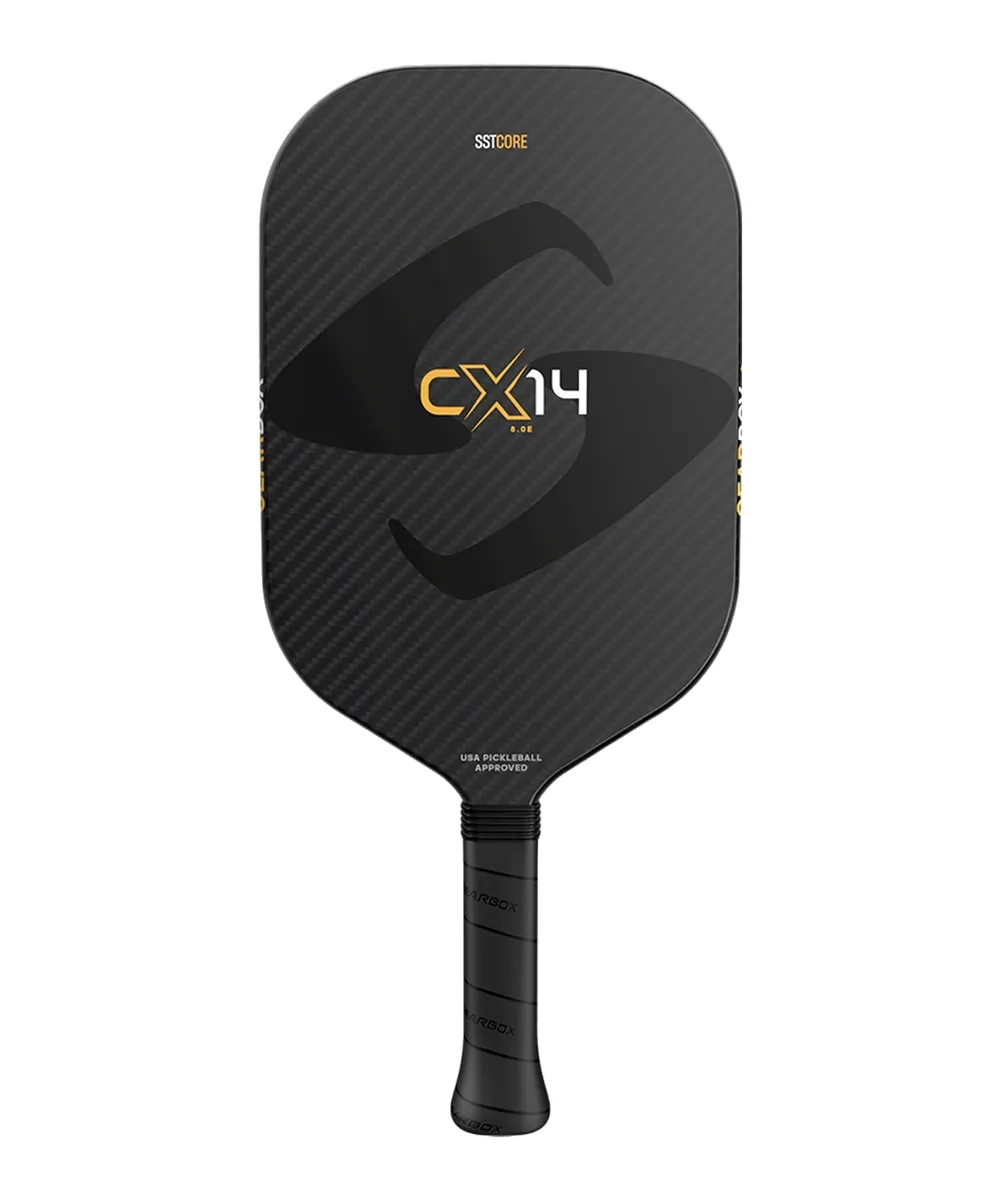
Gearbox GBX Power Elongated 16mm – $179.99 MSRP, 8.0 oz, 16mm core, raw unidirectional carbon, USAP approved. Owners like the cold-bond build, which resists crushing and degradation, and note the Gen-3 version costs $100 less than the older GX2. It’s stiff, though, and sacrifices control, spin, and forgiveness – reviewers say it’s really only for 4.0+ power players.
Ronbus Quanta (R1/R2/R3/R4) 16mm – $119.99 MSRP ($99 with codes), 7.68-7.80 oz, 16mm core, raw carbon, USAP approved. The Gen-4 EPP foam core avoids core crush and the paddle is very light and maneuverable. The catch: the stock sweet spot is small, and owners report you need to add 7.5-15g of weight at the 3 and 9 o’clock positions to get it performing well.
Fiberglass options reviewed
Pure fiberglass-face pickleball paddles are thin on the ground in the current market – most competitive paddles today lean carbon, with fiberglass showing up in hybrid blends or budget lines. The 11SIX24 Pegasus/Vapor/Hurache-X Jelly Bean series ($99.99, 7.93-8.24 oz, 16mm core) blends fiberglass with raw carbon and is considered the best budget control paddle in its tier, with excellent forgiveness and high twist weight. Owners note it lacks put-away power and has a smaller sweet spot than foam-core rivals.
For a clearer fiberglass comparison, look outside pickleball to padel, where fiberglass remains the dominant entry-level face material. The Babolat Contact ($59 street) and Head Evo Speed/Evo Extreme (both $99.95) are consistently praised as the most arm-friendly rackets at any price, with soft EVA cores and wide, forgiving sweet spots. Owners describe them as strictly entry frames with no real power ceiling – you’ll outgrow them as your game develops.
Verdict: Carbon Fiber or Fiberglass – Which Should You Buy?
Our data-backed recommendation by player type
If you’re past the absolute beginner stage and want spin, control, and a paddle that rewards technique, carbon fiber wins based on the weight of owner evidence here. Models like the JOOLA Perseus Pro IV and Selkirk LABS Boomstik deliver real performance, even with their specific quirks. If elbow comfort is non-negotiable, the Six Zero Coral stands out for a reason – owners keep coming back to its low-vibration feel.
When fiberglass is genuinely the smarter buy
Fiberglass, or fiberglass-carbon hybrids like the 11SIX24 Pegasus, still make sense if you’re brand new, budget-constrained, or recovering from arm issues and want maximum forgiveness over raw performance. In padel specifically, fiberglass entry frames remain the honest, sensible choice for anyone just starting out.
Frequently Asked Questions
Is carbon fiber or fiberglass better for beginners?
Beginners generally do fine with either, but soft, forgiving carbon paddles like the Vatic Pro Prism and Saga get strong praise for plush feel and large sweet spots at beginner-friendly prices. In padel, fiberglass entry frames like the Babolat Contact are specifically built and marketed for first-time players.
Which paddle face material lasts longer before delamination or wear?
Neither material has a clean track record in this dataset. Raw carbon faces on several budget and mid-tier paddles show grit and spin fade within 6-8 weeks to a few months of heavy use. Cores tend to hold up better than faces – foam and cold-bond builds report fewer structural failures than the surface grit itself.
Does fiberglass really give more power/pop than carbon fiber?
The flex characteristic of fiberglass does tend to produce a springier, more forgiving pop, based on how it’s consistently marketed and described by owners in padel entry frames. There isn’t a directly comparable fiberglass-only pickleball paddle in the current dataset to confirm this head-to-head against carbon, so treat this as a qualitative pattern rather than a measured fact.
Are carbon fiber paddles harder on your arm or elbow?
It depends heavily on the specific paddle’s core and swingweight, not the face material alone. Stiffer carbon builds like the Gearbox GBX Power and Paddletek Bantam TKO-C are described as stiff and loud, which some players associate with more arm strain. But other carbon paddles, like the Six Zero Coral, are specifically praised for minimal vibration. Face material isn’t the deciding factor here – core density and dampening design are.
Do carbon fiber paddles cost more, and is it worth it?
Generally, yes – most premium paddles in this dataset use carbon faces, from the $332.99 Selkirk LABS Boomstik down to sub-$100 budget carbon options like the Vatic Pro Prism. Whether it’s worth it depends on your level: intermediate-to-advanced players consistently report the control and spin benefits justify the price, while beginners may get similar practical results from a $99 budget carbon paddle.
Which material generates more spin according to owners?
Raw carbon faces are the more consistent spin performers across owner reports, especially with grit-focused designs like Selkirk’s InfiniGrit. The catch is that this spin advantage often fades over weeks or months of play as the grit wears down – a pattern reported across multiple raw carbon models, from budget to premium tiers.
Check our carbon fiber vs fiberglass pickleball paddle scorecard at the end for a side-by-side verdict.
Check our carbon fiber vs fiberglass pickleball paddle scorecard at the end for a side-by-side verdict.
The carbon fiber vs fiberglass pickleball paddle rankings above come from verified owner data, not the manufacturers’ marketing lines.
Frequently Asked Questions
Is carbon fiber worth the extra cost?
Yes for spin and longevity. Carbon surfaces hold texture longer and generate more spin, while fiberglass fades faster under regular play.
Do pros use carbon fiber paddles?
Most tour-level players use carbon or carbon-hybrid paddles for consistent spin and feel.

Isacc Shah
Isacc Shah writes PaddleTestLab. He does not test paddles in a lab and says so plainly — there is no rig, no radar gun, no staff hitting balls. Instead he aggregates independent bench measurements, manufacturer specifications, USA Pickleball's approval database and hundreds of verified owner reviews per product, then reports where those sources disagree. Every score on the site carries its evidence count. Where a specification is not published, the site writes UNKNOWN rather than estimating it, and the criticism is printed next to the praise.