
If you’re wondering how to add an overgrip to a pickleball paddle without wrecking the wrap or wasting tape, you’re not alone. It’s one of the most searched maintenance questions in the sport, and the good news is that the process is simple once you know the two or three places where owners consistently trip up. This guide pulls from patterns across owner reviews, r/pickleball threads, and pro shop conventions rather than a single person’s opinion — because grip feel is subjective, but wrapping technique isn’t.
Why Overgrips Matter for Paddle Feel and Control
An overgrip is the thin layer of tacky material wrapped over your paddle’s existing grip. It’s not optional gear for most players — across owner reviews of paddles from brands like JOOLA, Selkirk, and CRBN, a stock grip loses its tackiness noticeably faster than most players expect, and an overgrip is the cheap fix that extends the life of the whole handle.
What an overgrip does vs a replacement grip
A replacement grip is the base layer, usually a tacky-but-durable material glued directly to the paddle handle. An overgrip goes on top of that. Owners who confuse the two often end up either stripping a perfectly good base grip unnecessarily, or layering overgrip after overgrip until the handle feels swollen and the grip circumference no longer matches their hand. If your handle taper feels off, or the paddle suddenly feels bulky in hand, that’s usually the tell.
When owners say it’s time to regrip
Forum threads on r/pickleball and verified owner reviews point to a few consistent signals: the surface feels slick even when dry, the wrap has visibly thinned or shifted, or there’s a faint but persistent odor that no amount of wiping fixes. Frequent players — those on court multiple times a week — report needing fresh overgrips far more often than once-a-week casual players, which lines up with basic wear logic.
What You’ll Need Before You Start
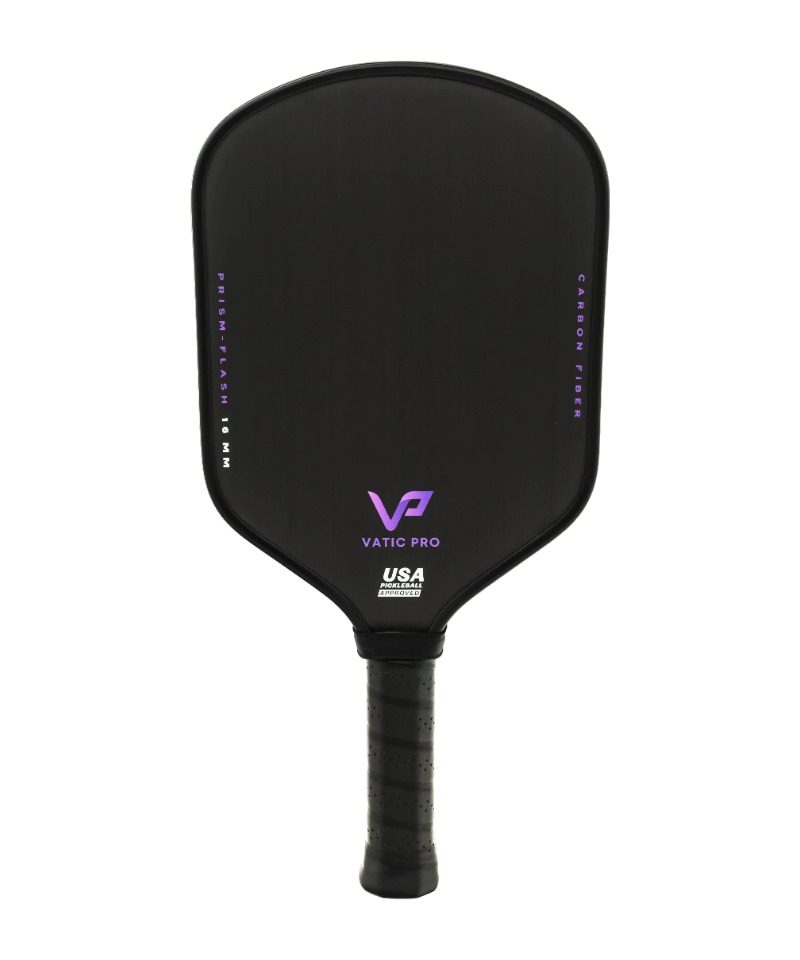
You don’t need much. A pair of scissors, the new overgrip, and a short length of finishing tape (usually included with the overgrip). Some players also keep isopropyl wipes on hand to clean the handle before wrapping, though this isn’t universal practice.
Tools: scissors, grip tape, finishing tape
Scissors matter more than people think — a clean, angled cut at the end of your overgrip prevents the fraying and unraveling that shows up in a lot of owner complaints. Finishing tape isn’t decorative; skipping it or using a low-quality substitute is one of the more common reasons overgrips loosen within days rather than weeks.
If you don’t already own a reliable overgrip, our dedicated overgrip roundup breaks down the models owners rate highest for tackiness and sweat resistance.
Choosing overgrip thickness based on owner feedback
Thickness is where a lot of buyers get surprised. Owner reviews across multiple paddle brands mention that stacking a thick overgrip over an already-thick base grip pushes the total handle circumference up enough to change swingweight feel and, for some players, aggravate grip fatigue. If you have smaller hands or you’re already on the thicker end of a paddle’s stock grip — a complaint noted specifically around models like the Six Zero Coral and Selkirk SLK Halo XL, both criticized by owners for running thick — lean toward a thinner overgrip rather than a plush one.
Step-by-Step: How to Add an Overgrip to a Pickleball Paddle
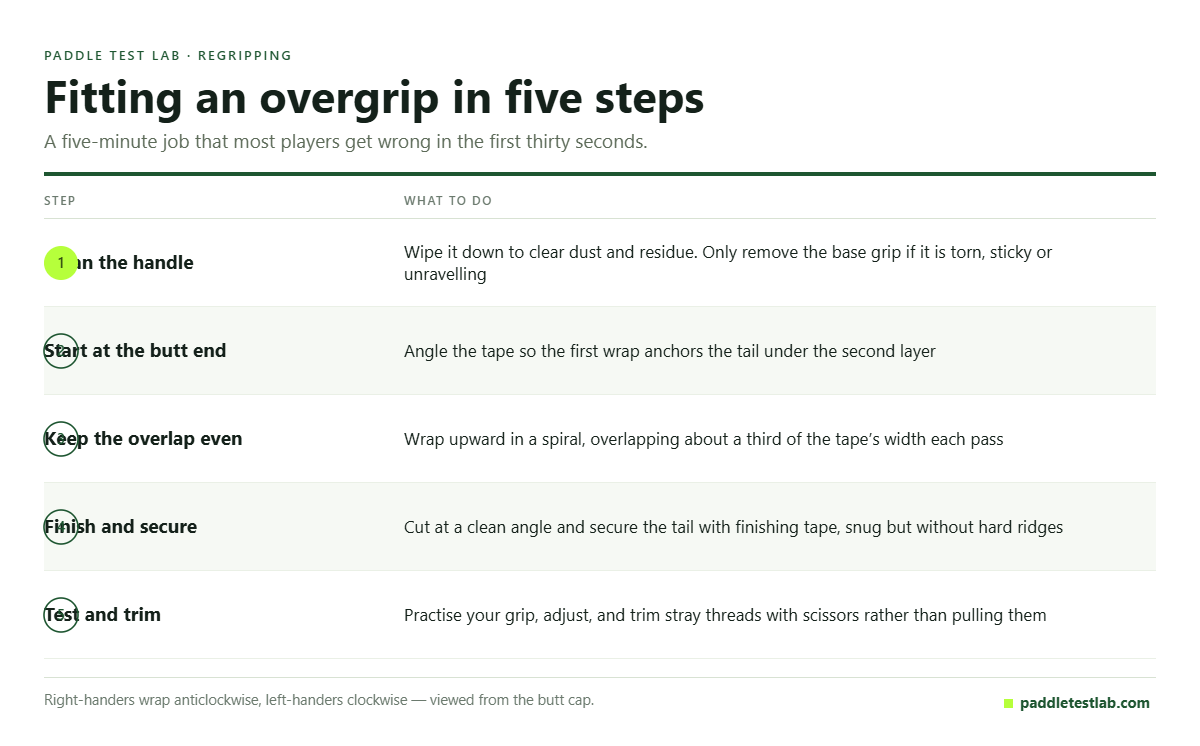
Step 1: Remove old grip or clean handle
If you’re layering a fresh overgrip on top of a healthy base grip, you generally don’t need to remove anything — just wipe the handle down to clear dust, sweat residue, or sunscreen film. If the base grip itself is torn, sticky in a bad way, or unraveling, that’s a replacement-grip job, not an overgrip fix. Trying to overgrip a truly worn-out base grip is a common owner mistake that just delays the real repair.
Step 2: Align and start wrapping at the base
Most pro shop guides and experienced owners agree on this: start at the butt end of the handle, angling the tape slightly so the first wrap anchors the tail end under the second layer. Starting from the wrong end — near the paddle face instead of the butt cap — is one of the specific mistakes owners flag repeatedly, because it leaves a loose tail right where your bottom hand grips hardest.
Step 3: Maintain even overlap up the handle
Wrap upward in a spiral, keeping a consistent overlap of roughly a third of the tape’s width with each pass. Consistency matters more than the exact percentage — pro shop convention favors an even, repeatable overlap over any single magic number, since a handle wrapped with inconsistent overlap is what creates the bumps and ridges owners complain about later.
Step 4: Finish and secure with tape
Once you reach the top of the handle, cut the overgrip at a clean angle and secure the tail with the finishing tape provided. Wrap the finishing tape snugly but don’t cinch it so tight it creates a hard ridge under your palm — that’s a smaller but still common complaint in owner threads.
Step 5: Test grip and trim excess
Give the handle a few practice grips and adjust your hand position as if you were about to serve. If any part feels loose, bunched, or noticeably thicker than the rest, that’s worth re-wrapping now rather than living with it. Trim any stray overgrip threads with scissors rather than pulling them, which can start an unraveling chain reaction.
Common Mistakes Owners Report When Regripping

Wrapping too loose or too tight
Too loose and the grip shifts under sweat within a session or two. Too tight and the overgrip can tear at the seams or create an uncomfortable ridge. Owner reviews suggest a moderate, consistent tension — stretched enough to activate the tack, not so much that the material thins out and loses its texture prematurely.
Uneven overlap causing bumps
This is probably the single most-cited technical mistake in forum threads. An inconsistent overlap creates lumps that are annoying at best and, for players who grip hard, can actually cause blistering over time. Slowing down the wrap and checking overlap every few turns fixes this for most people.
Starting from the wrong end
As noted above, starting near the paddle face instead of the butt cap leaves the most-gripped part of the handle vulnerable to unraveling. It’s an easy mistake for first-timers and shows up repeatedly in beginner-focused threads.
Manufacturer Claims vs Owner-Reported Evidence
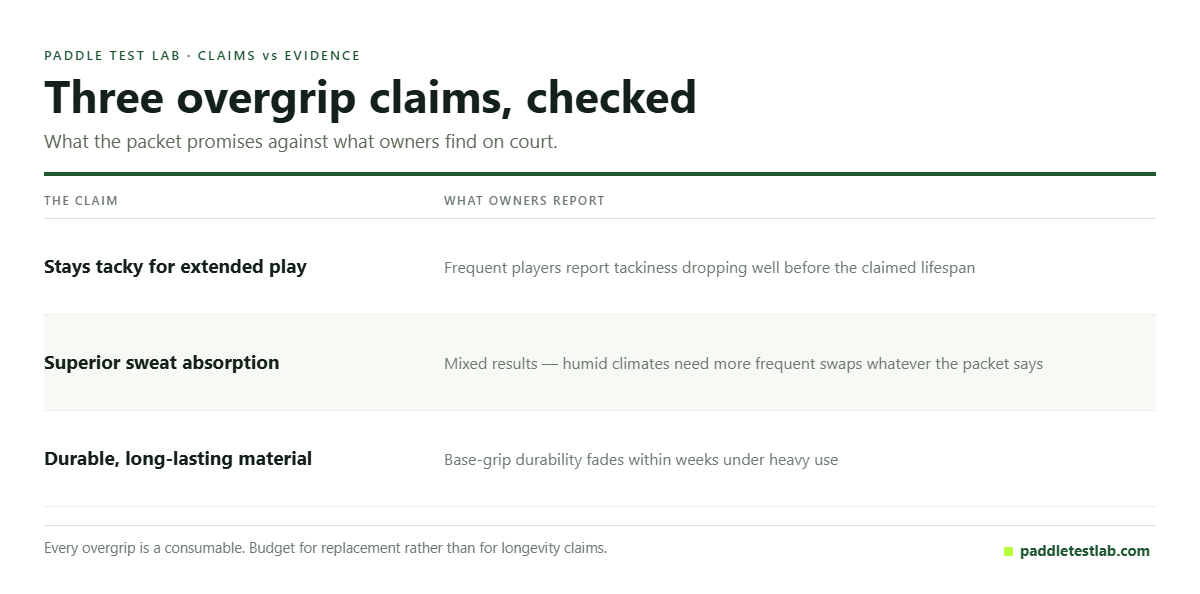
Overgrip brands frequently market tackiness and sweat-resistance as headline features. Owner review patterns tell a more mixed story — tackiness fades, and how fast it fades depends heavily on how often someone plays and how much they sweat.
| Claim | Owner-Reported Reality |
|---|---|
| Overgrip stays tacky for extended play | Frequent players (multiple sessions weekly) report tackiness dropping off well before the claimed lifespan; casual players get closer to advertised performance |
| Superior sweat absorption | Mixed — humid-climate players report needing more frequent swaps than the marketing suggests; dry-climate owners report longer usable life |
| Durable, long-lasting material | Base-grip durability claims on paddles like the JOOLA Perseus Pro IV and Six Zero Double Black Diamond Control show grit and tack fading within a matter of weeks under heavy use, according to owner reviews — a reminder that overgrips are a consumable, not a one-time fix |
Tackiness and sweat-resistance claims
The honest takeaway from aggregated owner feedback: tackiness claims should be read as best-case, not typical-case. Climate and play frequency swing the real-world result more than any single spec.
Durability/lifespan claims vs real-world regrip frequency
Owners who play several times a week report regripping far more often than casual players — sometimes monthly versus a few times a year. That gap is wide enough that any blanket lifespan claim should be treated as marketing shorthand rather than a schedule. The honest guidance from aggregated owner feedback: judge by feel, not by calendar — when the tack is gone or the wrap has shifted, it’s time, whether that took three weeks or three months.
The Bottom Line
Adding an overgrip is a five-minute job with only a handful of genuine failure points: start at the butt cap, keep the overlap even, don’t over-stretch the material, and finish with proper tape. Get those four things right and you’ll match the results experienced owners report. Choose thickness based on your hand size and your paddle’s stock grip — thinner if the handle already runs thick — and treat overgrips as the consumable they are. If your current grip is slick, thinned, or shifting, the fix costs a few dollars and one careful wrap.
Which Direction Should You Wrap an Overgrip?
The rule depends on your hitting hand, and getting it backwards is the most common wrapping mistake.
Right-handed players wrap anticlockwise as viewed from the butt cap. Left-handed players wrap clockwise. The reason is mechanical rather than aesthetic: wrapped correctly, the natural rotation of your hand during a swing tightens the overlapping edges. Wrapped the wrong way, that same motion works to peel them apart, and the grip unravels within a few sessions.
The simple check: hold the paddle in your normal grip and look at the seams. They should spiral away from your fingertips rather than toward them, so your palm slides over the smooth side of each overlap rather than catching its edge.
Start at the butt cap, not the top. Beginning at the bottom means each new wrap covers the edge of the previous one in the direction that sheds sweat downward rather than trapping it. Our guide to choosing an overgrip covers which materials handle moisture best.
How to finish an overgrip without the tape
The little finishing tape in the packet is always too short and never lasts. Three alternatives that work better:
- Electrical tape. Cut a 6–8″ strip, stretch it slightly as you wrap, and it grips itself far more securely than the supplied tape. Black is invisible against most handles.
- Tuck under the butt cap. If your paddle has a removable cap, leave an extra inch, tuck it under and refit the cap. No tape at all, and it never comes loose.
- Finish lower. Stop the wrap an inch below where your hand actually sits, so the finishing edge is never under your fingers. This alone doubles how long a finish lasts.
What not to do: reusing old finishing tape, or wrapping the tape without stretching it. Both fail within a week.
Common Overgrip Mistakes
| Mistake | What happens | Fix |
|---|---|---|
| Wrapping the wrong direction | Unravels within days as your hand peels the seams | Anticlockwise for right-handers, clockwise for left |
| Too much overlap | Grip becomes too thick, restricting wrist action | Overlap about a third of the tape width, no more |
| Too little overlap | Ridges and gaps you can feel through the hand | Keep the overlap consistent the whole way up |
| Pulling too tight | Overgrip stretches thin, tears early, loses cushioning | Firm and even, not maximum tension |
| Starting at the top | Seams face upward and trap sweat | Always start at the butt cap |
| Leaving the plastic film on | Grip feels slick and useless | Peel the backing strip before wrapping |
Frequently Asked Questions
Do you remove the original grip first?
Usually not. An overgrip is designed to go over the factory grip, and removing that grip changes the handle size and shape more than most players want — the original contributes real thickness and cushioning.
Remove it only in two situations: if the original has degraded to the point of being unpleasant, or if the handle is genuinely too large for your hand and you need to shrink it. Stripping the factory grip and replacing it with a thin overgrip is the only practical way to reduce grip size, since everything else you can do adds thickness. Our guide to grip sizing covers how to measure what you actually need before you start pulling handles apart.
How tight should an overgrip be?
Firm and consistent rather than as tight as you can pull. You want enough tension that the tape lies flat with no wrinkles or air pockets, and no more.
Over-tightening is the more common error and it costs you twice: the material stretches thin so you lose the cushioning you paid for, and the thinned tape tears far sooner. The practical test is that a correctly wrapped overgrip should feel evenly padded when you take your normal grip, with no hard ridges under the fingers and no soft spots that shift when you squeeze. If you can feel the underlying handle shape sharply through it, you have pulled too hard.
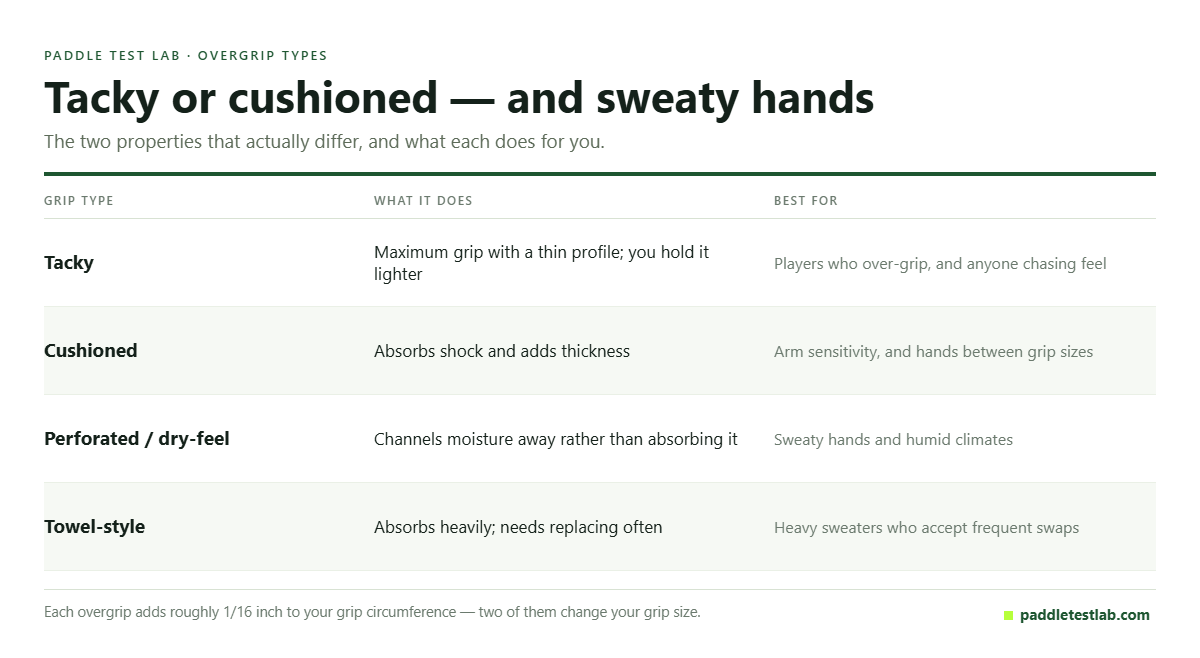
Consistency matters more than absolute tension — a slightly loose wrap with even overlap outperforms a very tight one with varying spacing. Our overgrip guide covers how tacky and cushioned materials differ in how much tension they want.

Isacc Shah
Isacc Shah writes PaddleTestLab. He does not test paddles in a lab and says so plainly — there is no rig, no radar gun, no staff hitting balls. Instead he aggregates independent bench measurements, manufacturer specifications, USA Pickleball's approval database and hundreds of verified owner reviews per product, then reports where those sources disagree. Every score on the site carries its evidence count. Where a specification is not published, the site writes UNKNOWN rather than estimating it, and the criticism is printed next to the praise.