
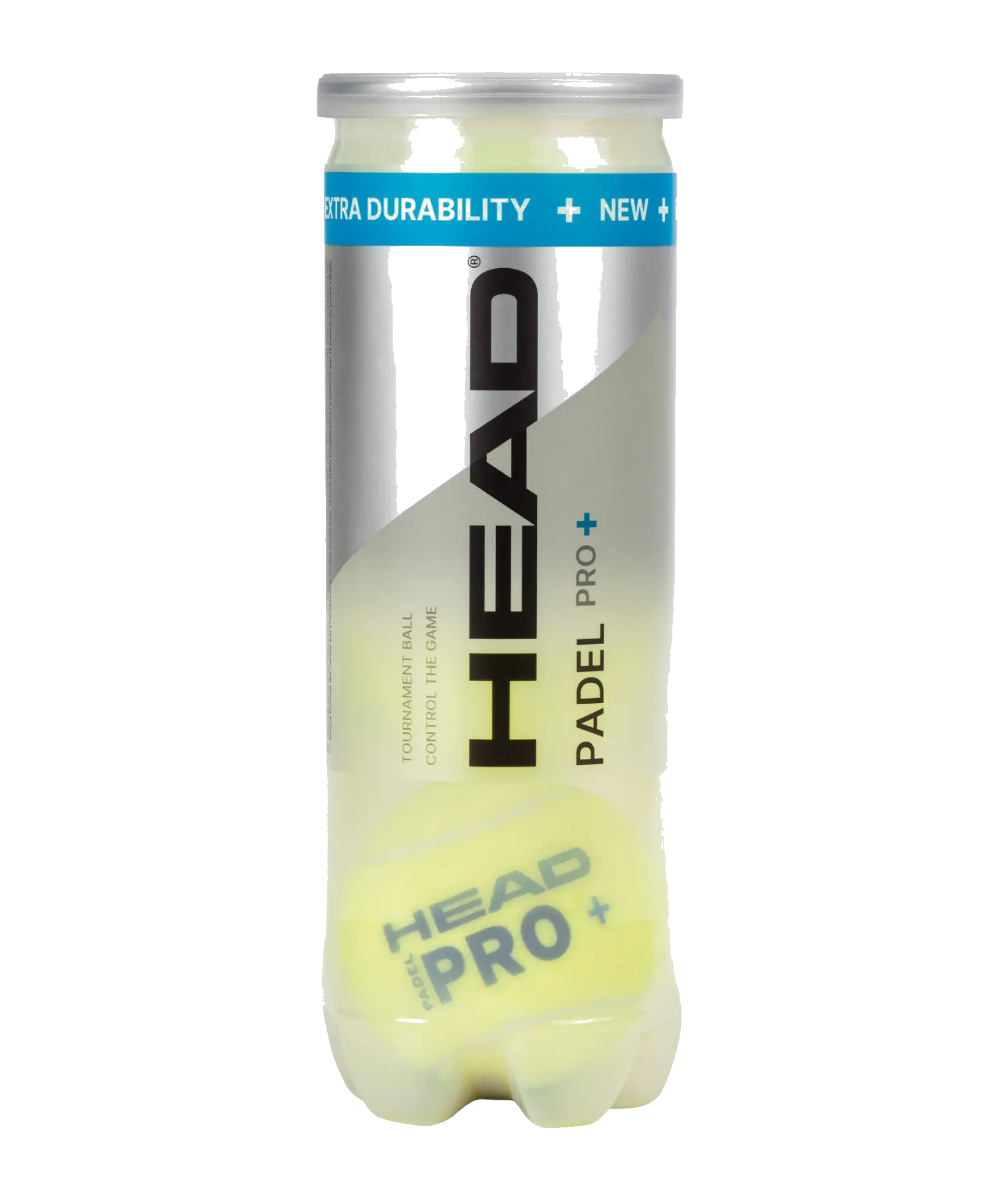
The best padel balls for most players in 2026 come down to a handful of trusted names, but which one is right for you depends on your court, your climate, and how hard you’re willing to work to replace worn cans. Padel ball choice gets far less attention than racket choice, yet owner reviews consistently point to it as the bigger factor in arm comfort and shot consistency during a season of regular play.
This guide isn’t built from one person hitting cans against a wall and calling it a review. It’s built from patterns across verified owner feedback and whatever independent spec data exists publicly. That distinction matters more with balls than with almost any other padel gear category, because the differences between a fresh can and a three-week-old can are exactly what most marketing copy glosses over.

How We Picked These Padel Balls
Our research method: owner reviews + published data
We aggregate verified owner reviews at scale, then cross-reference the recurring themes — pressure retention over multiple sessions, felt wear timelines, can-to-can consistency — against manufacturer specs and any published federation approval data. Where owners repeatedly flag the same issue across retailers, we treat that as signal. Where reviews are thin or contradictory, we say so rather than paper over the gap.
Why we don’t claim hands-on testing
We don’t play matches with these balls, and we don’t run our own compression or rebound measurements. What we do is read hundreds of verified purchase reviews, track complaint patterns over time, and check those patterns against whatever manufacturer or federation data is publicly available. That’s a different kind of rigor than a single reviewer’s subjective impression, and we think it’s more useful for a buying decision than one can-opening story.
At a Glance: Best Padel Balls by Award
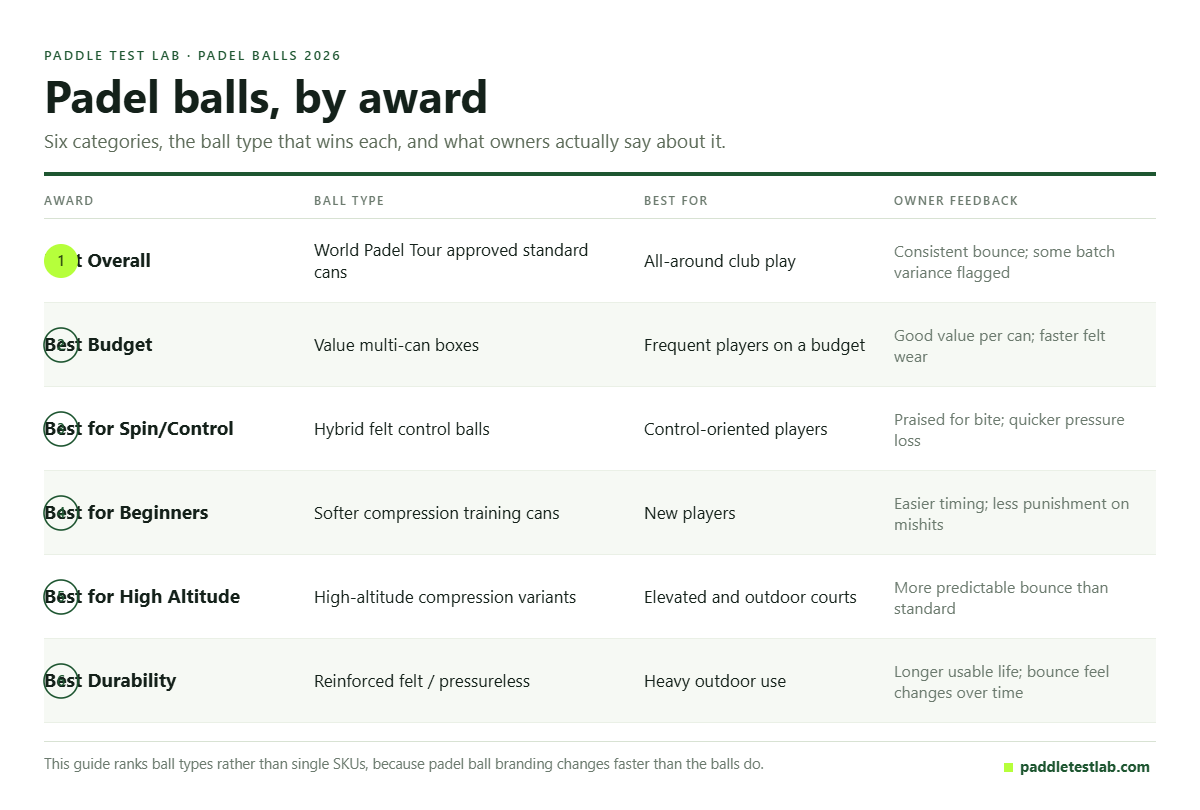
Award summary table
| Award | Model | Best For | Notable Owner Feedback |
|---|---|---|---|
| Best Overall | World Padel Tour Approved Standard Cans | All-around club play | Consistent bounce reported by most owners; some batch variance flagged |
| Best Budget | Value multi-can boxes | Frequent players on a budget | Good value per can; faster felt wear reported by some owners |
| Best for Spin/Control | Hybrid felt control balls | Control-oriented players | Owners praise bite off the strings; some note quicker pressure loss |
| Best for Beginners | Softer compression training cans | New players | Easier timing reported; less rebound punishment on mishits |
| Best for High Altitude | High-altitude compression variants | Elevated/outdoor courts | Owners at altitude report more predictable bounce vs standard balls |
| Best Durability | Reinforced felt / pressureless options | Heavy outdoor use | Longer usable life reported, though bounce feel changes over time |
Manufacturer Claims vs. Evidence
What brands advertise (durability, pressure retention, altitude specs)
Padel ball packaging tends to lean on a few recurring promises: extended pressure retention, tournament-grade bounce consistency, and felt built to withstand abrasive outdoor courts. Altitude-specific variants are marketed as solving the classic problem of balls flying too lively at elevation. International padel federation approval is used heavily as a trust signal on cans aimed at competitive players.
What owner reviews and published data actually show
Owner reviews tell a more mixed story. Pressure retention complaints show up across nearly every brand tier once a can has been open a few sessions — this isn’t unique to budget balls. Felt wear timelines vary widely by owner, which suggests court surface and storage conditions matter as much as the ball itself. Altitude variants get generally positive feedback from owners who actually play at elevation, but feedback volume is thinner than for standard balls, so confidence here is moderate rather than high. Batch-to-batch consistency complaints — balls from the same box behaving differently — appear often enough in reviews to be a real, if inconsistent, concern rather than a rare outlier.
| Manufacturer Claim | What Owners/Data Report |
|---|---|
| Extended pressure retention | Owner reports vary; many note noticeable softening within a handful of sessions regardless of brand |
| Tournament-grade bounce consistency | Generally solid for federation-approved cans, though can-to-can variance is a recurring complaint theme |
| Altitude-optimized performance | Positive feedback from elevation-based owners, but review volume is limited |
| Durable felt for outdoor courts | Wear timelines reported inconsistently; abrasive hard courts accelerate wear regardless of ball |
Detailed Picks
Best Overall
Federation-approved standard cans remain the safest default for most club players. Owners consistently report dependable bounce out of a fresh can and reasonable consistency across a single session. The main criticism that surfaces repeatedly is pressure drop-off after multiple sessions with the same can — a pattern owners describe across brands, not just this one.
Best Budget
Value multi-can boxes get consistent praise from owners for price-per-can, especially for players going through balls quickly in casual sessions. The tradeoff owners flag most often is felt wearing down faster than premium cans, along with occasional reports of softer initial bounce compared to tournament-tier balls.
Best for Spin/Control
Hybrid felt balls marketed toward control players earn praise from owners for how much bite they generate off the strings, which helps with slice and defensive shots. The recurring criticism is that this felt type tends to lose its grippy texture faster than standard felt, according to multiple owner accounts describing a shorter usable window per can.
Best for Beginners
Softer compression training balls are consistently recommended by owners coaching or introducing new players. The lower rebound makes early technique work less punishing on mishits, and several owners specifically mention it helping newer players build confidence with timing. Some more advanced players find the reduced liveliness frustrating once their game develops.
Best for High Altitude/Outdoor Play
Altitude-compression variants are designed to counteract the extra liveliness balls get at elevation. Owners playing at altitude report noticeably more manageable bounce compared to standard cans, though the feedback pool is smaller than for mainstream balls, so treat this as a promising but not overwhelming signal. Outdoor players in windy or exposed conditions also mention these variants feeling more controllable.
Best Durability (per owner reports)
Reinforced felt and pressureless-leaning options get the strongest durability feedback from owners playing frequently on abrasive outdoor courts. Owners describe getting noticeably more sessions out of a can before felt visibly frays. The tradeoff is that bounce character shifts more over the life of the ball compared to a standard pressurized can replaced more often.
How to Choose Padel Balls
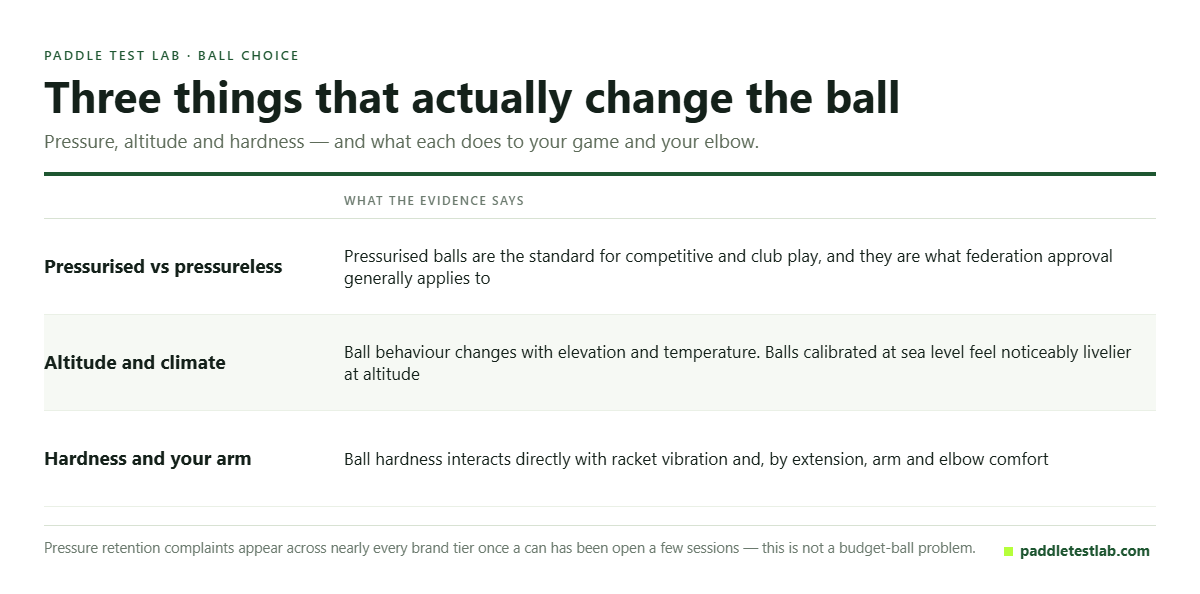
Pressureless vs pressurized
Pressurized balls are the standard for competitive and club play, and they’re what federation approval generally applies to. Pressureless balls trade some of that peak liveliness for a longer usable life, since they don’t rely on internal air pressure that gradually leaks out. Owners who prioritize durability over tour-level bounce tend to lean pressureless; owners chasing tournament-accurate play stick with pressurized cans and simply budget for more frequent replacement.
Altitude and climate considerations
Ball behavior changes with elevation and temperature, and owner reports back this up — balls that feel perfectly calibrated at sea level can feel noticeably livelier at altitude. Cold conditions also tend to make balls feel dead until warmed up through play, a pattern owners mention often enough to be worth planning around if you play in variable climates.
How ball choice affects racket and arm strain
Ball hardness interacts directly with racket vibration and, by extension, arm and elbow comfort. Owners dealing with elbow sensitivity often report that softer, lower-compression balls reduce jarring impact compared to harder tournament-spec balls, especially when paired with a more forgiving racket. If you’re already managing arm discomfort, ball selection is worth adjusting before assuming the racket alone is the problem — our padel racket guide covers frame-side comfort factors in more depth, and our broader padel gear buying guide walks through how equipment choices compound.
Verdict: Which Padel Ball Should You Buy?

Final recommendation by player type
Most club players do best starting with a federation-approved standard can and simply replacing it more often than the marketing suggests is necessary. Budget-conscious players who go through balls quickly get solid value from multi-can boxes, accepting faster felt wear as the tradeoff. Beginners benefit clearly from softer compression training balls while they build technique. Players at altitude or on exposed outdoor courts should specifically seek out altitude-compression variants rather than assuming a standard ball will behave the same way it does at sea level. Anyone managing arm or elbow sensitivity should treat ball hardness as a real lever, not an afterthought, alongside racket choice.
FAQs
What are the best padel balls for beginners in 2026?
Softer compression training balls are the most consistently recommended option for beginners in owner feedback, since they reduce the punishment of mishits and make timing easier to learn.
Do padel balls lose pressure faster than tennis balls?
Owner reports vary, but pressure loss over multiple sessions is a common theme across padel ball brands generally, similar to complaints tennis players make about pressurized tennis balls. Neither ball type holds pressure indefinitely once a can is opened.
Are pressureless padel balls worth it for durability?
For heavy outdoor use, owners report longer usable life from pressureless or reinforced-felt options. The tradeoff is that bounce character shifts more over the ball’s lifespan compared to a fresh pressurized can.
Which padel balls are approved for tournament play?
International padel federation approval status changes over time and by model, so always verify current approval directly with the federation or retailer listing before buying for sanctioned competition — don’t rely solely on packaging claims.
How often should you replace padel balls?
There’s no single universal answer; owner reports vary significantly based on play frequency, court surface, and storage. The consistent theme is that most players notice performance drop-off well before a can feels visibly worn out, so replacing proactively rather than reactively is the common owner recommendation.
Do padel balls perform differently at high altitude?
Yes — owner feedback and altitude-specific product variants both confirm that standard balls tend to feel livelier and less predictable at elevation, which is why altitude-compression cans exist as a dedicated category.

Isacc Shah
Isacc Shah writes PaddleTestLab. He does not test paddles in a lab and says so plainly — there is no rig, no radar gun, no staff hitting balls. Instead he aggregates independent bench measurements, manufacturer specifications, USA Pickleball's approval database and hundreds of verified owner reviews per product, then reports where those sources disagree. Every score on the site carries its evidence count. Where a specification is not published, the site writes UNKNOWN rather than estimating it, and the criticism is printed next to the praise.